For charity bingo halls, regulatory audits are not a matter of if—they’re a matter of when. Whether conducted annually or triggered by specific reporting requirements, audits are a routine part of nonprofit gaming operations. Yet many bingo hall operators find themselves scrambling at the last minute, searching for missing records, reconciling inconsistent numbers, and trying to piece together incomplete compliance logs.
This reactive approach increases stress, creates risk, and often leads to compliance issues.
The reality is simple: audit readiness is not something you prepare for the week before an inspection. It’s something you build into your daily operations. With structured processes and the right bingo compliance reporting software, operators can maintain continuous audit readiness and eliminate last-minute panic.
This guide explains how to prepare your bingo hall for a regulatory audit step by step—without the scramble.
Why Bingo Hall Audit Preparation Matters
Charity bingo is regulated to ensure transparency, fairness, and proper allocation of funds. Regulators review documentation to confirm:
- Accurate financial reporting
- Proper distribution of proceeds to charities
- Compliance with gaming laws
- Accurate prize payouts
- Proper volunteer involvement
- Inventory tracking (including pull tabs)
Failure to meet these requirements can result in:
- Fines
- License suspension
- Increased audit scrutiny
- Reporting penalties
- Operational disruptions
Proper bingo audit preparation ensures your records are complete, accurate, and ready at any time.
The Biggest Mistake: Preparing Only When an Audit Is Scheduled
Many operators treat audits as one-time events. When notified of an audit, they begin gathering:
- Session records
- Financial reports
- Charity documentation
- Inventory logs
This approach leads to:
- Missing data
- Inconsistent reports
- Manual errors
- Time-consuming reconciliation
- Increased audit risk
Instead, audit readiness should be an ongoing process supported by bingo compliance tracking systems.
What Regulators Actually Look For
Understanding what auditors review helps you prepare effectively. Most bingo regulatory audits focus on:
1. Session Documentation
Auditors verify that each bingo session is properly recorded, including:
- Date and time
- Location
- Charity assigned
- Session manager
- Games played
- Attendance
Accurate bingo session reporting is essential.
2. Financial Compliance
Auditors review financial records to ensure accuracy and transparency:
- Gross revenue
- Card sales
- Pull tab sales
- Prize payouts
- Expenses
- Net proceeds
Bingo financial compliance is one of the most scrutinized areas during audits.
3. Charity Distribution
Regulators confirm that funds are properly distributed:
- Charity participation records
- Revenue allocation
- Expense deductions
- Final payouts
Charity bingo compliance depends on accurate tracking of these details.
4. Pull Tab and Inventory Logs
If your hall sells pull tabs, auditors check:
- Inventory records
- Serial numbers
- Sales tracking
- Reconciliation logs
Pull tab compliance tracking must be precise.
5. Audit Trails
A complete audit trail shows:
- Who entered the data
- When it was recorded
- Any changes made
- Adjustments and corrections
Bingo audit trail software is essential for maintaining this transparency.
Step-by-Step Bingo Hall Audit Preparation
Step 1: Maintain Complete Bingo Compliance Logs Daily
Audit readiness begins with consistent documentation.
Every session should include:
- Session details
- Financial summaries
- Prize tracking
- Volunteer logs
- Charity assignments
Using bingo compliance reporting software ensures logs are recorded automatically and consistently.
Step 2: Centralize All Compliance Documentation
One of the biggest challenges in audit preparation is scattered data.
Operators often store records across:
- Spreadsheets
- Paper logs
- Accounting systems
- Emails
Centralizing documentation in one system improves efficiency and reduces errors.
Bingo compliance reporting software provides a single source of truth.
Step 3: Automate Financial Reconciliation
Manual reconciliation is one of the most error-prone processes.
Automation ensures:
- Accurate revenue tracking
- Correct prize calculations
- Consistent expense reporting
- Real-time financial summaries
Automated bingo hall compliance reporting eliminates discrepancies.
Step 4: Track Charity Participation Accurately
Each session must clearly show:
- Which charity participated
- Volunteer involvement
- Revenue share
- Expense allocation
Charity gaming compliance software automatically tracks these details and generates reports.
Step 5: Maintain Real-Time Audit Trails
Audit trails are critical for transparency.
A strong system records:
- Data entry timestamps
- User activity
- Edits and updates
- Report generation
Bingo audit logs should be automatically maintained and easily accessible.
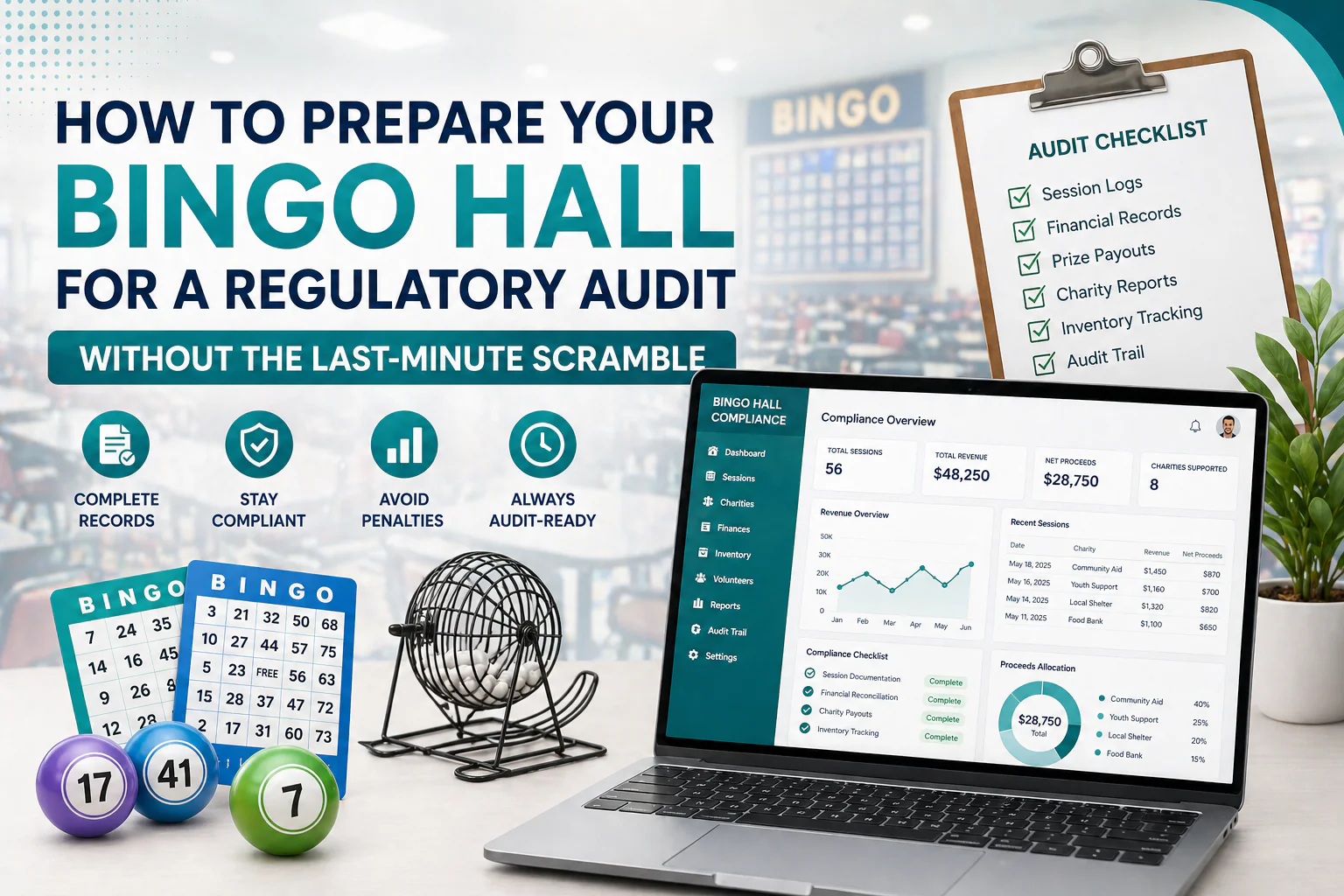
Step 6: Use a Standard Bingo Compliance Checklist
A compliance checklist ensures nothing is missed.
Your checklist should include:
- Session documentation
- Financial reports
- Charity records
- Prize logs
- Pull tab inventory
- Volunteer tracking
- Cash reconciliation
- Audit trail logs
Review this checklist weekly—not just before audits.
Step 7: Run Internal Compliance Reviews
Regular internal audits help identify issues early.
Monthly reviews should verify:
- Data accuracy
- Missing records
- Financial consistency
- Compliance gaps
This proactive approach reduces audit risk.
Step 8: Prepare Audit-Ready Reports in Advance
Instead of generating reports at the last minute, maintain:
- Weekly financial reports
- Monthly summaries
- Charity payout reports
- Attendance records
- Inventory logs
Bingo compliance reporting software can generate these automatically.
Step 9: Train Staff and Volunteers on Compliance
Compliance is a team effort.
Ensure staff understand:
- Documentation requirements
- Data entry procedures
- Financial tracking processes
- Audit expectations
Proper training reduces errors and improves consistency.
Step 10: Digitize Everything
Paper records increase audit risk.
Digital systems provide:
- Secure storage
- Easy access
- Searchable records
- Backup protection
- Faster reporting
Nonprofit bingo compliance is much easier with digital systems.
Common Audit Preparation Mistakes to Avoid
Even experienced operators make mistakes, such as:
- Incomplete bingo compliance logs
- Missing session data
- Manual financial errors
- No audit trail
- Disorganized documentation
- Delayed reporting
- Inconsistent recordkeeping
These issues can lead to audit findings.
How Bingo Compliance Reporting Software Eliminates Audit Stress
Purpose-built bingo compliance reporting software transforms audit preparation by:
- Automating session documentation
- Tracking financial data in real time
- Maintaining audit trails
- Generating compliance reports
- Centralizing documentation
- Reducing manual work
This allows operators to stay audit-ready at all times.
Benefits of Continuous Audit Readiness
When your bingo hall is always prepared:
- Audits become faster
- Stress is reduced
- Errors are minimized
- Compliance improves
- Transparency increases
- Operations run smoothly
Audit readiness becomes part of daily workflow—not a last-minute scramble.
Audit Preparation Checklist (Quick Reference)
Before any audit, ensure you have:
- Complete bingo compliance logs
- Accurate financial records
- Charity participation documentation
- Prize payout records
- Pull tab inventory logs
- Volunteer tracking records
- Cash reconciliation reports
- Full audit trail documentation
- Organized digital records
If these are already maintained, your audit is essentially complete.
Final Thoughts
Preparing your bingo hall for a regulatory audit does not need to be stressful or chaotic. The key is shifting from reactive preparation to proactive compliance management.
By maintaining accurate bingo compliance logs, automating financial tracking, and using bingo compliance reporting software, operators can ensure their records are always complete and audit-ready. Instead of scrambling before an audit, your hall can operate with confidence, knowing every session, transaction, and report is properly documented.
In today’s regulatory environment, continuous compliance is not just a best practice—it’s a necessity.