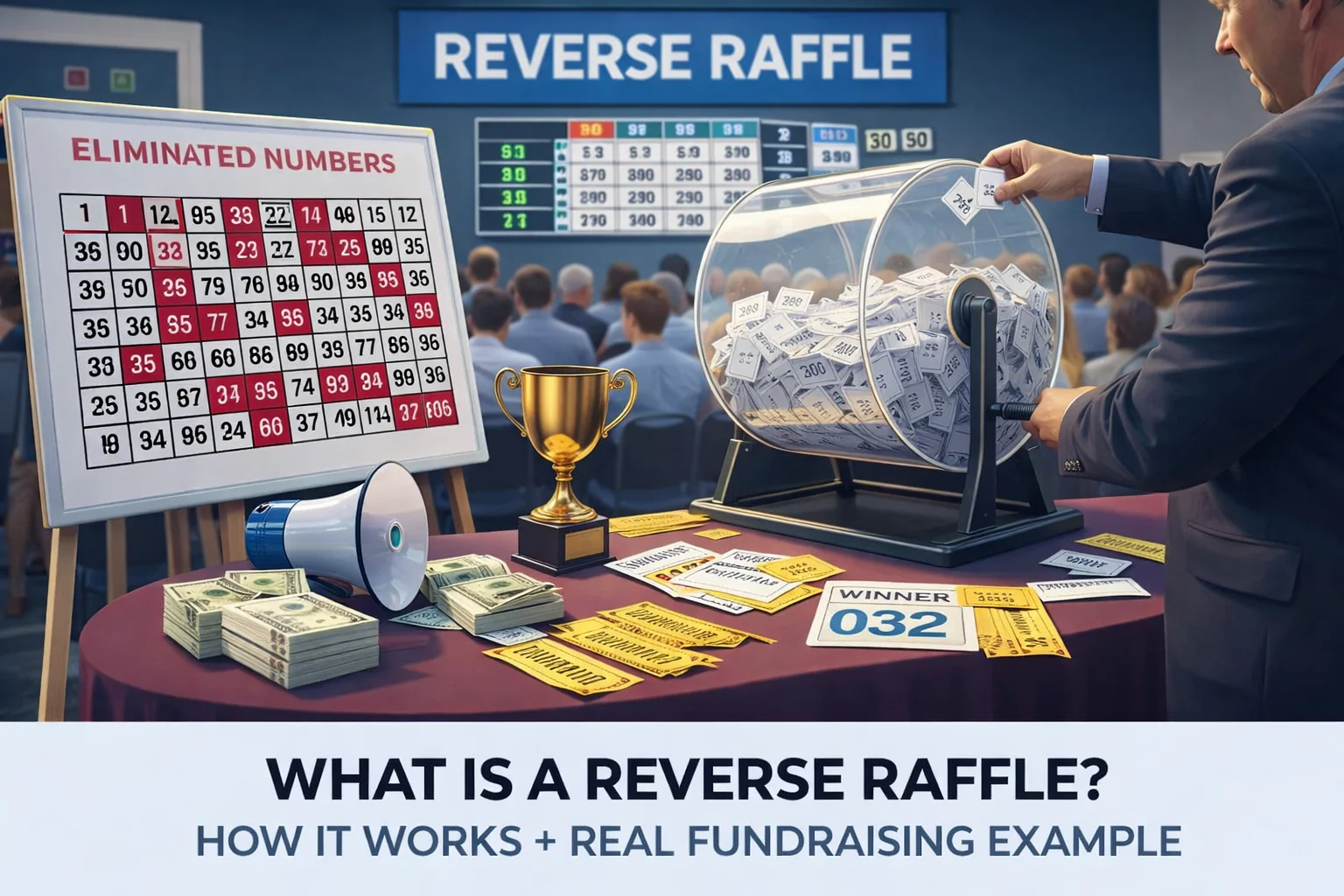
Reverse raffles have become one of the most engaging and effective fundraising formats for charities, nonprofits, schools, and community organizations. Unlike traditional raffles that end the moment a winner is drawn, reverse raffles build excitement throughout the entire event. Every participant stays in the game longer, which increases engagement, encourages ticket sales, and creates a memorable experience.
If you're new to this format, understanding what a reverse raffle is and how it works can help you decide whether it's the right fit for your next fundraiser.
What Is a Reverse Raffle?
A reverse raffle is a fundraising game where participants purchase numbered tickets, and instead of drawing a winner immediately, numbers are eliminated one at a time until only one ticket remains. The last remaining ticket becomes the winner.
This simple twist changes the entire dynamic of a raffle. Rather than hoping to win instantly, participants stay involved as the list shrinks. The closer the event gets to the final few numbers, the more suspense builds.
Because of this, reverse raffles are often used for:
- Charity fundraising events
- Non-profit campaigns
- School fundraisers
- Church events
- Community raffles
- Corporate charity nights
- Sponsor-driven giveaways
The format is flexible and can work for both small and large events.
How Does a Reverse Raffle Work?
A reverse raffle follows a structured but simple process. Tickets are sold before the event, and each participant receives a unique number. During the event, numbers are randomly eliminated one by one. As more numbers are removed, anticipation grows until only one ticket remains.
Here’s a typical step-by-step flow:
- Sell a limited number of tickets
- Assign a unique number to each ticket
- Start the raffle draw
- Randomly eliminate ticket numbers
- Continue removing numbers one by one
- Display remaining tickets
- Build suspense as numbers decrease
- Last remaining ticket wins the prize
This gradual elimination is what makes reverse raffles so engaging. Participants watch closely as the list shrinks, and excitement increases toward the final draw.
Reverse Raffle Example
To better understand how a reverse raffle works, here’s a simple fundraising example.
An organization sells 200 tickets at $50 each. This generates $10,000 in total fundraising revenue. The group sets a grand prize of $4,000 and keeps the remaining $6,000 to support their cause.
During the event, ticket numbers are randomly eliminated one at a time. Participants remain in the game until their number is removed. When only one ticket remains, that participant wins the grand prize.
This format encourages higher participation because every ticket stays active longer, making the experience more exciting.
Reverse Raffle Rules
Reverse raffles typically follow a few basic rules, though organizations can customize them depending on the event.
- Each participant receives a numbered ticket
- Numbers are eliminated randomly
- Eliminated tickets cannot be returned
- The event continues until one ticket remains
- Last remaining ticket wins the grand prize
- Optional bonus prizes can be added
- Limited ticket quantity increases demand
These simple rules keep the event easy to understand for participants.
Reverse Raffle vs Traditional Raffle
The biggest difference between reverse raffles and traditional raffles is how the winner is selected. This difference affects engagement and fundraising potential.
| Feature | Reverse Raffle | Traditional Raffle |
| Winner selection | Last ticket wins | First ticket wins |
| Excitement | Builds over time | Instant |
| Engagement | High | Moderate |
| Audience retention | Strong | Limited |
| Fundraising potential | Higher | Moderate |
Because reverse raffles keep participants involved longer, they often lead to better engagement and stronger fundraising results.
When Should You Use a Reverse Raffle?
Reverse raffles are especially effective when the goal is to maximize participation and keep attendees engaged. They work well for ticket-based fundraising events where suspense can increase excitement.
Organizations commonly use reverse raffles for:
- Charity fundraising campaigns
- School fundraising events
- Church fundraisers
- Nonprofit galas
- Community events
- Corporate charity nights
- Sponsor-supported raffles
They can also be combined with dinner events, auctions, or entertainment programs.
Reverse Raffle Prize Ideas
Choosing the right prize can significantly impact ticket sales. Popular reverse raffle prizes include:
- Cash grand prize
- Vacation packages
- Electronics
- Gift cards
- Sports tickets
- Sponsored prizes
- Luxury items
- Experience packages
Offering a compelling prize helps increase participation and fundraising totals.
Tips for Running a Successful Reverse Raffle
A few simple strategies can make a reverse raffle more successful. Selling a limited number of tickets creates urgency and increases demand. Promoting the event early helps generate interest and secure participants ahead of time. Announcing remaining ticket numbers during the event builds suspense and keeps attendees engaged.
Some organizations also add bonus prizes when only a few tickets remain. This keeps excitement high and encourages participants to stay involved until the end.
Clear communication, a structured draw process, and a strong prize all contribute to a successful reverse raffle.
Frequently Asked Questions
What is a reverse raffle?
A reverse raffle is a fundraising game where tickets are eliminated until one remains. The final ticket wins the prize.
How does a reverse raffle work?
Participants buy tickets, numbers are randomly removed, and the last remaining ticket wins.
Are reverse raffles good for fundraising?
Yes. Reverse raffles often increase engagement and encourage more ticket sales.
How many tickets are used in a reverse raffle?
Most reverse raffles use between 100 and 300 tickets, depending on event size.
What is the difference between raffle and reverse raffle?
Traditional raffles pick a winner immediately, while reverse raffles eliminate tickets until one remains.
Can reverse raffles have multiple prizes?
Yes. Some events include bonus prizes during the elimination process.
How long does a reverse raffle take?
Most reverse raffles last between 30 minutes and two hours.
Run Your Own Reverse Raffle
Reverse raffles are simple to understand, easy to run, and highly effective for fundraising. By building suspense and keeping participants engaged until the final draw, this format helps organizations create memorable events while raising more for their cause.