Bingo associations face a growing challenge: maintaining consistent attendance across member halls in an increasingly competitive entertainment environment.
Some halls thrive with strong attendance, modern communication tools, and active player engagement. Others struggle with declining participation, inconsistent marketing, and outdated processes.
The problem is not always effort. Often, it is infrastructure.
When every hall operates independently using different systems, marketing strategies become fragmented. Messaging becomes inconsistent. Attendance patterns become unpredictable. And associations lose the ability to guide growth across their network.
That’s why more organizations are turning to white-label bingo platforms to standardize attendance marketing, automate communication, and unify player engagement across member halls.
The Modern Bingo Attendance Problem
Attendance is the lifeblood of bingo operations.
Without consistent attendance:
- Revenue fluctuates
- Charity fundraising suffers
- Player retention declines
- Events become harder to sustain
Historically, many bingo halls relied on:
- Local word-of-mouth
- Flyers
- Community bulletin boards
- Facebook posts
But player behavior has changed.
Today’s audiences expect:
- Fast communication
- Personalized reminders
- Loyalty rewards
- Digital engagement
- Consistent experiences
Associations that fail to modernize attendance marketing risk long-term decline across member halls.
Why Independent Marketing Systems Create Problems
Many bingo associations operate as decentralized networks.
Each hall uses its own:
- Marketing methods
- Attendance systems
- CRM tools
- SMS providers
- Loyalty programs
This creates major operational challenges.
1. Inconsistent Branding Across Halls
Without centralized systems:
- Messaging varies widely
- Promotions feel disconnected
- Branding becomes inconsistent
Players may not even realize halls belong to the same association.
A white-label platform solves this by creating unified branding while still allowing local customization.
2. Uneven Attendance Performance
Some halls adopt modern marketing strategies.
Others do not.
This creates:
- Strong halls growing stronger
- Weak halls falling behind
- Association-wide inconsistency
Without centralized visibility, associations struggle to support underperforming locations.
3. Fragmented Player Data
When halls operate separate systems:
- Player histories remain isolated
- Loyalty tracking breaks down
- Attendance insights disappear
Associations lose the ability to understand:
- Cross-hall attendance patterns
- Player engagement trends
- Regional participation behavior
Centralized platforms eliminate these silos.
4. No Standardized Communication Strategy
One hall may send SMS reminders consistently.
Another may rely entirely on Facebook.
This inconsistency hurts attendance.
Research consistently shows that multi-channel communication significantly improves engagement and event participation compared to relying on a single platform.
What is a white-label bingo platform?
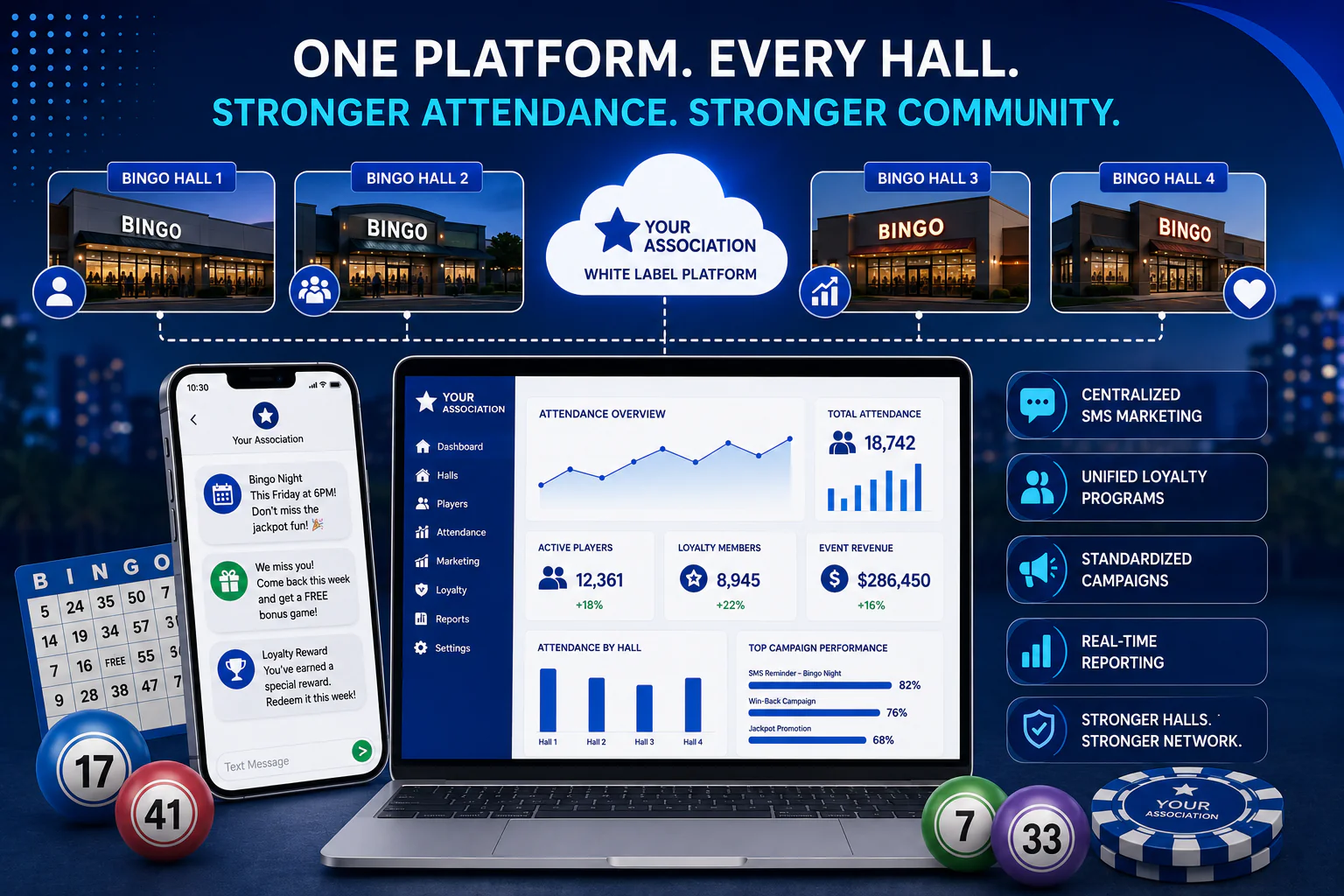
A white-label bingo platform allows associations to provide member halls with a shared technology system under the association’s own branding.
Instead of every hall purchasing separate tools, the association provides:
- Attendance marketing systems
- SMS automation
- Loyalty tracking
- CRM tools
- Reporting dashboards
- Communication workflows
All within one centralized platform.
The halls maintain local operations, while the association standardizes infrastructure.
Why Attendance Marketing Needs Standardization
Attendance marketing is not just about promotions.
It is about building consistent player behavior.
Modern attendance marketing includes:
- SMS reminders
- Loyalty campaigns
- Win-back automation
- Event notifications
- Visit frequency tracking
- Personalized engagement
Without standardization:
- Campaign quality varies
- Messaging timing changes
- Player experiences become inconsistent
This weakens association-wide growth.
How White Label Platforms Standardize Attendance Marketing
1. Centralized SMS Marketing Systems
SMS marketing has become one of the most effective attendance drivers in gaming and entertainment environments because messages are immediate, highly visible, and time-sensitive.
A centralized platform allows associations to standardize:
- Reminder timing
- Campaign templates
- Event promotions
- Win-back messaging
For example:
- Automated session reminders
- Jackpot announcements
- Attendance recovery campaigns
- Loyalty reward notifications
This ensures every hall benefits from proven communication strategies.
2. Unified Loyalty Programs Across Member Halls
Fragmented loyalty programs confuse players.
A white-label loyalty platform creates:
- Consistent reward systems
- Shared loyalty tiers
- Standardized engagement rules
Players can:
- Earn rewards consistently
- Recognize the association brand
- Build long-term loyalty across halls
This strengthens retention.
3. Automated Attendance Campaigns
Manual marketing is inconsistent.
Automation ensures:
- Messages are sent on time
- Campaigns run continuously
- Attendance gaps are addressed automatically
Examples include:
- “We miss you” campaigns
- Weekly attendance reminders
- Birthday rewards
- Event countdown campaigns
Automation creates predictability.
4. Standardized Event Promotion
Associations often host:
- Regional tournaments
- Charity nights
- Special jackpot events
- Seasonal campaigns
A centralized platform ensures:
- Consistent promotion
- Coordinated messaging
- Shared branding
This improves attendance across all halls.
5. Shared Marketing Templates
Many smaller halls lack dedicated marketing teams.
White label platforms help by providing:
- Prebuilt SMS templates
- Email campaigns
- Event workflows
- Promotional graphics
This raises marketing quality association-wide.
The Importance of Centralized Reporting
One of the biggest advantages of a white-label platform is visibility.
Associations gain access to:
- Attendance trends
- Campaign performance
- Loyalty engagement
- Hall-by-hall comparisons
This allows leadership to:
- Identify struggling halls
- Replicate successful strategies
- Improve regional performance
Without centralized reporting, associations operate blindly.
How Standardized Marketing Improves Player Retention
Player retention depends heavily on consistency.
When communication varies widely between halls:
- Players disengage
- Habits weaken
- Attendance becomes irregular
Standardized attendance marketing creates:
- Familiar experiences
- Predictable engagement
- Stronger player habits
This improves long-term retention.
Multi-Hall Attendance Growth Strategies Enabled by White Label Platforms
A centralized platform enables associations to launch large-scale initiatives such as:
- Regional attendance competitions
- Cross-hall loyalty rewards
- Shared jackpot promotions
- Seasonal attendance campaigns
- Association-wide SMS alerts
These campaigns are difficult to coordinate manually.
Why Associations Need More Than Generic CRM Software
Generic CRM platforms are not designed for bingo hall attendance behavior.
Most lack:
- Visit frequency tracking
- Session-based engagement
- Bingo loyalty systems
- Attendance automation
- Gaming-specific workflows
Purpose-built bingo association software solves these operational gaps.
Key Features Associations Should Look For
When evaluating a white-label platform, associations should prioritize:
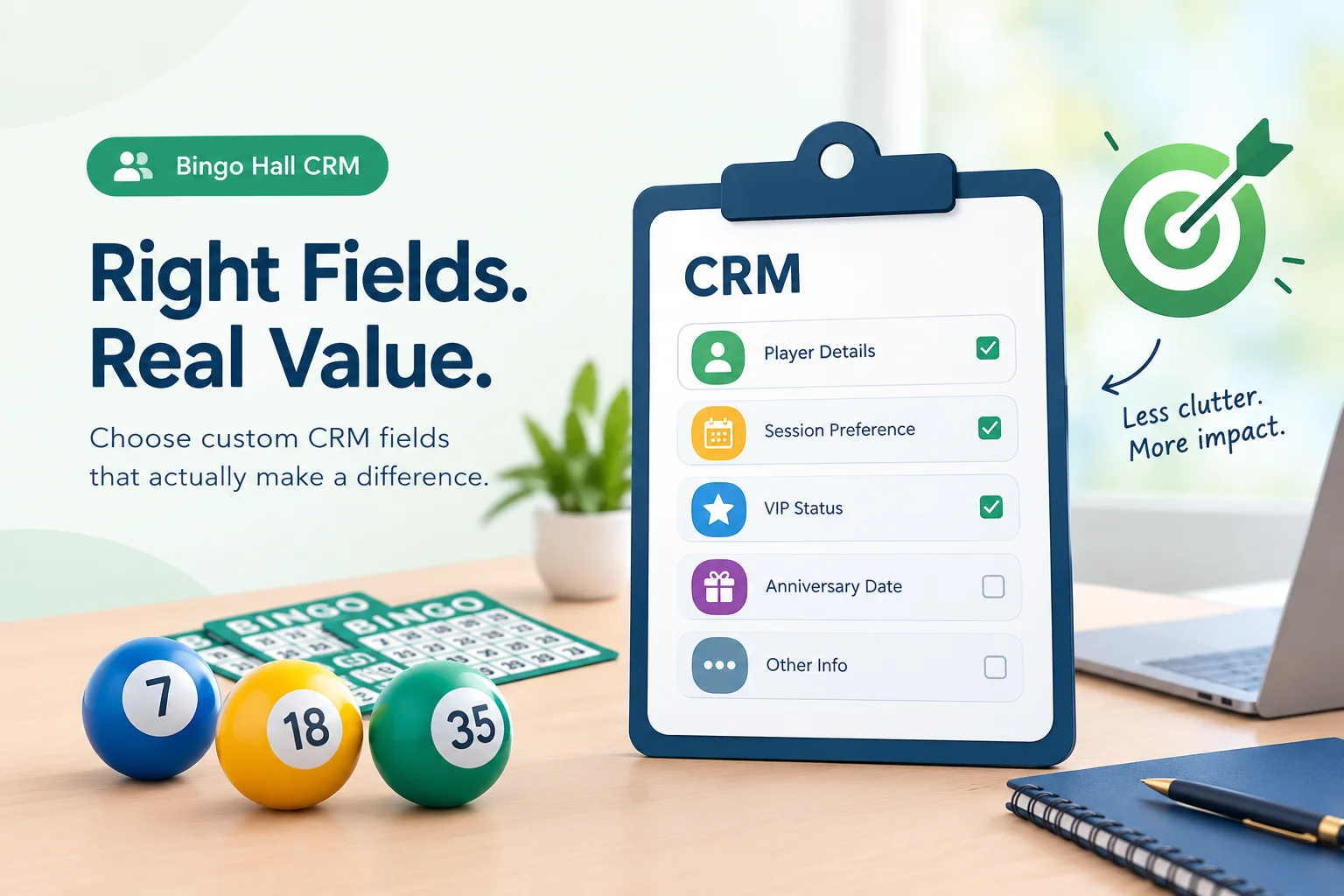
- Centralized CRM
- SMS marketing automation
- Attendance tracking
- Loyalty management
- Multi-hall reporting
- White label branding
- Automated workflows
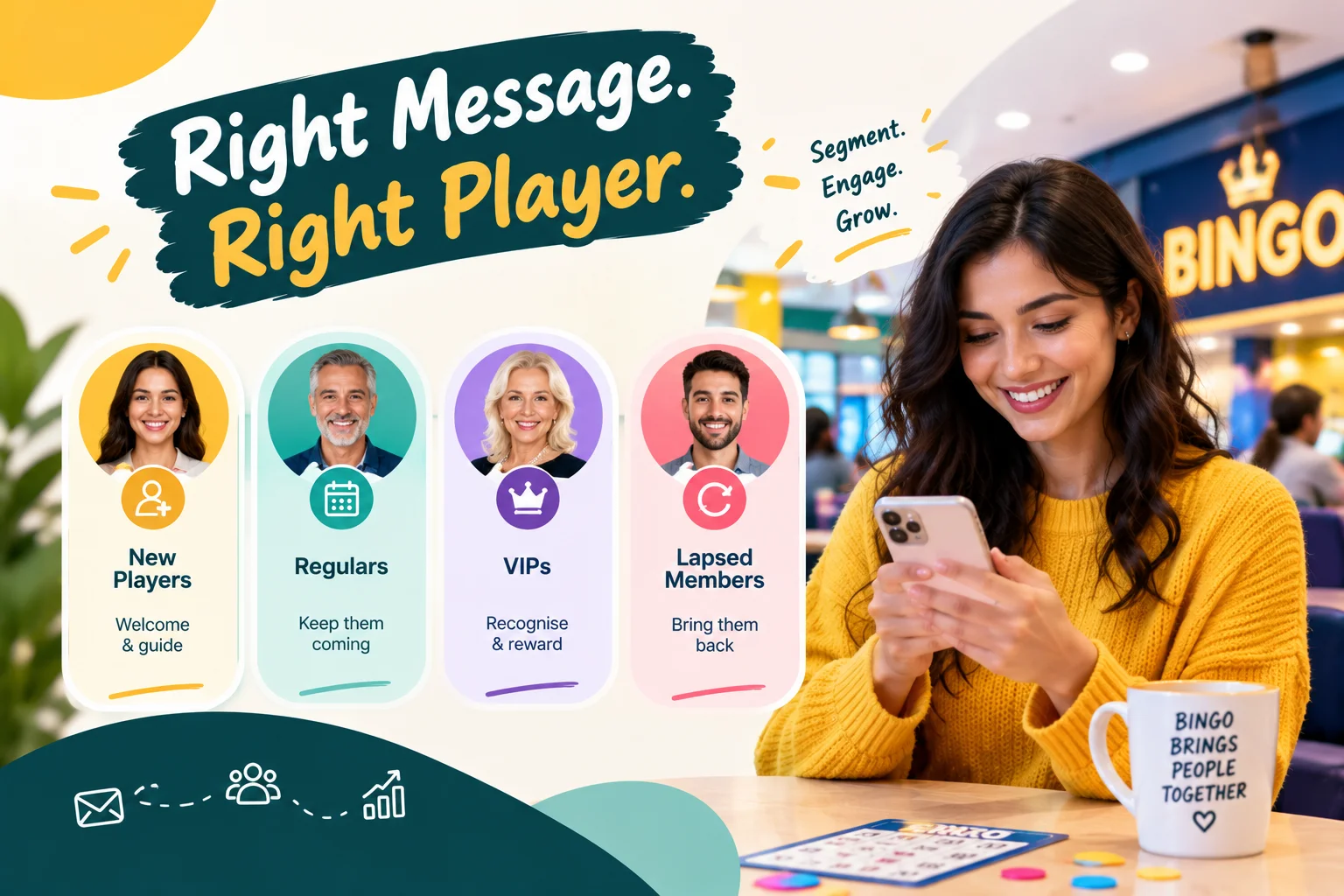
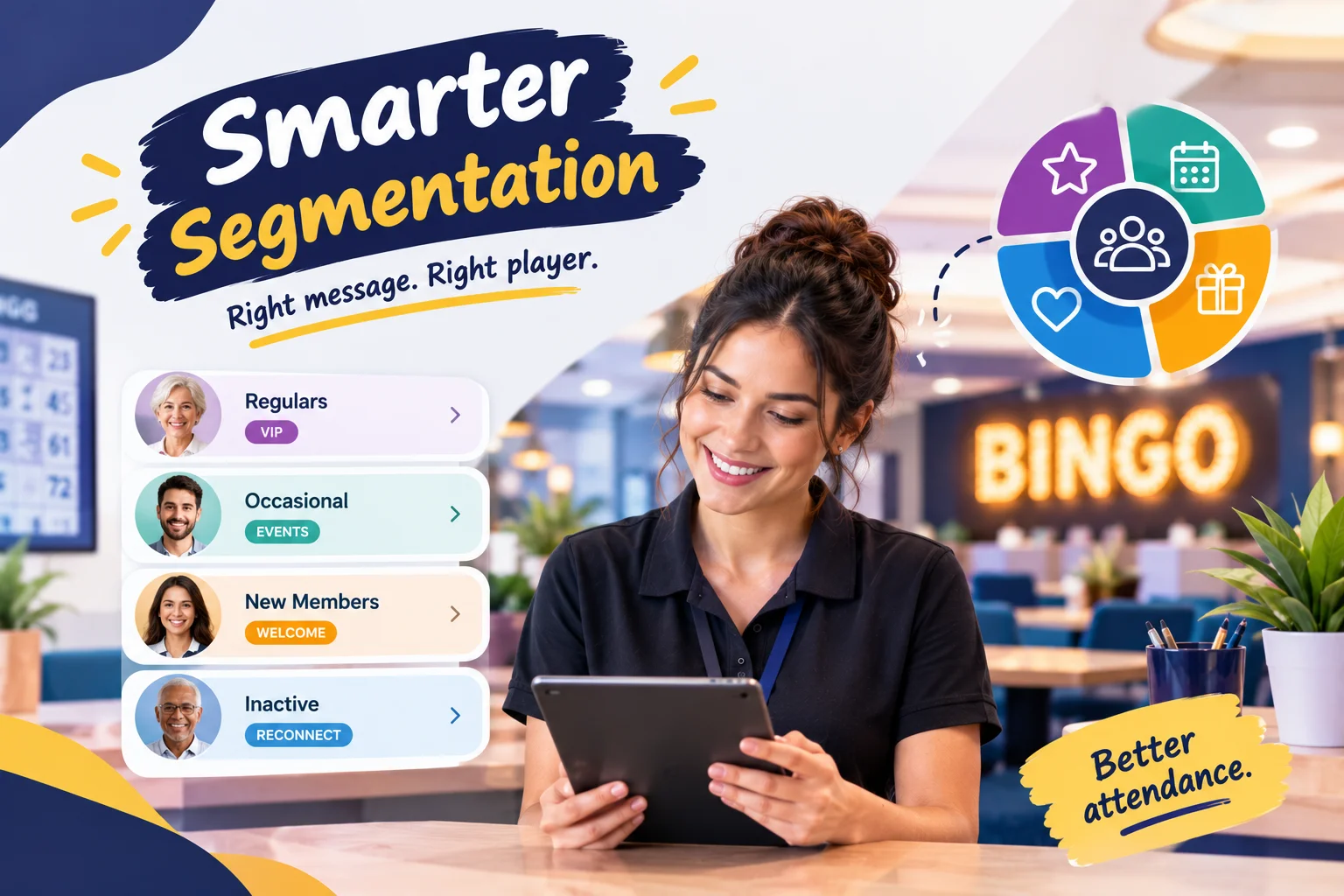
- Player segmentation
- Event promotion tools
These features create scalable infrastructure.
Signs Your Association Needs Standardization
Associations typically need centralized systems when:
- Member hall attendance varies dramatically
- Marketing quality is inconsistent
- Communication feels fragmented
- Reporting is difficult to consolidate
- Loyalty programs differ by hall
- Smaller halls struggle operationally
These are signs of infrastructure fragmentation.
The Strategic Value of White Label Infrastructure
White-label platforms do more than improve technology.
They strengthen:
- Association identity
- Member hall consistency
- Operational efficiency
- Player trust
- Long-term growth potential
This creates a stronger overall ecosystem.
Final Thoughts
Bingo associations cannot rely on fragmented marketing systems to maintain attendance growth across member halls.
When every location uses different communication tools, attendance strategies, and loyalty systems, inconsistency becomes unavoidable.
A white-label bingo platform provides the centralized infrastructure needed to standardize attendance marketing, automate engagement, unify branding, and improve player retention across the entire network.
With the right platform, associations can transform disconnected halls into a coordinated, data-driven ecosystem built for long-term attendance growth and operational stability.