A bingo hall can spend weeks trying to attract new players.
Social posts need to be created. Promotions need to be scheduled. Staff need to answer questions. Ads need to be monitored. Existing players need regular reminders.
And yet, some of the easiest opportunities to bring new people through the door may already be sitting inside the hall's existing customer base.
Think about what happens when a regular player tells a friend, family member, coworker, or neighbor about a bingo night.
That person has already done something valuable for you: they've introduced someone who may have never considered visiting.
The challenge is turning that informal recommendation into an actual visit.
This is where gift cards can play a surprisingly important role.
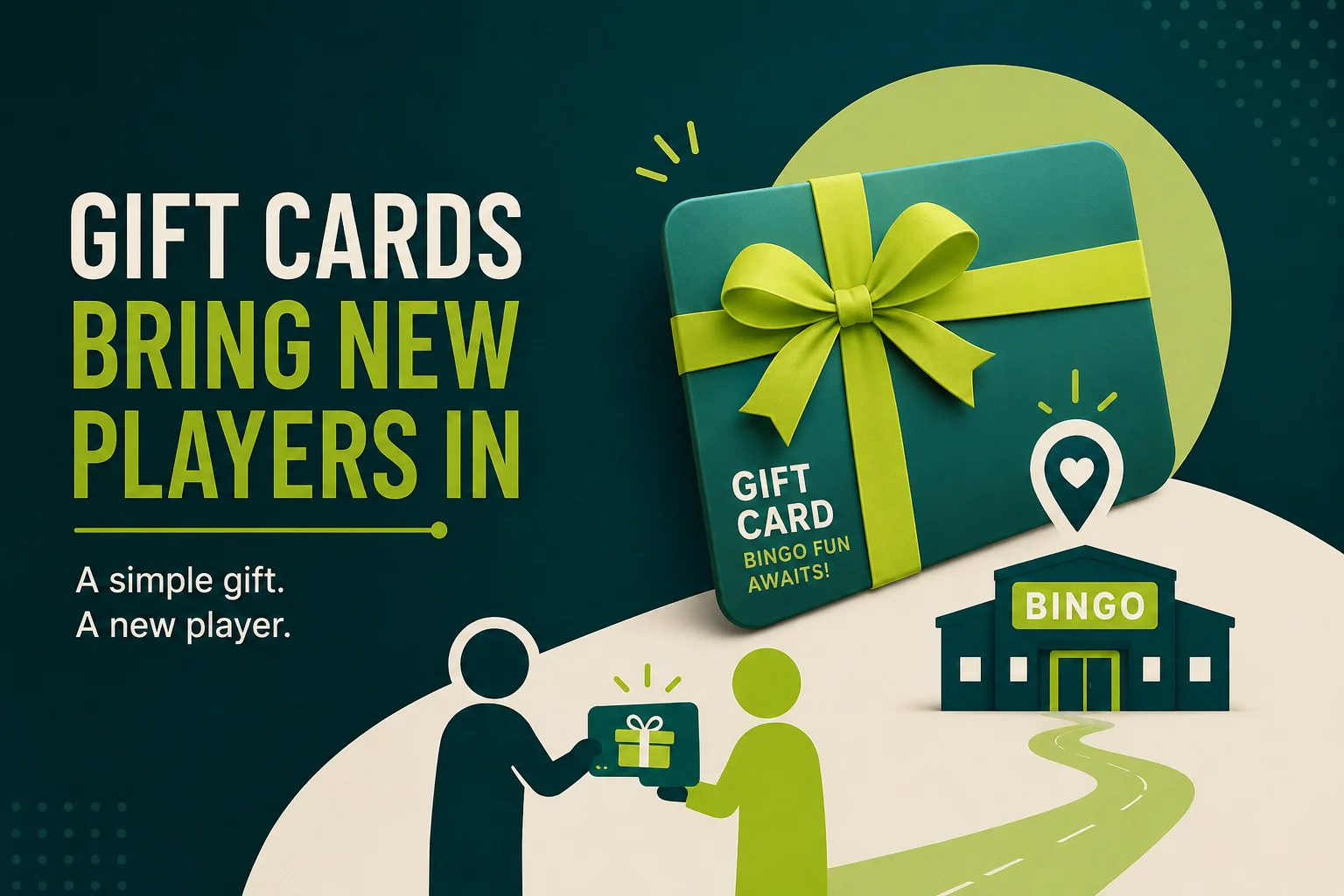
A gift card gives an existing player something tangible to share with someone else. Instead of saying, "You should come play sometime," they can give that person a reason—and potentially a value—to make their first visit.
For bingo halls and entertainment venues, that creates a customer acquisition channel that works through existing relationships rather than depending entirely on additional advertising.
The Difference Between Being Told About a Bingo Hall and Actually Visiting One
A new player usually has several reasons to hesitate.
They may not know:
- What to expect when they arrive
- How bingo sessions work
- Whether beginners are welcome
- When they should visit
- What they need to bring
- Whether they will enjoy the experience
A recommendation from a friend removes some of that uncertainty.
A gift card can remove even more.
Instead of receiving an abstract recommendation, the potential player receives something they can actually use.
That changes the conversation from:
"You should come with me sometime."
to:
"Here's a gift card. Let's go together."
That is a much stronger invitation.
Gift Cards Turn Existing Players Into Introducers
Traditional marketing depends on the venue finding new customers.
Gift cards create another route.
Your existing players already have relationships with people who may share their interests. They know coworkers, friends, relatives, and community members who could potentially become future players.
A gift card gives those loyal customers an easy way to introduce someone new.
This is especially useful for bingo halls because the experience is naturally social.
A player may be more comfortable attending their first session when someone they already know is going too.
The gift card doesn't replace marketing.
It extends your marketing through the people who already know and trust your venue.
Why This Doesn't Feel Like Another Promotion
There's an important difference between advertising and gifting.
A promotional message says:
"Come to our bingo hall."
A gift card says:
"I'd like you to experience this with me."
The second message is personal.
That personal context can make the introduction feel less like an advertisement and more like an invitation.
For operators, this creates a useful acquisition loop:
Existing player → Gift card → New visitor → First experience → Loyalty opportunity
The venue doesn't necessarily need to create another advertising campaign for every new player entering that loop.
Start With the People Who Already Love Your Venue
Not every customer is equally likely to introduce someone new.
Your strongest candidates may be:
- Frequent players
- VIP members
- Long-term members
- Players who attend special events
- Customers with strong engagement
- Players who regularly participate in promotions
These customers already understand the value of your venue.
They are also more likely to feel comfortable recommending it.
Instead of treating your entire database identically, consider positioning gift cards as a benefit or engagement opportunity for your most active players.
Gift Cards Can Make First Visits Less Intimidating
A first visit can feel unfamiliar.
The new player doesn't know the staff, the layout, the schedule, or the other players.
A gift card can help make the first visit feel more intentional.
For example, an existing player could give someone a gift card and say:
"Come with me Thursday. I'll show you how everything works."
Now the new visitor isn't walking into an unfamiliar environment alone.
They have:
- A reason to visit
- Someone they know
- A specific time to attend
- A defined incentive
- An introduction to the venue
That can make the transition from curiosity to actual attendance much easier.
Don't Treat the Gift Card as the End of the Journey
This is where operators can get even more value from digital gift cards.
The goal shouldn't simply be:
Gift card purchased → Gift card redeemed → Done
The better journey is:
Gift card purchased → New player visits → Player profile created → Follow-up → Loyalty enrollment → Second visit
The first visit is an acquisition opportunity.
Once the new player has experienced the venue, the operator has a chance to build a direct relationship.
For example, after the first visit, the player could be invited to join the loyalty programme or receive information about upcoming sessions and events, subject to applicable consent requirements.
The gift card creates the introduction.
Your customer engagement strategy creates the relationship.
The Second Visit Is Where the Real Opportunity Begins
Getting someone through the door once is useful.
Getting them to return is far more valuable.
Consider a new player who uses a gift card on Saturday.
Without follow-up, the experience may end there.
With a connected customer engagement system, the venue can recognise that the player is new and create a relevant next step.
For example:
First visit: Gift card redeemed.
After visit: Welcome communication.
Next week: Invitation to an upcoming session.
Second visit: Loyalty reward earned.
Later: Progress toward a VIP tier or other engagement benefit.
This creates a path from gift recipient to regular player.
Gift Cards Can Support Different Acquisition Scenarios
The strategy doesn't have to be limited to birthdays or holidays.
Bingo halls can use gift cards around many occasions.
Birthday Gifting
Encourage existing players to introduce friends or family members through birthday gift cards.
Holiday Gifting
Create seasonal opportunities for players to give someone a bingo experience.
Fundraising Events
Gift cards can be incorporated into charity events, raffles, or community fundraising initiatives where appropriate.
New Player Incentives
A current member can give a gift card to someone who has never visited.
Player Appreciation
Reward highly engaged players with gift cards they can share, effectively turning recognition into a potential acquisition opportunity.
The key is to make the gift relevant to a real social occasion rather than treating it as another generic discount.
Digital Makes Gift Cards Easier to Share
Physical gift cards can work, but they introduce friction.
Someone has to purchase the card, carry it, deliver it, and remember to bring it to the venue.
Digital gift cards reduce many of those barriers.
A customer can potentially purchase or receive a digital gift card and share it with someone else without needing a physical card.
For operators, digital delivery also creates a more manageable process for tracking gift card activity and connecting it with the broader customer experience.
That matters because the more efficiently a gift card can move from one customer to another, the easier it becomes to use gifting as an ongoing acquisition mechanism.
Track the Journey From Gift to New Player
One of the biggest advantages of digital gift cards is visibility.
Instead of simply knowing that a gift card was purchased, operators can look at the broader customer journey.
Useful questions include:
- How many gift cards were issued?
- How many were redeemed?
- How many redemptions came from new players?
- How many recipients joined the loyalty programme?
- How many returned for a second visit?
- Which gift occasions generate the most new visitors?
These numbers can reveal whether gifting is actually contributing to player acquisition.
A Simple Bingo Hall Example
Imagine a bingo hall has 800 active loyalty members.
Instead of spending more money on broad advertising, the operator introduces a digital gift card programme.
A regular player purchases a gift card for a friend.
The friend redeems it during a Saturday session.
The venue identifies the visitor as a new customer and invites them to join its loyalty programme.
The new player returns the following week.
A month later, that player brings another friend.
Now one gift card has potentially created more than one new customer relationship.
This is the compounding effect that makes customer-to-customer acquisition interesting.
Combine Gift Cards With Loyalty
Gift cards become even more useful when they connect with loyalty.
For example, an operator might create a campaign where an existing player receives a loyalty benefit for purchasing a qualifying gift card, while the recipient receives an introductory benefit when they visit.
The exact structure can vary by venue and applicable gaming, promotional, and regulatory requirements.
The principle is simple:
Reward the introduction without making the programme dependent on constant discounts.
The existing player has a reason to share.
The new player has a reason to visit.
The venue has an opportunity to build a new relationship.
Avoid Making Gift Cards Too Complicated
The strongest gift card experience should be easy to understand.
Players should quickly know:
- What the gift card is worth
- How it can be used
- Where it can be redeemed
- When it expires, if applicable
- How the recipient can use it
Don't bury the value beneath complicated rules.
A simple gifting experience is more likely to be shared.
Gift Cards Shouldn't Replace Your Loyalty Strategy
A gift card can create the first visit.
It shouldn't be responsible for creating the entire customer relationship.
Once someone arrives, other engagement tools can take over.
These might include:
- Loyalty points
- Digital punch cards
- VIP tiers
- SMS reminders
- Digital coupons
- Gamification
- Event invitations
- Personalised campaigns
The goal is to move the customer from gift recipient to engaged member.
That's where long-term value is created.
Where JustKonnect Fits Into the Customer Journey
Gift cards work best when they aren't isolated from the rest of your customer engagement system.
JustKonnect Gift Cards is designed around bingo hall operations and attendance rather than traditional retail transactions. The platform connects gift cards with the broader loyalty and engagement environment, helping operators reduce manual work, improve player communication, and gain better visibility into customer activity.
That creates a more connected journey.
A gift can introduce a new player.
A customer profile can capture the relationship.
Loyalty can encourage the second visit.
SMS can keep the player informed.
Analytics can show whether the strategy is producing repeat attendance.
Instead of treating a gift card as a standalone product, operators can make it part of a larger player-retention process.
Common Mistakes to Avoid
Treating Every Gift Card Recipient as an Existing Customer
A recipient may be completely new to your venue. The first communication should recognise that difference.
Stopping After Redemption
The first visit is an opportunity to build a relationship. Don't let the journey end at the redemption counter.
Making the Programme Too Discount-Heavy
The value of gifting is the introduction and experience. You don't necessarily need increasingly large discounts to make it work.
Failing to Track New-Player Behaviour
If you don't know whether gift recipients return, you can't determine the programme's long-term value.
Ignoring the Existing Player
The person giving the gift is part of the acquisition mechanism. Keep them engaged and recognise their loyalty where appropriate.
Frequently Asked Questions
Can gift cards help bingo halls attract new players?
Yes. Gift cards give existing customers a simple way to introduce friends, relatives, and other contacts to the venue, potentially creating new-player visits without relying entirely on additional advertising.
Are digital gift cards better than physical gift cards?
Digital gift cards can reduce friction because they are easier to distribute and manage electronically. They can also provide better visibility into issuance and redemption activity.
How can a bingo hall turn a gift-card recipient into a regular player?
Use the first visit as the starting point for a customer relationship. With appropriate consent, follow up with relevant event information, loyalty opportunities, and reasons to return.
Can gift cards work with loyalty programmes?
Yes. Gift cards can be incorporated into a broader loyalty strategy alongside points, rewards, VIP tiers, SMS communication, and other engagement tools.
What should bingo halls track?
Operators can monitor gift card issuance, redemption, new-player visits, loyalty enrolment, second visits, and subsequent engagement to understand whether gifting contributes to customer acquisition and retention.
When Your Best Marketing Channel Is Already Sitting in the Room
The most interesting thing about gift cards isn't the card itself.
It's the person holding it.
Every regular player already has a network of people who may never have discovered your bingo hall through traditional advertising. A digital gift card gives that player a simple way to open the door for someone else.
The first visit creates awareness.
The experience creates interest.
The follow-up creates the opportunity for retention.
And when the entire journey is connected, one customer's loyalty can become the starting point for another customer's relationship with your venue.
Explore JustKonnect Gift Cards to see how digital gifting can fit into a broader bingo hall loyalty and engagement strategy, then consider booking a demo to explore how gift cards, customer profiles, rewards, communication, and reporting can work together.