One of the biggest frustrations restaurant owners face is unpredictability.
One week, the dining room is full.
The next week, the tables sit empty.
Friday nights are packed.
Tuesday afternoons are slow.
Customer traffic fluctuates constantly.
Many restaurants accept this inconsistency as normal.
It doesn't have to be.
The most successful restaurants are not necessarily the ones with the best food, biggest advertising budget, or most social media followers.
They are often the restaurants that consistently communicate with guests.
That communication increasingly happens through SMS marketing.
Modern restaurant SMS marketing allows operators to create structured, weekly engagement campaigns that keep guests connected, increase visit frequency, improve customer retention, and generate more predictable attendance patterns.
Instead of hoping customers remember to come back, restaurants can actively guide repeat behavior.
Why Most Restaurant Marketing Is Reactive
Many restaurants market only when they need customers.
The pattern often looks like this:
- Slow week arrives
- Sales decline
- Operator launches promotion
- Social media post gets published
- A small traffic spike occurs
- Marketing stops
Then the cycle repeats.
This reactive approach creates inconsistency because communication only happens during problems.
Customers forget about the restaurant between promotions.
As a result:
- Visit frequency declines
- Loyalty weakens
- Guest habits disappear
The strongest restaurant brands communicate consistently, regardless of how busy they currently are.
Why SMS Has Become a Critical Restaurant Marketing Channel
Restaurant operators face increasing challenges with traditional marketing channels.
Email inboxes are crowded.
Social media reach is unpredictable.
Paid advertising costs continue to rise.
SMS marketing solves many of these problems because text messages are:
- Immediate
- Personal
- Direct
- Mobile-friendly
- Highly visible
Unlike social media posts that may never appear in a customer's feed, text messages typically reach customers instantly.
For restaurants, this visibility creates a significant advantage.
What Is Restaurant SMS Marketing?
Restaurant SMS marketing uses text messaging to communicate directly with customers.
Messages may include:
- Weekly specials
- Event announcements
- Loyalty rewards
- Birthday offers
- Visit reminders
- VIP promotions
- Reservation opportunities
- Win-back campaigns
When integrated with restaurant loyalty software, SMS becomes a powerful retention engine rather than just a promotional tool.
Why Weekly Campaigns Work Better Than Random Promotions
One of the biggest mistakes restaurants make is communicating inconsistently.
Guests never know:
- When promotions are happening
- What events are coming
- Why they should return
Weekly SMS campaigns create rhythm.
Customers begin expecting communication from your restaurant.
This consistency strengthens brand awareness and encourages repeat behavior.
Over time, weekly engagement becomes part of the customer relationship.
The Psychology Behind Predictable Guest Lists
Restaurant retention is largely about habit formation.
Guests who visit regularly typically do not make complicated dining decisions every week.
Instead, they develop routines.
Examples include:
- Taco Tuesday
- Friday night dinner
- Weekend brunch
- Monthly family outing
- Happy hour gatherings
SMS marketing reinforces these habits by providing timely reminders that encourage repeat visits.
The goal is not simply to advertise.
The goal is to become part of the customer's routine.
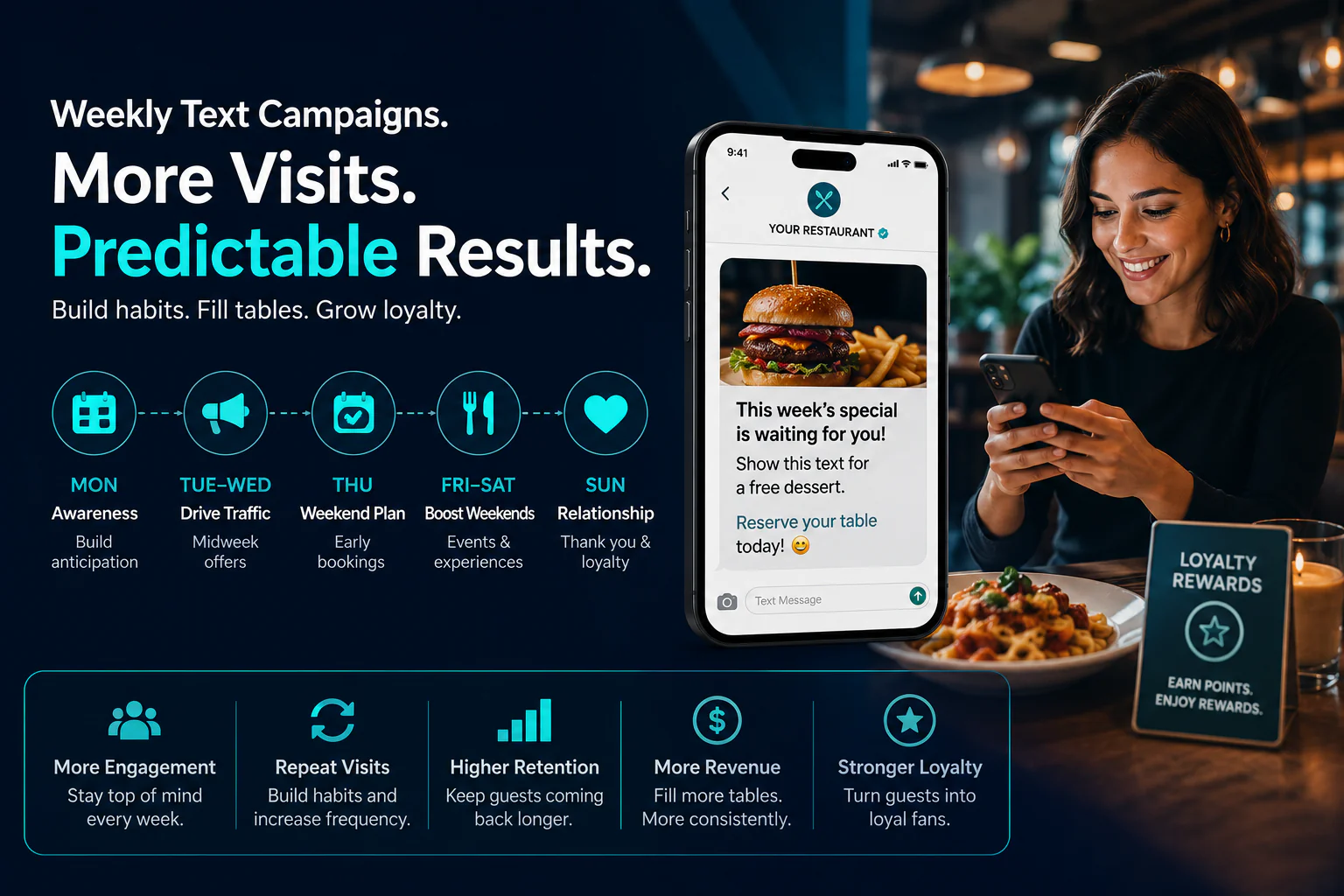
Building a Weekly Restaurant SMS Framework
The most successful restaurant SMS strategies follow a repeatable structure.
Monday: Awareness Campaign
Start the week by generating awareness.
Example objectives:
- Promote upcoming events
- Introduce weekly specials
- Highlight featured menu items
- Build anticipation
Example message:
"New week, new specials! Join us this Wednesday for our chef's featured menu."
This establishes visibility early.
Tuesday and Wednesday: Traffic Generation
Midweek often represents a slower period for many restaurants.
SMS campaigns can help fill attendance gaps.
Examples include:
- Lunch promotions
- Family meal offers
- Happy hour reminders
- Loyalty member rewards
The goal is to influence customer decisions before they make alternative plans.
Thursday: Weekend Planning Campaign
Many consumers begin planning weekend activities on Thursday.
This makes it an ideal communication window.
Campaign objectives:
- Promote reservations
- Highlight events
- Encourage early bookings
- Build anticipation
Restaurants that communicate before the weekend often outperform those waiting until Friday.
Friday and Saturday: Experience Enhancement
Weekend messaging should focus on excitement rather than discounts.
Examples include:
- Live music announcements
- Event reminders
- VIP experiences
- Limited-time menu items
This helps maximize attendance during peak periods.
Sunday: Relationship Building
Sunday campaigns often perform well when focused on loyalty and appreciation.
Examples:
- Thank-you messages
- Loyalty point updates
- Upcoming event previews
- Community engagement
Retention grows when customers feel valued.
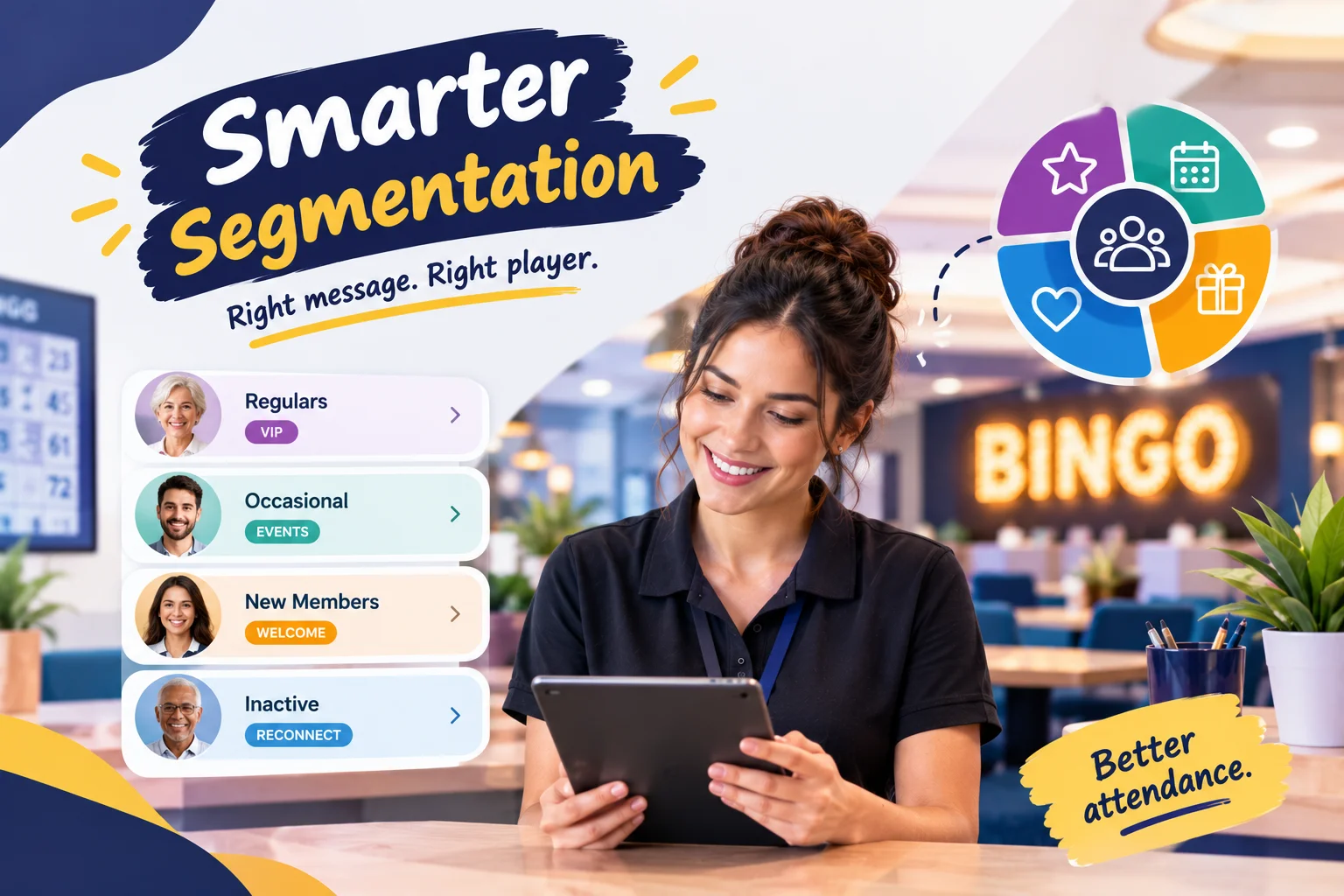
Segmenting Your Guest Database
Not every customer should receive identical messages.
Modern restaurant loyalty software allows operators to segment guests based on behavior.
Examples include:
New Customers
Recently visited guests who need encouragement to return.
Frequent Guests
Highly engaged customers who deserve recognition.
VIP Customers
Top spenders and loyal supporters.
Lapsed Guests
Customers who have not visited recently.
Event Attendees
Guests who frequently participate in restaurant events.
Segmentation dramatically improves campaign relevance.
The Importance of Visit Frequency Tracking
Many restaurant operators focus heavily on sales metrics.
However, visit frequency often predicts future revenue more accurately.
Restaurants should monitor:
- Visits per month
- Time between visits
- Loyalty participation
- Customer engagement trends
Weekly SMS campaigns help increase visit frequency by maintaining consistent communication.
Win-Back Campaigns: Recovering Lost Guests
Every restaurant has customers who stop visiting.
Most operators never attempt to recover them.
This represents a major missed opportunity.
Automated win-back campaigns can target guests who have not visited within:
- 30 days
- 60 days
- 90 days
Example:
"We miss seeing you! Stop by this week and enjoy a special loyalty reward."
Even modest recovery rates can significantly impact revenue.
Loyalty Programs and SMS Marketing Work Best Together
SMS marketing becomes even more effective when integrated with a restaurant loyalty program.
Together they create:
- Better personalization
- Improved retention
- Higher engagement
- More accurate segmentation
Customers receive messages based on actual behavior rather than generic promotions.
This creates a stronger relationship between the restaurant and the guest.
Common Restaurant SMS Marketing Mistakes
Many restaurants damage engagement by:
Sending Too Many Messages
Overcommunication leads to opt-outs.
Only Promoting Discounts
Constant discounts weaken brand value.
Ignoring Segmentation
Generic campaigns reduce relevance.
Failing to Track Results
Without analytics, improvement becomes difficult.
Inconsistent Scheduling
Random communication weakens retention.
Successful SMS marketing depends on consistency and relevance.
Key Metrics Restaurants Should Monitor
Effective restaurant SMS campaigns should track:
- Open rates
- Click rates
- Redemption rates
- Visit frequency
- Loyalty participation
- Repeat visit percentage
- Guest retention rate
- Campaign ROI
These metrics provide visibility into customer behavior and campaign performance.
Why Automation Changes Everything
Manual marketing often fails because restaurant operators are busy.
Automation solves this problem.
Restaurant marketing automation allows operators to schedule:
- Weekly campaigns
- Loyalty messages
- Birthday offers
- Win-back sequences
- Event reminders
- VIP communications
This ensures customers receive consistent communication without increasing staff workload.
What Modern Restaurant Loyalty and SMS Platforms Provide
Purpose-built restaurant loyalty and SMS platforms combine:
- Customer databases
- Loyalty programs
- SMS automation
- Guest segmentation
- Visit frequency tracking
- Retention reporting
- Automated workflows
- Campaign management
Instead of using multiple disconnected tools, operators can manage guest engagement from one centralized platform.
The Future of Restaurant Marketing Is Retention
The restaurant industry is becoming increasingly competitive.
Winning new customers will always matter.
However, sustainable growth comes from increasing the lifetime value of existing guests.
Restaurants that focus on:
- Customer retention
- Visit frequency
- Loyalty engagement
- Automated communication
Will outperform restaurants that depend entirely on constant customer acquisition.
Final Thoughts
Restaurant SMS marketing is not simply another promotional channel.
When implemented correctly, it becomes a structured guest retention system that creates predictable attendance patterns and stronger customer relationships.
Weekly text campaigns help restaurants stay visible, reinforce dining habits, increase visit frequency, and maintain ongoing engagement throughout the customer lifecycle.
Combined with restaurant loyalty software, segmentation, automation, and behavioral tracking, SMS marketing transforms occasional diners into regular guests—creating the predictable guest list that every restaurant operator wants and every successful restaurant depends on.