In entertainment venues—bingo halls, arcades, gaming centers, and attractions—success depends on one key factor: repeat attendance.
Unlike retail businesses that rely on frequent purchases, entertainment venues rely on customers returning regularly. But maintaining that consistency is challenging. Customers get busy, forget schedules, or simply fall out of habit.
That’s why SMS marketing has become one of the most powerful tools for modern entertainment operators.
When combined with entertainment venue loyalty software, automated SMS campaigns allow venues to reach customers at the right time, with the right message, and drive consistent return visits.
Why SMS Marketing Works for Entertainment Venues
SMS marketing stands out because of its immediacy and visibility.
- SMS open rates exceed 90%, often within minutes
- Messages are direct and personal
- No reliance on apps or algorithms
- Perfect for time-sensitive reminders
For entertainment venues, this is critical.
Customers don’t need constant communication—they need timely nudges.
SMS provides exactly that.
The Core Problem: Attendance Gaps
Entertainment venues face a common issue:
👉 Long gaps between visits
Customers may attend:
- Once a week
- Once a month
- Occasionally
Without consistent reminders, these gaps increase.
Over time:
- Habits break
- Engagement drops
- Players become inactive
SMS marketing directly addresses this problem by closing the gap between visits.
From Manual Messaging to Automated Campaigns
Many venues still rely on manual marketing:
- Posting on social media
- Sending occasional emails
- Announcing events at the last minute
This approach is inconsistent and reactive.
Automated SMS campaigns change the model completely.
Instead of sending messages manually, systems trigger messages based on:
- Visit behavior
- Attendance patterns
- Loyalty status
- Time-based triggers
This creates a predictable and scalable marketing system.
What Is Automated SMS Marketing?
Automated SMS marketing uses software to send messages based on predefined rules and customer behavior.
Examples include:
- Welcome messages
- Session reminders
- Missed visit alerts
- Loyalty rewards notifications
- Win-back campaigns
With entertainment marketing software, these campaigns run continuously without manual effort.
The Role of Loyalty Software in SMS Marketing
SMS marketing becomes significantly more powerful when integrated with loyalty systems.
Why?
Because loyalty software provides:
- Visit frequency tracking
- Customer segmentation
- Attendance data
- Engagement insights
This allows SMS campaigns to be:
- Personalized
- Timely
- Relevant
Instead of generic messages, operators can send behavior-driven communication.
High-Performing SMS Campaign Types for Entertainment Venues
1. Session Reminder Campaigns
Purpose:
👉 Increase attendance for scheduled sessions
Example:
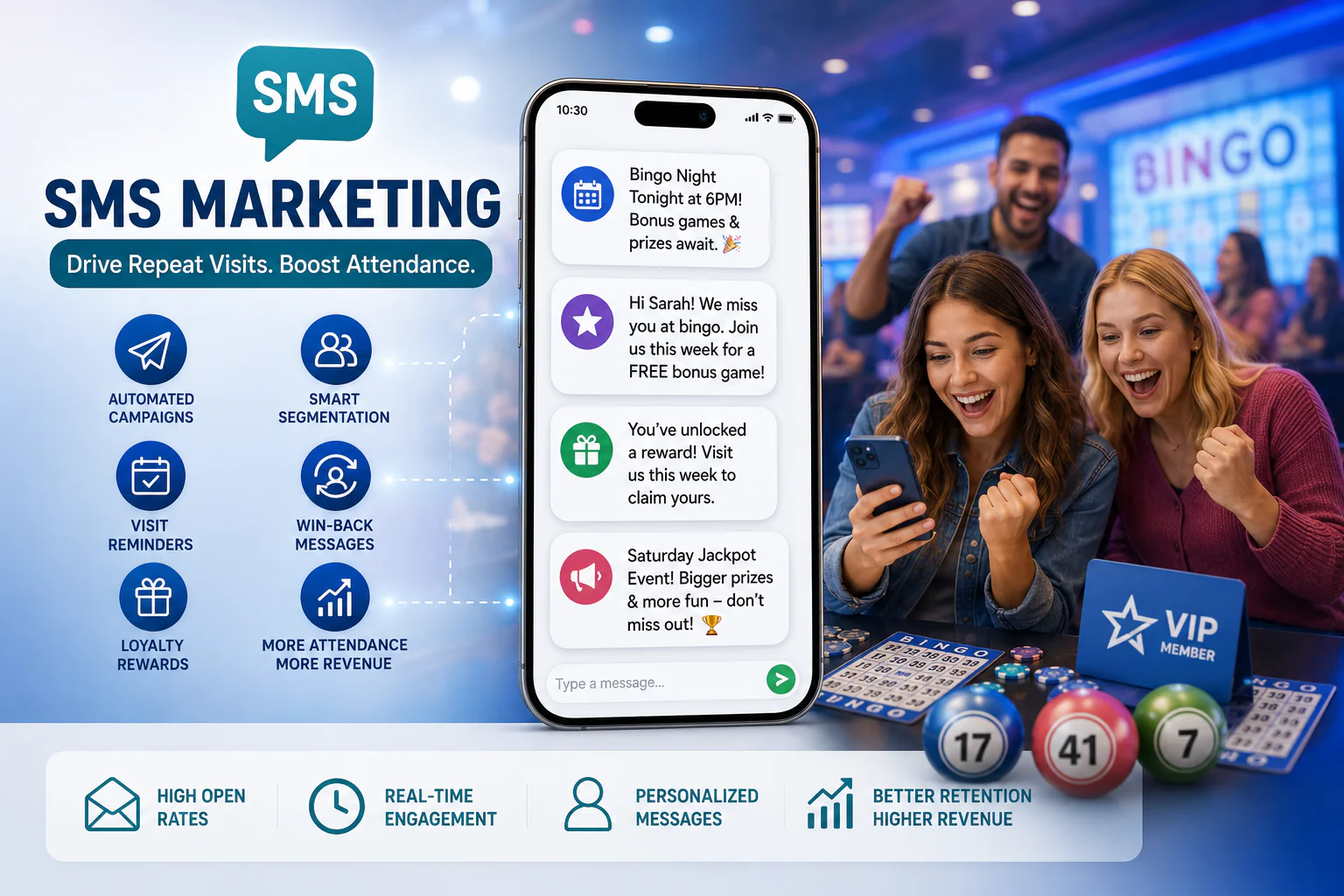
"Join us tonight at 6 PM for Bingo Night! Bonus games and special prizes are waiting."
These messages reduce no-shows and increase turnout.
2. Same-Day Attendance Boost Messages
Purpose:
👉 Fill seats quickly
Example:
"Seats available tonight! Come in before 7 PM and get a bonus entry."
This creates urgency and immediate action.
3. Lapsed Player Win-Back Campaigns
Purpose:
👉 Re-engage inactive customers
Example:
"We haven’t seen you in a while! Join us this week for a free bonus game."
These campaigns are highly effective at restoring attendance.
4. Loyalty Reward Notifications
Purpose:
👉 Reinforce engagement
Example:
"You’ve unlocked a reward! Visit us this week to claim your bonus."
This strengthens loyalty behavior.
5. Visit Frequency Campaigns
Purpose:
👉 Encourage habit formation
Example:
"Visit 3 times this week and earn a special reward!"
This aligns with visit-based loyalty strategies.
6. Event Promotion Campaigns
Purpose:
👉 Drive attendance for special events
Example:
"Saturday Night Jackpot Event! Bigger prizes and more games—don’t miss out."
Events create spikes in attendance.
7. Birthday and Personalized Campaigns
Purpose:
👉 Build emotional connection
Example:
"Happy Birthday! Celebrate with us and enjoy a special reward."
Personalization improves engagement.
Why Automation Is Critical
Manual SMS marketing is not scalable.
Automation ensures:
- Messages are sent at the right time
- Campaigns run consistently
- No customer segment is missed
- Data drives decisions
This transforms marketing from reactive to proactive.
The Link Between SMS and Visit Frequency
The ultimate goal of SMS marketing is not just communication—it’s behavior change.
SMS campaigns:
- Remind customers to attend
- Encourage repeat visits
- Reinforce habits
- Reduce inactivity
Even small increases in visit frequency can significantly impact revenue.
For example:
- Moving a customer from 1 visit/month → 2 visits/month doubles engagement
- Increasing weekly attendance improves lifetime value
This is why SMS marketing is central to attendance marketing strategies.
Personalization: The Key to High Engagement
Generic messages don’t perform well.
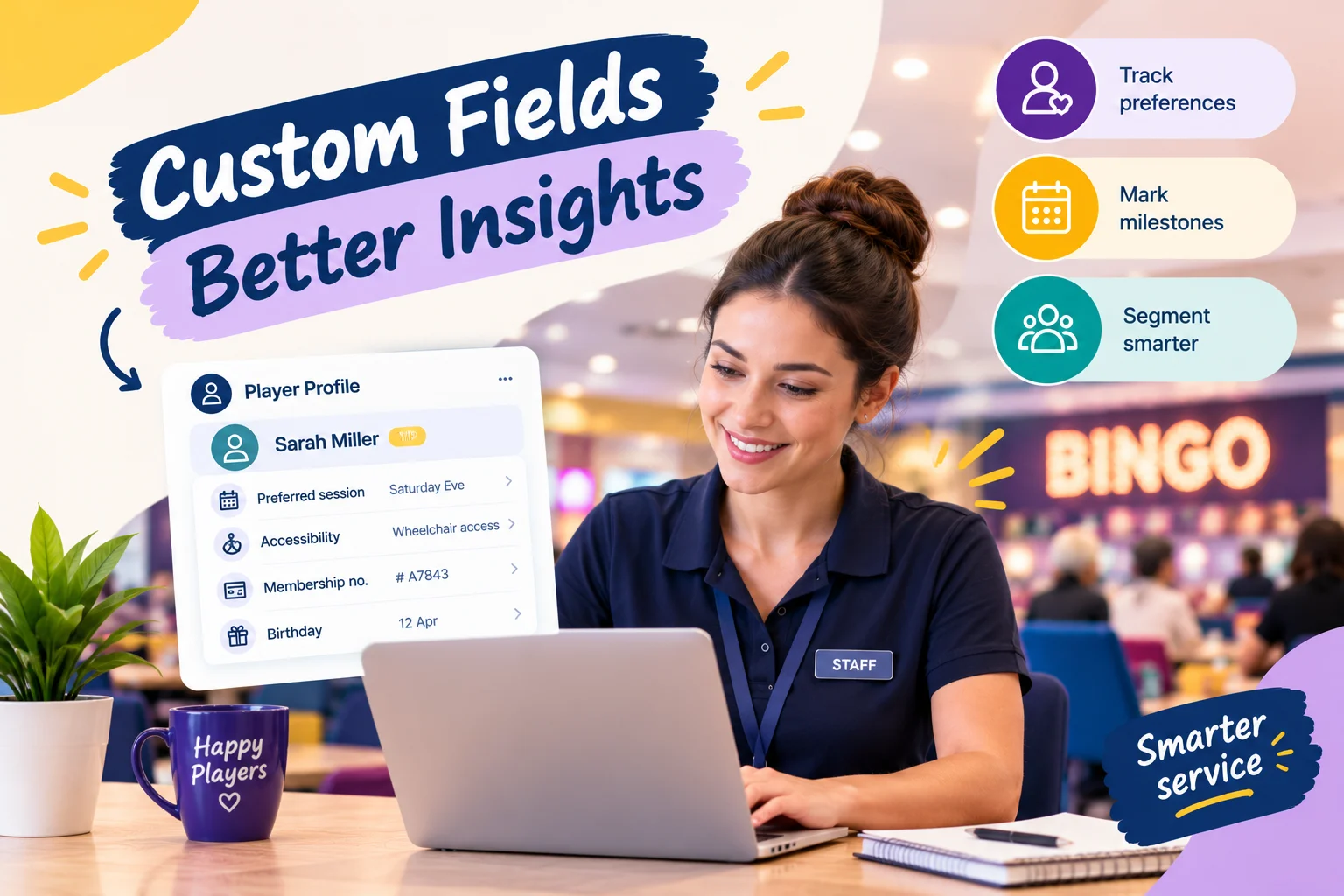
Effective SMS campaigns use:
- Player name
- Visit history
- Preferred days
- Loyalty status
Example:
"Hi Sarah, we miss you! Join us this Friday for your favorite bingo session."
Personalization increases response rates significantly.
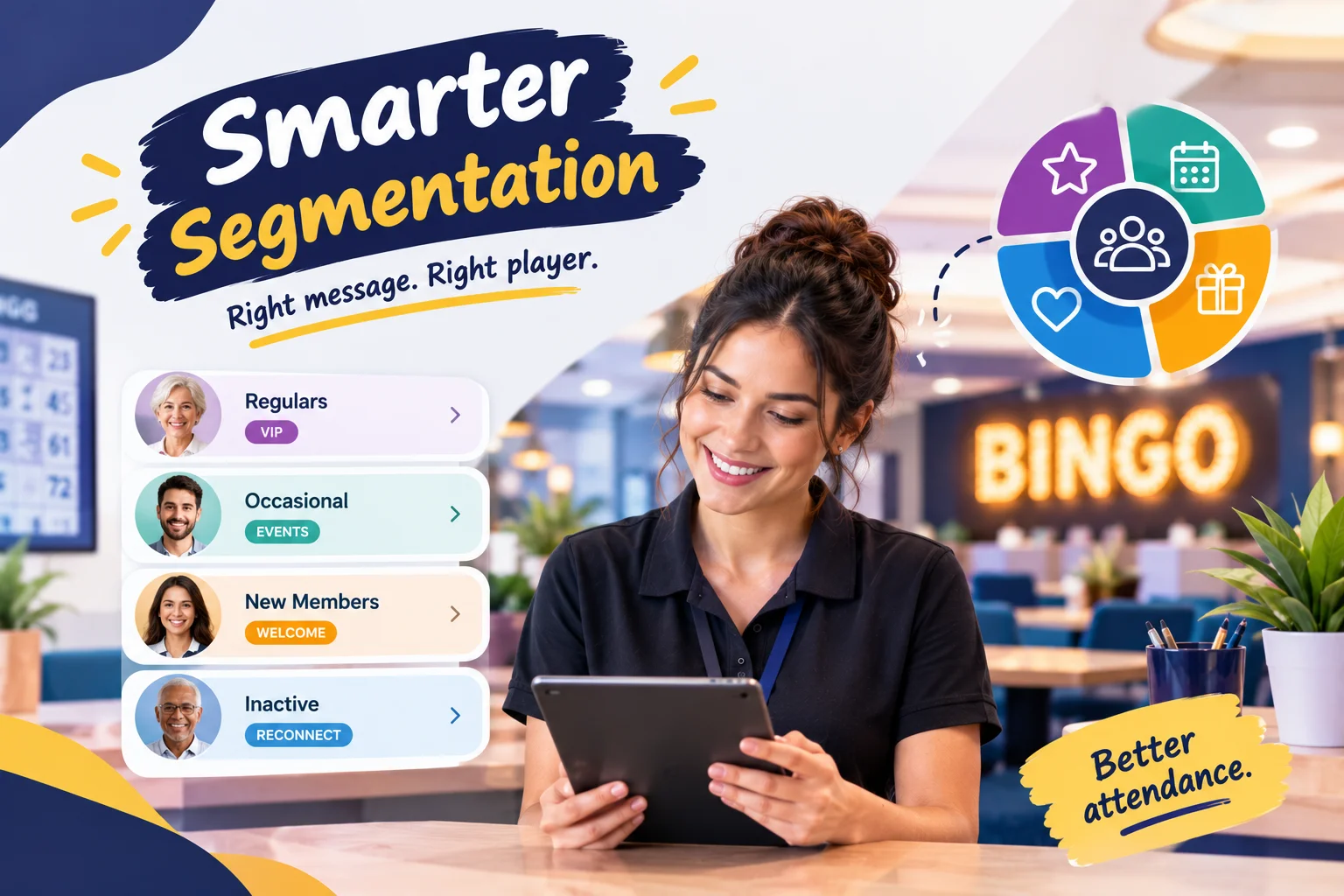
Segmentation: Sending the Right Message to the Right Audience
Not all customers should receive the same message.
Segmentation allows operators to target:
- Active players
- Lapsed players
- VIP customers
- New visitors
- Frequent attendees
This improves campaign effectiveness.
Timing: When SMS Campaigns Work Best
Timing is critical.
High-performing schedules include:
- Morning reminders for evening sessions
- Same-day afternoon alerts
- Day-before event promotions
- Weekly schedule announcements
Poor timing reduces impact.
Multi-Location SMS Marketing
For operators managing multiple venues, SMS marketing becomes more complex.
Challenges include:
- Different schedules
- Different audiences
- Location-specific promotions
Multi-location loyalty software solves this by:
- Segmenting customers by location
- Sending targeted messages
- Managing campaigns centrally
This ensures consistency and scalability.
Measuring SMS Campaign Performance
To optimize campaigns, track:
- Delivery rate
- Open rate
- Click-through rate
- Attendance response
- Repeat visits
- Conversion rate
These metrics help refine strategy.
Common Mistakes to Avoid
Operators often make these mistakes:
- Sending too many messages
- Using generic messaging
- Ignoring segmentation
- Not tracking results
- Failing to automate campaigns
Avoiding these improves performance.
How SMS Marketing Increases Revenue
SMS marketing impacts revenue by:
- Increasing attendance
- Improving retention
- Reducing lapsed players
- Driving event participation
- Supporting loyalty programs
The result is a more consistent and predictable income.
What to Look for in SMS Marketing Software
When choosing a solution, prioritize:
- Automation capabilities
- Loyalty integration
- Segmentation tools
- Multi-location support
- Real-time analytics
- Easy campaign setup
These features ensure effectiveness.
When SMS Marketing Becomes Essential
If your venue experiences:
- Inconsistent attendance
- High churn
- Low repeat visits
- Weak engagement
Then SMS marketing is not optional—it’s essential.
Final Thoughts
Entertainment venues don’t grow through one-time visits—they grow through repeat attendance.
SMS marketing provides a direct, effective, and scalable way to drive that behavior.
When combined with entertainment venue loyalty software, automated SMS campaigns become a powerful engine for retention, engagement, and revenue growth.
By delivering the right message at the right time, operators can turn occasional visitors into regulars—and build a sustainable, high-performing venue.