One of the biggest challenges facing bingo halls today is not attracting players to a single session.
It is getting them to come back consistently.
Many operators invest heavily in promotions, jackpots, events, and advertising to drive attendance. While these efforts may successfully fill seats for a particular night, they often fail to create ongoing engagement once players leave the venue.
The reality is simple:
Player engagement does not end when a session ends.
In fact, the period between visits is often where retention is won or lost.
If players forget about your hall between sessions, attendance frequency declines. Loyalty participation weakens. Customer retention suffers.
This is where gamification has emerged as one of the most powerful tools available to modern bingo operators.
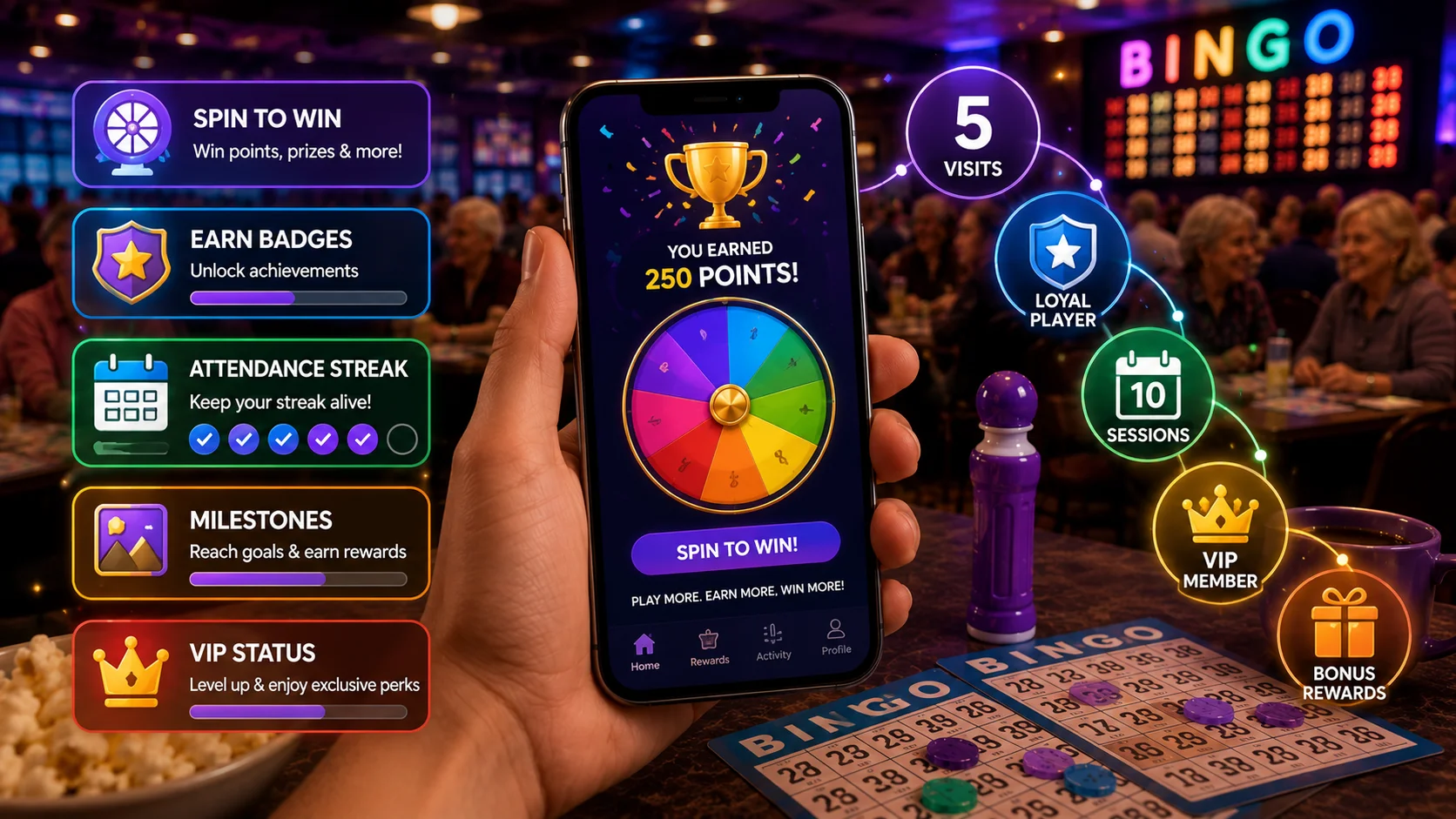
By incorporating interactive experiences such as spin-to-win rewards, achievement badges, attendance milestones, streak challenges, and loyalty progression systems, bingo halls can keep players engaged long after the final game has been called.
The result is stronger loyalty, higher attendance frequency, increased retention, and a more connected player community.
What Is Gamification in a Bingo Loyalty Program?
Gamification is the process of applying game-like mechanics to customer engagement activities.
Rather than simply offering rewards, gamification creates experiences that encourage participation, competition, achievement, and progression.
Examples include:
- Spin-to-win reward wheels
- Attendance badges
- Loyalty milestones
- Visit streaks
- VIP status levels
- Challenge-based rewards
- Achievement unlocks
- Bonus point campaigns
These features transform passive loyalty programs into interactive experiences.
Instead of merely collecting rewards, players actively participate in their loyalty journey.
Why Traditional Loyalty Programs Often Lose Momentum
Many bingo halls offer some type of loyalty program.
Common examples include:
- Attendance punch cards
- Basic point systems
- Discount programs
- Reward redemption offers
While these programs provide value, they often struggle to maintain excitement over time.
The reason is that traditional loyalty programs are transactional.
Players attend.
They earn points.
They redeem rewards.
The cycle is predictable.
Gamification introduces anticipation, excitement, and achievement.
It gives players reasons to stay engaged even when they are not physically attending a session.
The Psychology Behind Gamification
Gamification works because it aligns with fundamental human motivations.
People enjoy:
- Earning rewards
- Completing challenges
- Unlocking achievements
- Tracking progress
- Receiving recognition
- Reaching milestones
These psychological drivers encourage repeated engagement.
Rather than relying solely on financial incentives, gamification creates emotional investment.
That emotional connection is often what drives long-term loyalty.
Spin-to-Win Promotions: Creating Excitement Between Visits
Among the most popular gamification features is the spin-to-win reward wheel.
The concept is simple.
Players earn opportunities to spin a digital wheel and win prizes.
Possible rewards may include:
- Loyalty points
- Free game entries
- Merchandise
- Concession discounts
- VIP access
- Attendance bonuses
- Exclusive promotions
What makes spin-to-win so effective is uncertainty.
Players do not know what reward they will receive.
That anticipation creates excitement and encourages participation.
When to Use Spin-to-Win Campaigns
Spin-to-win promotions work particularly well for:
- New player onboarding
- Loyalty program enrollment
- Event registration
- Attendance milestones
- Reactivation campaigns
- Holiday promotions
Because the experience feels interactive, participation rates are often significantly higher than traditional promotions.
Achievement Badges: Turning Attendance Into Accomplishment
Badges provide recognition for specific behaviors.
Players earn badges when they complete predefined achievements.
Examples include:
- First Visit Badge
- Five Visit Badge
- Monthly Attendance Badge
- Fundraising Supporter Badge
- VIP Member Badge
- Loyalty Champion Badge
Badges may seem simple, but they provide something many rewards programs overlook:
Recognition.
People enjoy being acknowledged for their participation.
Badges create visible accomplishments that encourage continued engagement.
Attendance Milestones Encourage Repeat Visits
Attendance milestones are one of the most effective retention tools available.
Instead of rewarding spending, they reward attendance behavior.
Examples include:
- Attend 5 sessions
- Attend 10 sessions
- Attend 25 sessions
- Attend every week for one month
- Attend multiple fundraising events
Each milestone unlocks rewards, recognition, or exclusive benefits.
This encourages players to focus on attendance consistency rather than isolated visits.
For bingo halls, this directly supports one of the most important business objectives:
Increasing visit frequency.
Why Visit Frequency Matters More Than Transactions
Many operators focus heavily on spending.
However, attendance frequency is often a stronger indicator of long-term player value.
A player who attends regularly:
- Participates more often
- Engages with promotions
- Joins loyalty programs
- Brings friends and family
- Supports fundraising initiatives
Gamification helps build attendance habits that naturally increase overall customer value over time.
Streak Challenges: Building Player Habits
Another highly effective gamification strategy is streak rewards.
A streak challenge rewards players for maintaining consistent attendance.
Examples include:
- Attend three consecutive weeks
- Attend every Friday this month
- Participate in four fundraising nights in a row
The longer the streak, the greater the reward.
Streaks work because people dislike losing progress.
Once players begin building a streak, they become more motivated to continue participating.
This creates stronger attendance habits and increases retention.
Loyalty Levels and VIP Progression
Status-based loyalty systems add another layer of engagement.
Players can advance through tiers such as:
- Bronze
- Silver
- Gold
- Platinum
- VIP
Each level unlocks additional rewards and privileges.
Examples may include:
- Bonus points
- Priority event registration
- Exclusive promotions
- Special recognition
- Enhanced rewards
Progression systems create long-term goals that encourage sustained participation.
How SMS Marketing Supports Gamification
Gamification becomes even more powerful when integrated with SMS marketing.
Text messages keep players informed about:
- New challenges
- Badge achievements
- Milestone progress
- Spin-to-win opportunities
- Loyalty rewards
- Upcoming events
Examples include:
"You are one visit away from unlocking your Gold Attendance Badge."
"Your spin-to-win reward is waiting."
"You have completed three consecutive visits. Keep your streak alive this week."
These messages maintain engagement between sessions.
Reactivating Lapsed Players Through Gamification
Every bingo hall has players who stop attending.
Traditional win-back campaigns often rely solely on discounts.
Gamification offers a more engaging alternative.
Examples include:
- Bonus spins for returning players
- Reactivation badges
- Streak recovery opportunities
- Limited-time achievement challenges
These campaigns create excitement while encouraging players to reconnect with the hall.
Measuring Gamification Success
Modern gamification software provides detailed reporting on engagement activity.
Key metrics include:
- Visit frequency
- Attendance growth
- Loyalty participation
- Badge completion rates
- Reward redemption rates
- Streak participation
- Reactivation rates
- Player retention
Tracking these metrics helps operators understand which campaigns are producing results.
Common Gamification Mistakes
Some bingo halls struggle because they:
- Make challenges too complicated
- Offer rewards that lack value
- Fail to communicate progress
- Ignore attendance data
- Overlook automation
The most effective gamification programs are simple, engaging, and consistently promoted.
Why Gamification Is Becoming Essential for Bingo Halls
Player expectations are evolving.
Consumers increasingly expect interactive experiences.
Static loyalty programs often fail to capture attention.
Gamification provides ongoing reasons for players to engage with your hall between visits.
Instead of relying solely on jackpots and promotions, operators create year-round engagement opportunities that strengthen player relationships.
This results in:
- Higher attendance frequency
- Improved customer retention
- Greater loyalty participation
- Stronger player engagement
- More predictable attendance
Final Thoughts
Keeping players engaged between sessions is one of the biggest challenges in bingo hall marketing.
Gamification provides a proven solution.
Features such as spin-to-win promotions, attendance badges, achievement milestones, streak rewards, loyalty tiers, and interactive challenges transform loyalty programs into engagement platforms.
Rather than waiting for players to decide when to return, operators actively encourage ongoing participation through fun, rewarding experiences.
When combined with CRM data, attendance marketing, loyalty automation, and SMS communication, gamification becomes one of the most effective tools available for increasing attendance, improving retention, and building lasting player loyalty.