For years, email marketing has been one of the most widely used communication tools for local businesses.
Restaurants send newsletters.
Bingo halls promote upcoming sessions.
Entertainment venues announce special events.
Nonprofits share fundraising campaigns.
And while email remains a valuable marketing channel, many venue operators are discovering a growing challenge:
Customers are not paying attention.
Inbox competition has never been higher.
Consumers receive dozens, sometimes hundreds, of emails every day.
As a result, even well-designed email campaigns often struggle to generate meaningful engagement.
This is where SMS marketing changes the equation.
Text messaging has become one of the most effective communication channels available to physical venues because it delivers something every marketer wants:
Visibility.
If your goal is increasing attendance, driving repeat visits, promoting events, or improving customer retention, visibility matters more than almost anything else.
A message that gets ignored cannot drive action.
A message that gets seen can.
Why Local Venue Marketing Depends on Attention
Every venue operator faces the same challenge.
Whether you manage:
- A bingo hall
- A restaurant
- An arcade
- A family entertainment center
- A fundraising organization
- A nonprofit event venue
You are competing for customer attention.
People are constantly distracted by:
- Social media
- Streaming services
- Work obligations
- Family responsibilities
- Competing entertainment options
The challenge is not simply sending marketing messages.
The challenge is getting those messages noticed.
This is why communication channel selection matters.
The Problem With Modern Email Marketing
Email remains useful.
However, several factors limit its effectiveness for attendance-driven businesses.
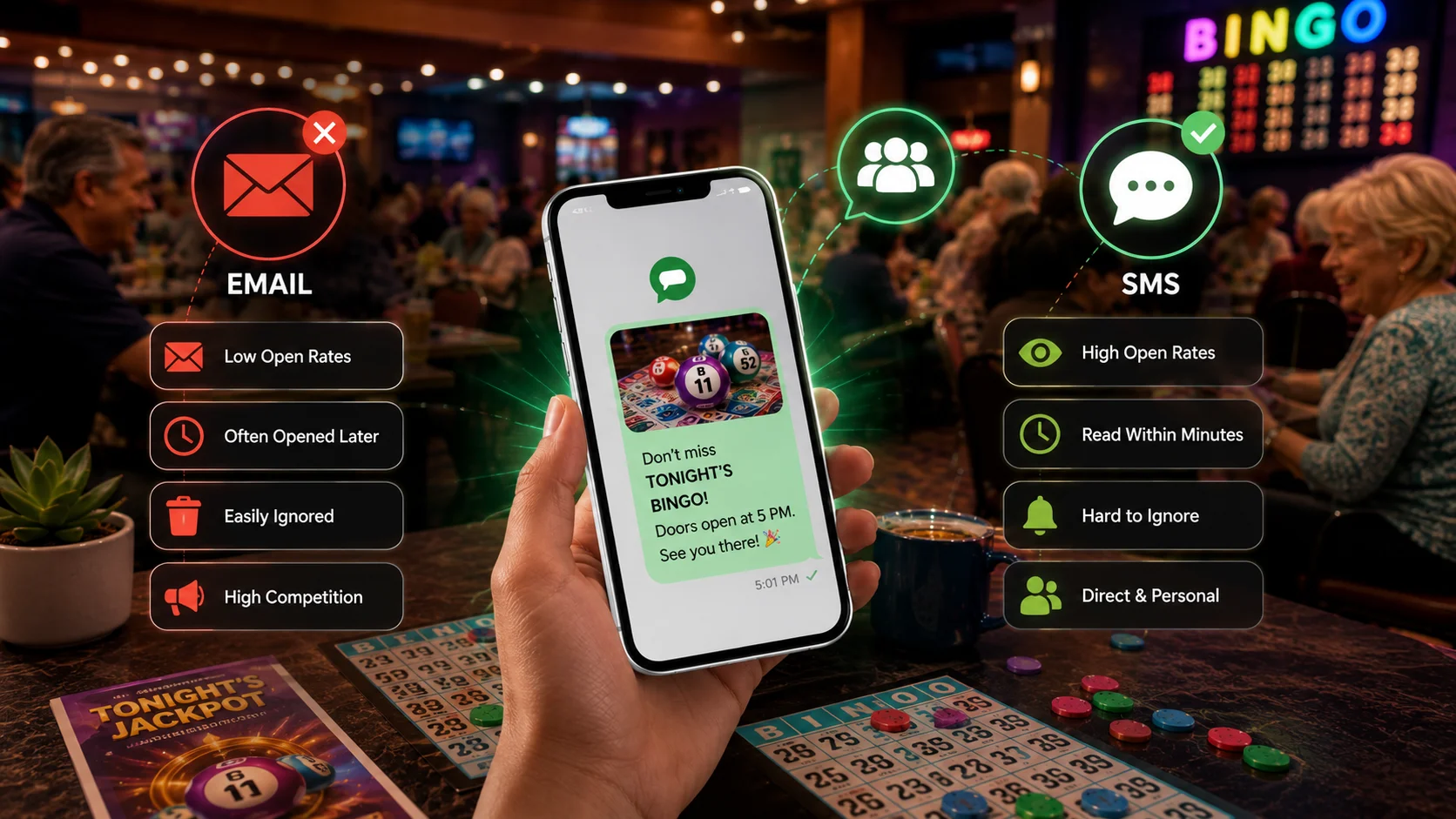
Inbox Overload
Most consumers receive large volumes of email every day.
Marketing messages often get buried beneath:
- Work emails
- Promotions
- Receipts
- Notifications
- Newsletters
Even customers who want to hear from your organization may never see your message.
Delayed Engagement
Many people check email only periodically.
A time-sensitive promotion may be missed entirely.
Reduced Visibility
Even opened emails often compete with numerous other messages for attention.
As inboxes become increasingly crowded, visibility becomes less predictable.
For local venues that depend on timely attendance decisions, this creates significant challenges.
Why SMS Marketing Performs Differently
Text messaging operates in a completely different environment.
Unlike email, SMS messages arrive directly on a customer's mobile device.
They typically appear immediately and demand attention.
Several characteristics make SMS particularly effective.
Direct Delivery
Messages reach customers without competing inside crowded inboxes.
Mobile Accessibility
Customers carry their phones almost everywhere.
Immediate Visibility
Texts are often viewed shortly after delivery.
Simplicity
SMS messages communicate quickly and clearly.
For attendance marketing, these advantages are significant.
Why Visibility Matters More Than Message Length
One common misconception is that marketing success depends primarily on message content.
Content certainly matters.
However, visibility comes first.
Consider two scenarios.
Scenario One
An excellent email promotion that nobody opens.
Scenario Two
A simple text message that every customer sees.
The second message will almost always generate better attendance outcomes.
A perfectly written message cannot influence behavior if it remains unread.
The Relationship Between SMS and Attendance Marketing
Attendance marketing focuses on influencing customer behavior.
The goal is not merely generating awareness.
The goal is increasing visits.
SMS marketing supports this objective exceptionally well because it reaches customers when attendance decisions are often being made.
Examples include:
- Tonight's bingo session
- Weekend entertainment plans
- Restaurant dining choices
- Fundraising event participation
- Family activity decisions
Timely communication influences these choices.
Delayed communication often misses the opportunity entirely.
Why SMS Is Ideal for Physical Venues
Physical venues operate differently than e-commerce businesses.
Success depends on customers physically showing up.
This creates unique marketing requirements.
Operators need communication tools that support:
- Event promotion
- Attendance reminders
- Loyalty engagement
- Last-minute attendance boosts
- Customer retention
- Visit frequency improvement
SMS marketing addresses each of these objectives effectively.
Building SMS Campaigns That Produce Measurable Results
The best SMS campaigns are not random.
They follow a structured strategy.
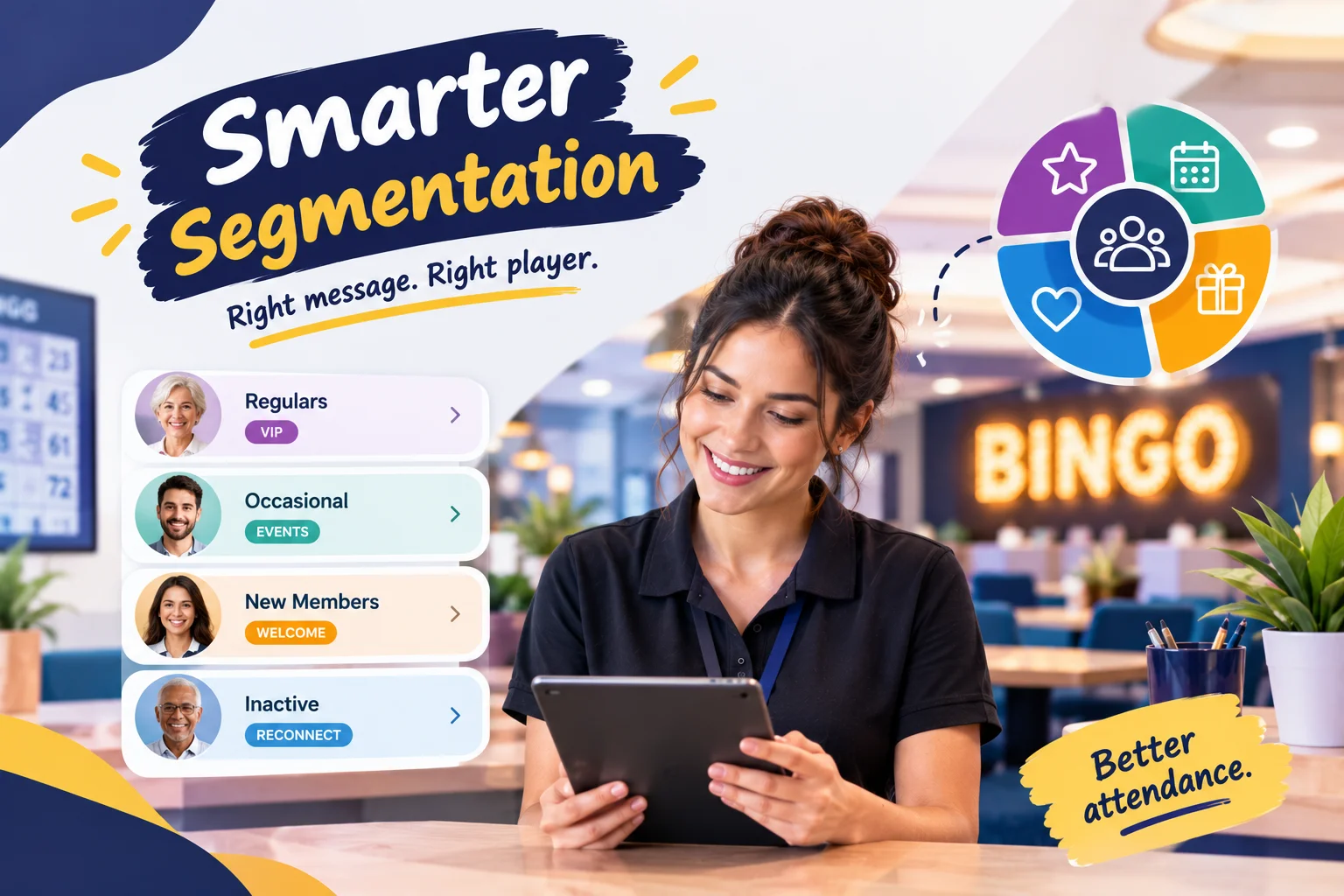
Start With Segmentation
Not every customer should receive identical messages.
Segment audiences based on:
- Attendance history
- Loyalty participation
- Visit frequency
- Event participation
- Membership status
Segmentation improves relevance and engagement.
Focus on Clear Calls to Action
Every message should encourage a specific action.
Examples include:
- Attend tonight's event
- Claim a loyalty reward
- Register for a fundraiser
- Visit this weekend
- Redeem a promotion
Clarity improves response rates.
Maintain Consistent Communication
Attendance marketing works best when communication is predictable.
Weekly campaigns often outperform sporadic messaging because customers develop familiarity with the brand.
SMS Campaign Types That Drive Attendance
Event Promotion Campaigns
Promote upcoming sessions, tournaments, fundraising events, or special activities.
Attendance Reminder Campaigns
Encourage participation shortly before events begin.
Loyalty Engagement Campaigns
Keep members informed about rewards, milestones, and benefits.
Reactivation Campaigns
Target customers who have stopped attending.
VIP Campaigns
Reward highly engaged customers with exclusive opportunities.
Together, these campaign types create a comprehensive engagement strategy.
Why Automation Improves Performance
Many organizations struggle with marketing consistency.
Staff becomes busy.
Campaigns get delayed.
Opportunities are missed.
Automation eliminates these challenges.
Modern SMS marketing software can automatically trigger communications based on customer behavior.
Examples include:
- Birthday messages
- Attendance milestones
- Loyalty achievements
- Membership anniversaries
- Inactivity periods
Automation ensures communication remains consistent without increasing workload.
Measuring Success Beyond Open Rates
Open rates are important.
But attendance-focused organizations should track broader outcomes.
Key metrics include:
Attendance Growth
Did visits increase?
Repeat Attendance
Are customers returning more frequently?
Loyalty Participation
Are members engaging with rewards?
Reactivation Rates
Are inactive customers returning?
Campaign ROI
Did communications generate measurable revenue?
These metrics provide a more complete picture of marketing effectiveness.
Why SMS and CRM Integration Matters
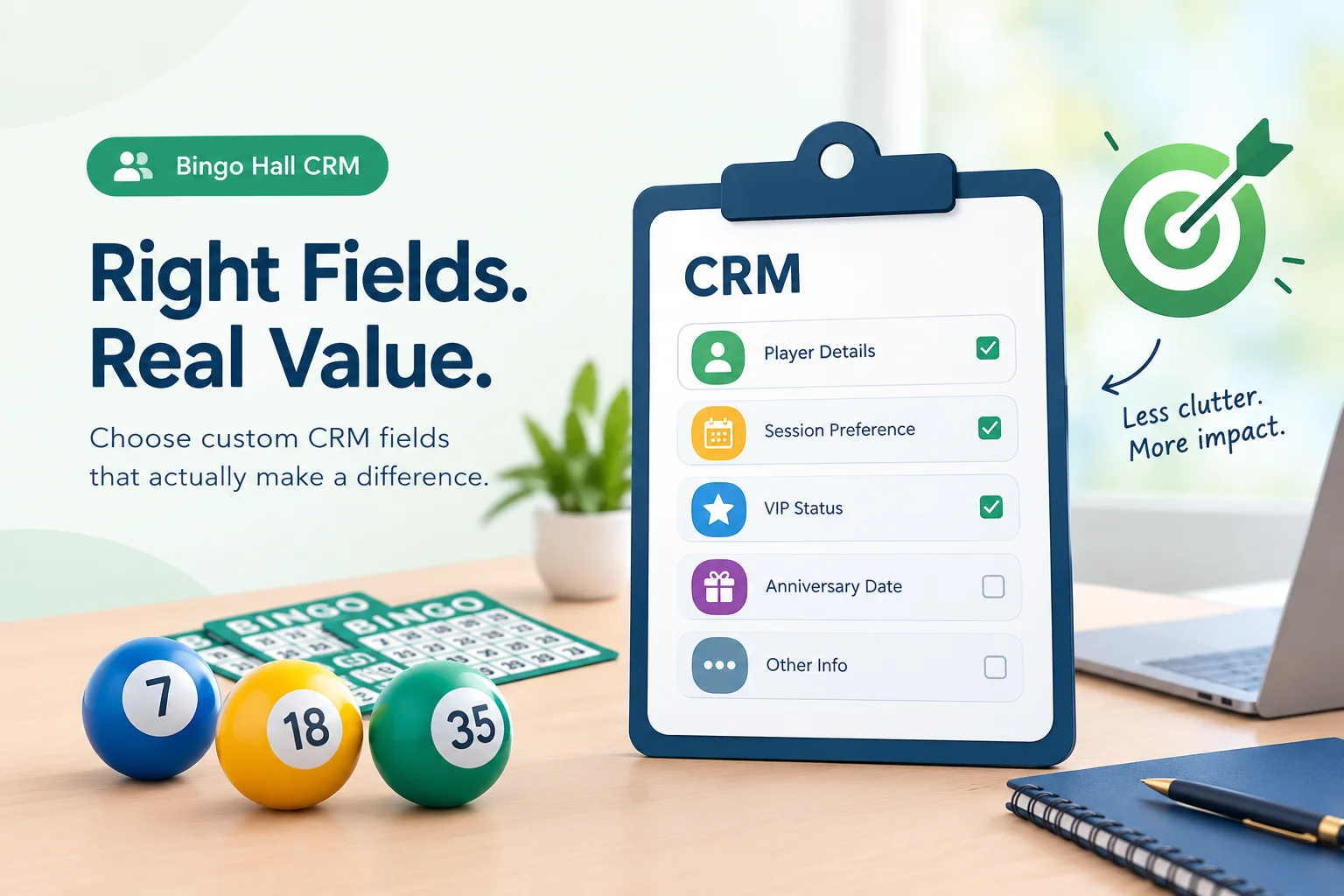
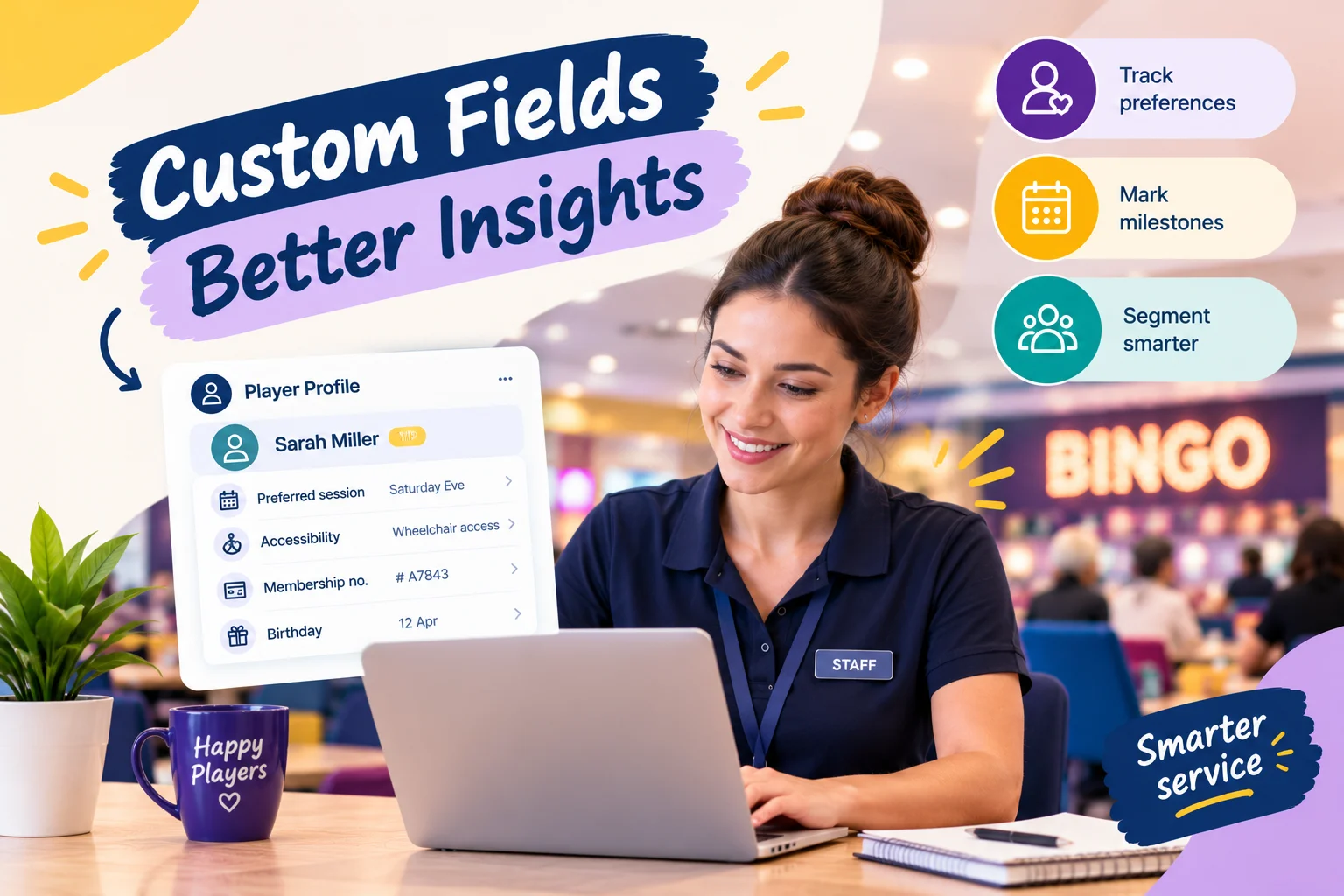
SMS marketing becomes significantly more powerful when connected to customer data.
A CRM-integrated platform provides visibility into:
- Attendance behavior
- Customer preferences
- Loyalty participation
- Visit frequency
- Campaign responses
This allows operators to send highly relevant communications instead of generic promotions.
Personalization improves engagement and retention.
Common Mistakes Local Venues Make
Many organizations fail to maximize SMS performance because they:
Send Generic Messages
Relevance matters.
Ignore Customer Segmentation
Different audiences require different communications.
Focus Only on Promotions
Relationship-building messages are equally important.
Fail to Track Results
Optimization requires measurement.
Communicate Inconsistently
Customer engagement weakens when communication becomes sporadic.
Avoiding these mistakes significantly improves campaign performance.
The Future of Local Venue Marketing
Marketing channels will continue evolving.
However, one principle will remain constant:
Visibility drives engagement.
Organizations that communicate effectively with customers will consistently outperform those that rely on passive marketing channels.
SMS marketing provides a direct, measurable, and highly visible communication pathway that aligns perfectly with the needs of attendance-driven businesses.
As competition for attention increases, direct communication channels will become even more valuable.
Final Thoughts
Email marketing still has a place in modern marketing strategies.
However, for local venues focused on attendance, engagement, loyalty participation, and repeat visits, SMS marketing offers a significant advantage.
The reason is simple.
Customers cannot act on messages they never see.
By combining SMS marketing with audience segmentation, CRM data, loyalty engagement, automation, and attendance-focused campaign strategies, venues can dramatically improve customer communication and generate measurable business outcomes.
For bingo halls, restaurants, entertainment centers, nonprofits, and other attendance-driven organizations, SMS marketing is not simply another communication channel.
It is one of the most effective tools available for turning visibility into attendance and engagement into long-term customer loyalty.