A bingo hall CRM is only as powerful as the player data it tracks. While many systems store basic contact information, the most effective bingo hall CRM software goes much further — capturing visit frequency, identifying lapsed players, and organizing loyalty tiers to improve attendance and retention.
For charity bingo halls and commercial operations alike, understanding player behavior is essential. Without structured player tracking, operators cannot identify regular attendees, re-engage inactive players, or reward loyal customers. This is why purpose-built bingo player management software includes specialized player data fields designed specifically for bingo hall operations.
Tracking the right data inside a bingo hall CRM transforms raw attendance into actionable insights. It allows operators to improve marketing, increase repeat visits, and maximize revenue per session.
Why Player Data Matters in a Bingo Hall CRM
Unlike traditional businesses, bingo halls depend heavily on repeat visits. Most revenue comes from returning players rather than one-time attendees. A well-designed CRM for bingo halls helps operators understand:
- How often players attend
- When players stop visiting
- Which players are most loyal
- Who responds to promotions
- Which sessions do players prefer
- Which players are at risk of leaving
Generic CRM systems do not track this behavior automatically. A dedicated bingo player tracking software platform includes specialized fields built around attendance and engagement.
These fields allow bingo halls to segment players, personalize outreach, and improve player retention.
Visit Frequency: The Most Important Player Metric
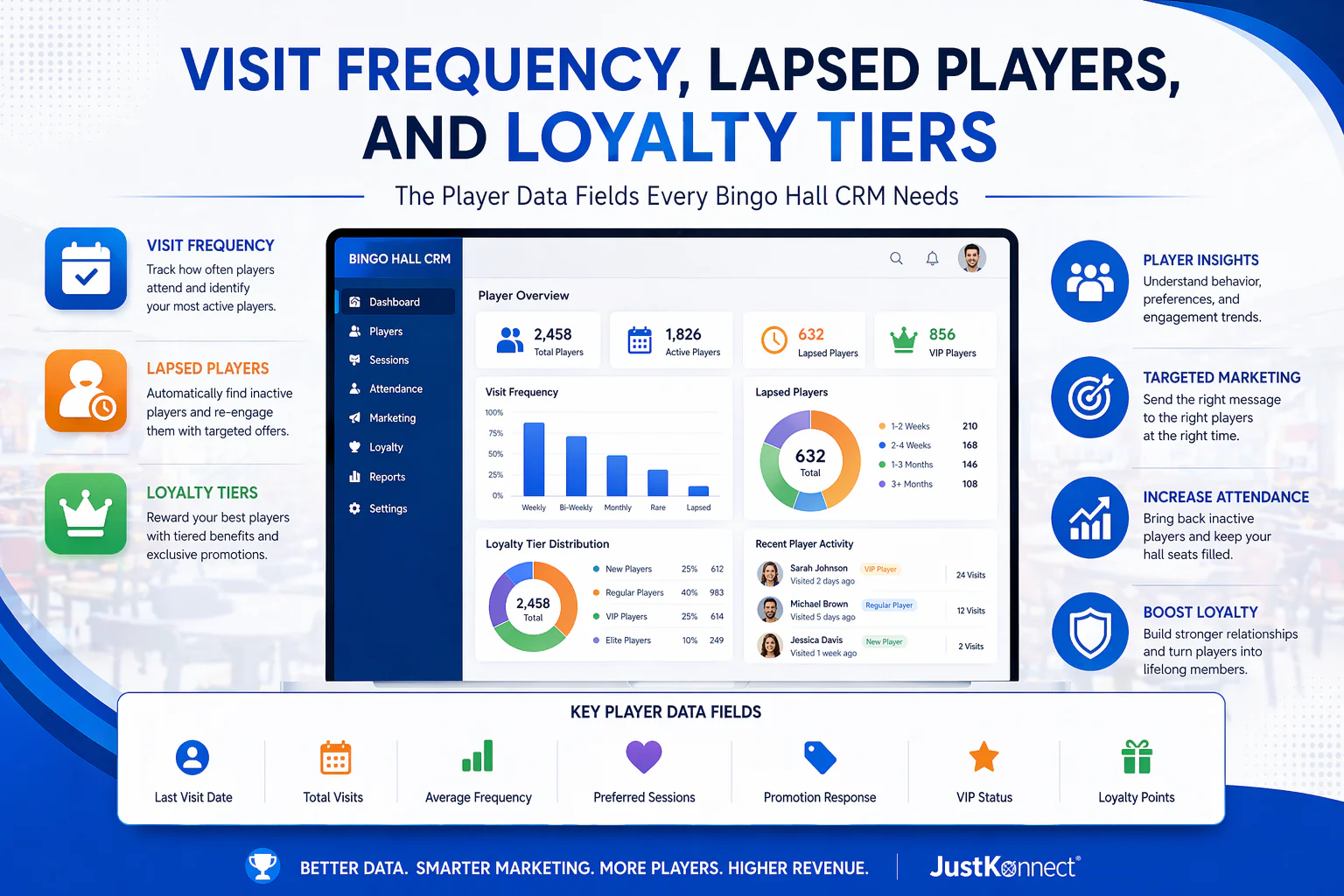
Visit frequency is one of the most critical data points in any bingo hall CRM. It measures how often players attend sessions within a specific time period.
Tracking visit frequency helps identify:
- Regular players
- Occasional players
- New players
- Declining attendance
- High-value players
A bingo hall CRM software platform should automatically track:
- Visits per week
- Visits per month
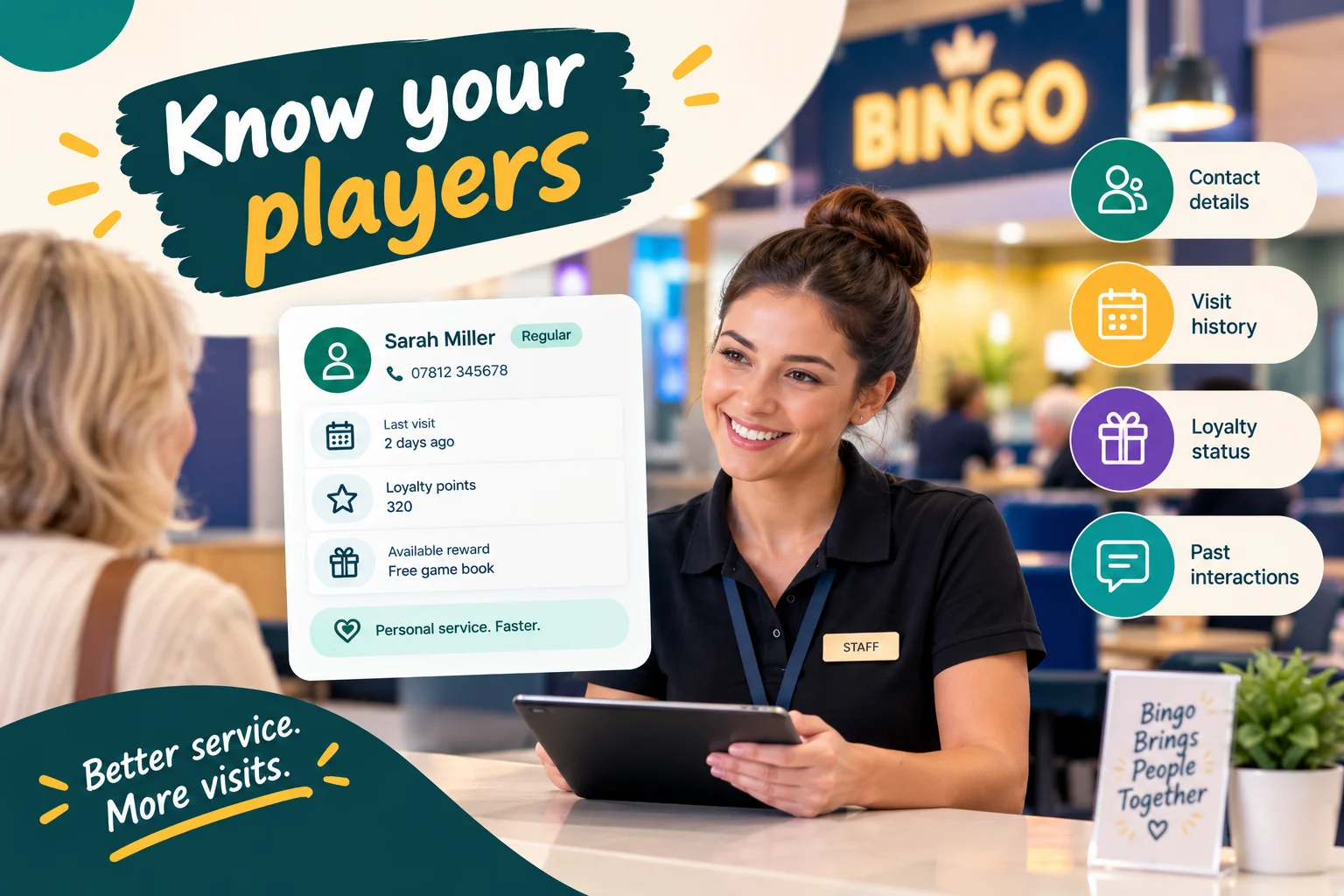
- Last visit date
- Average attendance frequency
- Preferred session days
- Lifetime visits
With this data, operators can segment players and tailor marketing campaigns.
For example:
- Weekly players receive VIP rewards
- Monthly players receive reminders
- First-time players receive welcome offers
- Declining players receive reactivation messages
Without visit frequency tracking, these opportunities are missed.
How Visit Frequency Improves Bingo Hall Player Retention
Visit frequency data helps bingo hall CRM systems trigger automated marketing. For example:
- Players who visit weekly receive loyalty incentives
- Players who skip two weeks receive reminder emails
- Players who drop below average attendance receive promotions
- High-frequency players receive VIP invitations
This type of automated segmentation improves retention significantly. Bingo hall loyalty program software often relies on visit frequency as the foundation for tiering and rewards.
Tracking attendance patterns also helps operators understand which sessions drive repeat visits.
Identifying Lapsed Players Automatically
Lapsed players are individuals who previously attended regularly but have stopped visiting. These players represent one of the biggest opportunities for attendance growth.
A bingo hall CRM should automatically identify:
- Players inactive for 2 weeks
- Players inactive for 30 days
- Players inactive for 60 days
- Former regular players who stopped attending
- VIP players who became inactive
Generic CRM systems cannot easily identify these patterns. Bingo player management software includes built-in logic to flag lapsed players automatically.
Once identified, operators can send targeted campaigns such as:
- “We miss you” promotions
- Free game offers
- Bonus card incentives
- VIP return invitations
- Special event notifications
Reactivating lapsed players is often easier than acquiring new ones.
Why Lapsed Player Tracking Is Essential
Many bingo halls focus only on new player acquisition. However, lost players often represent a significant revenue loss.
Tracking lapsed players helps:
- Recover lost revenue
- Improve attendance consistency
- Identify retention issues
- Test marketing effectiveness
- Monitor player satisfaction
A bingo hall CRM software platform should include:
- Last visit date
- Days since last visit
- Attendance decline alerts
- Lapsed player status
- Reactivation campaign tracking
These fields help operators maintain consistent attendance.
Loyalty Tiers: Rewarding Your Best Players
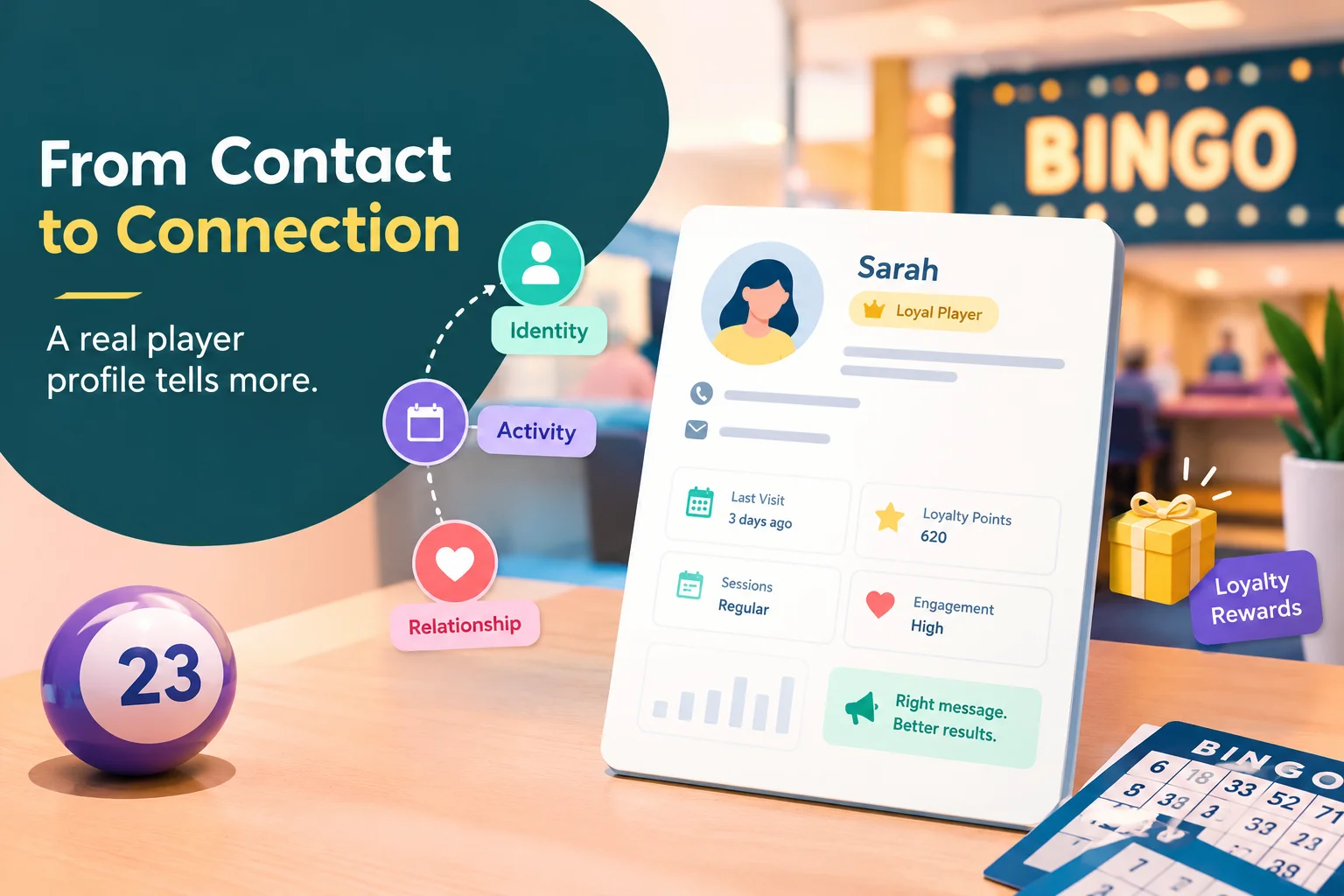
Loyalty tiers are another essential feature of bingo hall CRM software. These tiers categorize players based on their engagement and reward them accordingly.
Common loyalty tiers include:
- New Player
- Regular Player
- VIP Player
- Elite Player
- High Value Player
A bingo hall loyalty program software system automatically assigns players to tiers based on:
- Visit frequency
- Spending
- Attendance consistency
- Participation in promotions
- Lifetime visits
This segmentation allows operators to reward players appropriately.
How Loyalty Tiers Increase Bingo Hall Attendance
Loyalty tiers encourage players to attend more frequently. When players know they can unlock rewards, they are more likely to return.
Examples of tier rewards:
- VIP seating
- Bonus games
- Early entry
- Special prizes
- Loyalty points
- Exclusive events
- Birthday bonuses
A bingo hall CRM tracks these tiers automatically and updates player status based on activity.
This creates a structured player retention strategy.
Additional Player Data Fields Every Bingo Hall CRM Needs
Beyond visit frequency and loyalty tiers, a complete bingo player database should include:
Attendance History
Tracking every visit helps analyze player behavior and session preferences.
Preferred Session
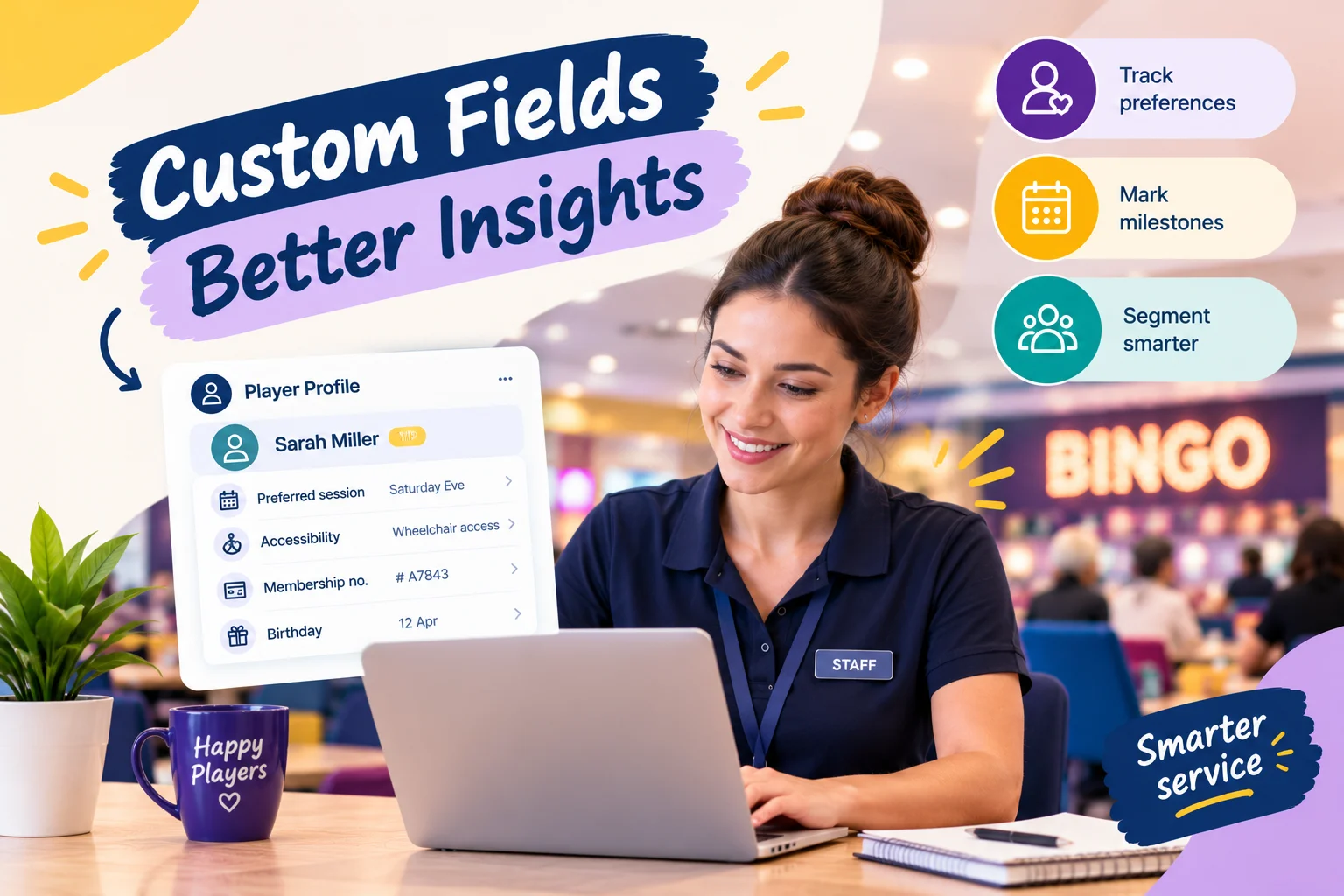
Some players attend only specific days or charities. This allows targeted marketing.
Player Status
New, active, declining, or lapsed player classification.
Lifetime Visits
Total attendance count for loyalty tracking.
Average Visits Per Month
Used to measure engagement.
Last Visit Date
Essential for lapsed player identification.
Promotion Response
Tracks which players respond to offers.
VIP Flag
Identifies high-value players.
Signup Source
Shows how players discovered the bingo hall.
These fields transform a basic CRM into a true bingo hall player tracking software.
Player Segmentation Using CRM Data
Once data fields are tracked, bingo hall CRM software can segment players into groups such as:
- Weekly players
- Monthly players
- Lapsed players
- VIP players
- New players
- High spenders
- Charity supporters
- Weekend players
Segmentation allows personalized marketing instead of generic announcements.
This improves engagement and attendance.
Marketing Automation Powered by Player Data
With proper data fields, bingo hall CRM software can automate:
- Visit reminders
- Lapsed player campaigns
- Loyalty tier upgrades
- VIP invitations
- Birthday offers
- Session promotions
- Reactivation campaigns
Automation reduces manual work while increasing attendance.
Generic CRM platforms cannot easily provide this level of automation for bingo operations.
Reporting and Analytics for Player Behavior
A purpose-built bingo hall CRM also provides analytics such as:
- Player retention rate
- Average visit frequency
- Lapsed player count
- VIP player growth
- New player trends
- Loyalty tier distribution
- Attendance by player segment
These insights help operators improve marketing and scheduling decisions.
Why Generic CRM Software Falls Short
Generic CRM platforms track:
- Contacts
- Emails
- Deals
- Leads
They do not track:
- Visit frequency
- Lapsed players
- Loyalty tiers
- Session attendance
- Player retention
- VIP status
This makes them unsuitable for bingo hall player management.
A dedicated bingo hall CRM software platform is designed specifically for player tracking.
Final Thoughts
Visit frequency, lapsed player identification, and loyalty tiers form the foundation of effective bingo hall CRM software. These player data fields allow operators to understand behavior, improve retention, and increase attendance.
Without structured player tracking, bingo halls rely on guesswork. With purpose-built bingo player management software, operators gain clear insights into who attends, who stops coming, and who deserves rewards.
A bingo hall CRM designed around these data fields helps automate marketing, segment players, and build long-term loyalty — ensuring seats stay filled, and revenue continues to grow.