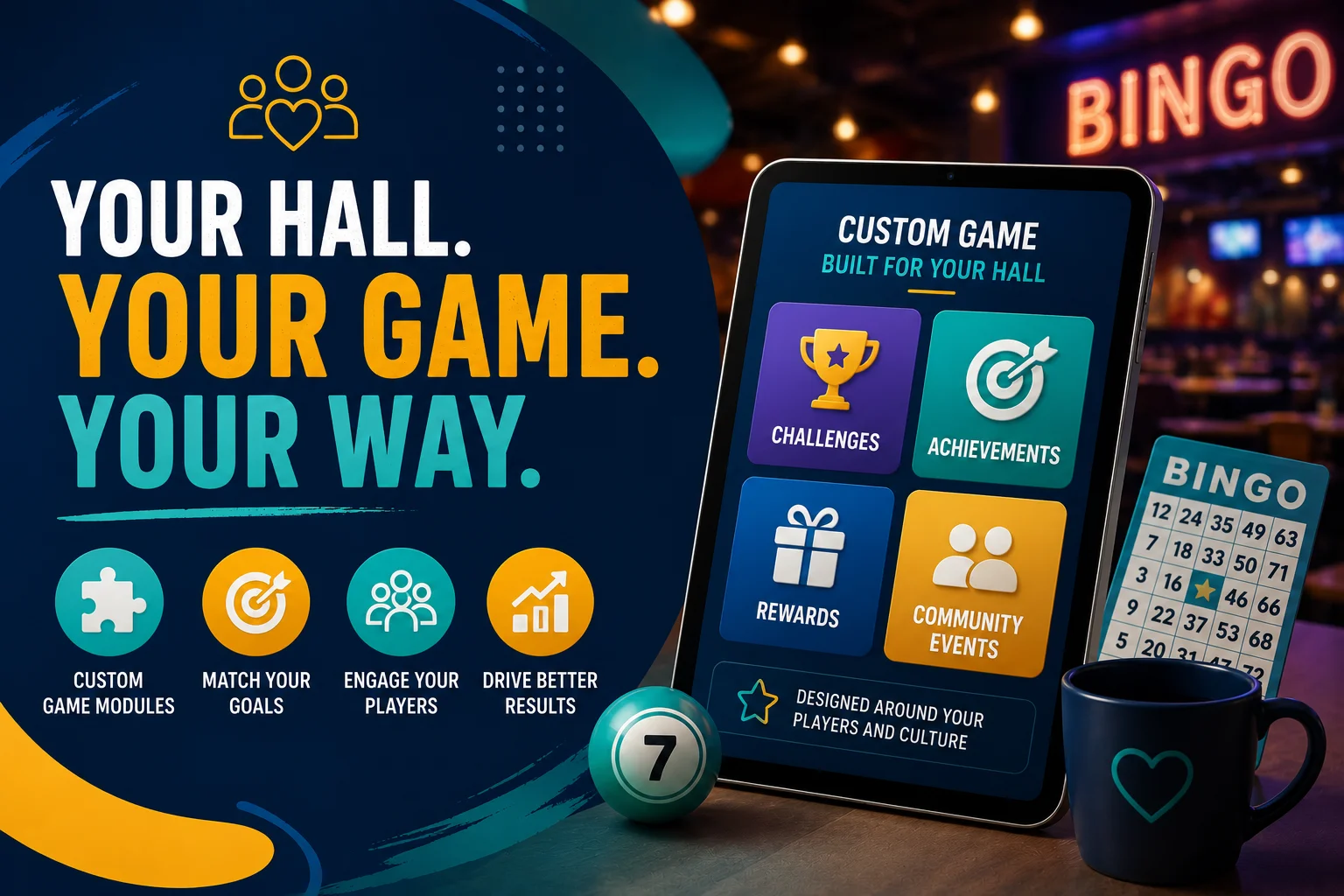
Every bingo hall has its own personality.
One venue might be known for its lively Friday nights and strong local following. Another may have a community-focused atmosphere built around charity events and fundraising. A third may attract younger entertainment-focused players who enjoy interactive experiences, challenges, and digital rewards.
Yet many promotional platforms treat these venues as if they are identical.
The result is often a familiar problem: operators have access to promotional tools, but the campaigns don't always feel like they belong to their hall.
A generic challenge may technically work.
A standard reward may generate activity.
A template promotion may get clicks.
But effective player engagement is about more than getting someone to interact once.
It is about creating experiences that feel relevant to the people who actually walk through your doors.
This is where custom game modules can make a difference.
Instead of forcing every venue into the same promotional format, custom game experiences give operators more flexibility to build campaigns around their audience, events, branding, community, and operational goals.
Your Hall Has Its Own Personality
Think about the difference between two bingo halls.
Hall A: Community-Focused
Its customers know one another. Charity fundraising is a major part of the venue's identity, and special community events attract strong participation.
A suitable promotion might revolve around:
- Community achievements
- Fundraising milestones
- Event participation
- Local recognition
- Group challenges
Hall B: Entertainment-Focused
This venue places greater emphasis on entertainment, themed nights, prizes, and digital engagement.
Its promotions might focus on:
- Challenges
- Interactive games
- Player achievements
- Event competitions
- Digital rewards
Both venues operate in the same broader industry.
But their customers may respond to completely different experiences.
A one-size-fits-all game cannot always reflect that difference.
Generic Promotions Can Feel Generic
Off-the-shelf promotional tools are useful because they are easy to deploy.
But convenience can come with limitations.
You may be given a fixed set of:
- Game formats
- Reward structures
- Campaign templates
- Rules
- Visual designs
- Player journeys
The operator then has to fit their promotion into the available framework.
That's backwards.
Your marketing strategy should determine the experience.
The technology should help you deliver it.
What Makes a Game Module "Custom"?
A custom game module allows the promotional experience to be designed around a specific objective, audience, theme, or venue identity rather than relying entirely on a standard template.
That doesn't necessarily mean building an entirely new game from scratch every time.
It can mean adapting the experience around factors such as:
- Your venue's branding
- Your customer behaviour
- Your event calendar
- Your loyalty strategy
- Your preferred rewards
- Your audience segments
- Your promotional objectives
The important principle is flexibility.
Start With the Behaviour You Want to Change
The first question shouldn't be:
"What game should we build?"
Start with:
"What do we want players to do?"
For example:
Goal: Increase Tuesday attendance.
The game mechanic could encourage progress toward a Tuesday-specific achievement.
Goal: Increase loyalty sign-ups.
The game could become part of the registration experience.
Goal: Promote a charity event.
The game could be themed around the event and encourage participation.
Goal: Re-engage inactive players.
The game could give returning customers a simple reason to open the app.
The technology becomes more effective when the game has a clear purpose.
Match the Promotion to Your Hall's Culture
Culture isn't limited to branding.
It is the collection of behaviours, expectations, traditions, and relationships that make one venue different from another.
A community-oriented hall might want campaigns that emphasise participation and shared experiences.
A competitive audience might respond better to achievement-based challenges.
A venue with strong VIP relationships may benefit from status-driven experiences.
A family-oriented entertainment venue might favour simple, accessible games.
The promotional mechanic should fit naturally into the environment.
Custom Games Can Make Events More Memorable
Special events are ideal opportunities for custom game modules.
Suppose your hall is running a major charity night.
A generic:
"Join us Friday!"
promotion may not fully capture the significance of the event.
A custom game can be built around the theme.
For example:
Charity Challenge
Players complete qualifying activities throughout the campaign to unlock progress toward a community achievement.
The experience becomes part of the event story.
The promotion isn't simply advertising the event.
It gives customers something to participate in before and during it.
Seasonal Campaigns Can Feel Different From Ordinary Promotions
The same principle applies to seasonal campaigns.
A venue may run special promotions around:
- Holiday periods
- Anniversaries
- Community celebrations
- Summer events
- Fundraising campaigns
- Player appreciation weeks
Instead of changing only the headline and reward, operators can change the experience itself.
That creates a stronger distinction between:
Everyday loyalty activity
and
Special occasion engagement
Let Your Brand Appear Inside the Experience
Brand consistency matters.
If your venue has a distinctive identity, the digital experience should not feel like it belongs to an unrelated company.
Custom game modules can provide more opportunities to align the experience with:
- Brand language
- Visual identity
- Event themes
- Promotional terminology
- Customer expectations
That creates continuity between the physical venue and digital experience.
A player should ideally feel that the game is part of the hall, not something that has simply been attached to it.
Use Different Game Mechanics for Different Goals
Not every promotional objective needs the same mechanic.
Want Repeat Visits?
Use progress and milestone mechanics.
Want More Event Participation?
Use event-specific challenges.
Want More Loyalty Engagement?
Use points, achievements, and interactive tasks.
Want More Referrals?
Create referral-linked game progression.
Want to Re-Engage Inactive Players?
Use short, low-friction interactive experiences.
The point isn't to use customisation for its own sake.
It is to choose a mechanic that supports the behaviour you want.
Build Around Existing Loyalty Programmes
A custom game shouldn't create another disconnected customer experience.
It can become another layer of the loyalty programme.
For example:
Player completes custom challenge
↓
Earns loyalty points
↓
Unlocks achievement
↓
Progresses toward VIP tier
↓
Receives relevant reward
Now the game is contributing to the customer's broader relationship with the venue.
The player isn't completing an isolated activity.
They're making progress within a larger system.
Give Regular Players Something New
Your most loyal customers may already understand every standard promotion you run.
They know how the points work.
They know the usual discounts.
They've seen the same campaign formats.
Custom game modules can introduce variety without rebuilding the entire loyalty strategy.
For example, a venue could introduce a limited-time challenge for its most active members.
The mechanics may be familiar, but the objective and theme are new.
That gives regular players something different to discover.
Don't Assume More Complexity Means Better Engagement
Customisation doesn't mean creating complicated games.
In fact, simplicity can be a major advantage.
A custom module might be extremely straightforward:
Complete three qualifying visits → Unlock an achievement.
Or:
Attend the special event → Complete the event challenge → Receive loyalty progress.
The experience can be simple for the player while still being strategically customised for the operator.
Build Promotions Around Local Events
A bingo hall often has a stronger relationship with its local community than a generic online brand.
That can become part of the promotional strategy.
For example:
Local Charity Week
Create a challenge that encourages participation throughout the week.
Venue Anniversary
Create an achievement for customers who participate during the anniversary period.
Community Event
Create a themed digital challenge that leads into the physical event.
The promotional experience becomes connected to something meaningful to the venue.
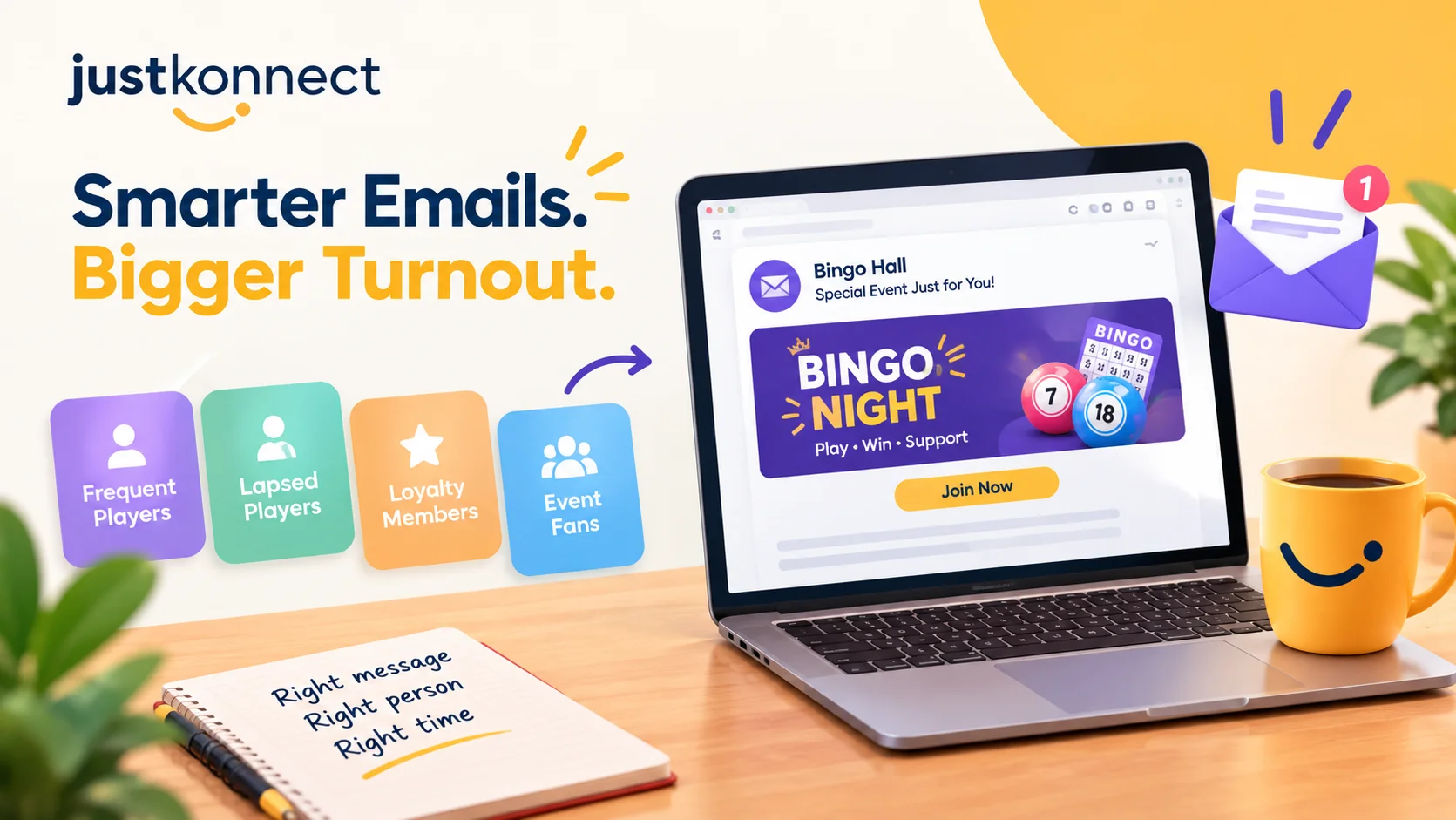
Use Customer Segments to Change the Experience
Your database probably contains different types of players.
Treating everyone the same wastes some of that information.
A custom game module can be incorporated into different customer journeys.
New Players
Simple welcome experiences.
Regular Players
Attendance challenges.
VIPs
Exclusive challenges and recognition.
Event Attendees
Event-specific achievements.
Lapsed Players
Return-focused experiences.
The game mechanic doesn't have to change completely.
The objective, messaging, and rewards can.
Customisation Can Improve Personalisation
Personalisation is often associated with putting someone's name into an SMS.
That's useful, but it is only one form of personalisation.
A more meaningful approach is personalising what the customer is being asked to do.
A frequent player might see:
"Complete your next milestone."
A lapsed player might see:
"Come back and restart your progress."
A new member might see:
"Complete your first challenge."
The experience reflects the customer's relationship with the venue.
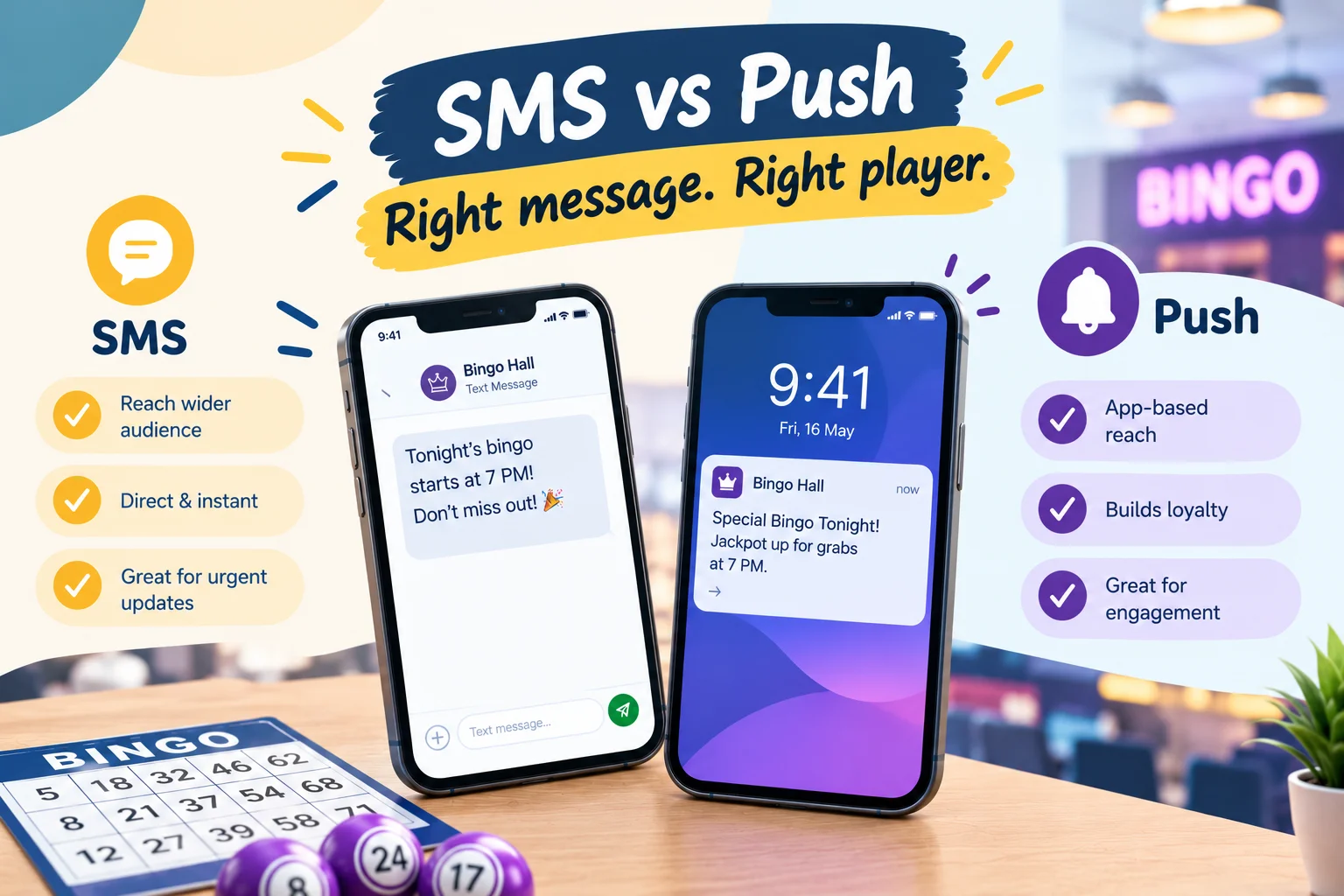
Connect Custom Games With SMS
A custom game becomes much more useful when customers are actually reminded to participate.
For example:
"Your Friday Challenge is now live."
The customer opens the app.
They complete the challenge.
They earn progress.
Later:
"You're one visit away from completing your challenge."
This creates a connected communication loop.
The SMS gets attention.
The game creates interaction.
The loyalty system records progress.
The venue gets another opportunity to drive attendance.
Use Analytics to Find What Resonates
Customisation shouldn't be based entirely on assumptions.
Measure the results.
For each campaign, consider tracking:
- Participation rate
- Completion rate
- Loyalty sign-ups
- Repeat visits
- Event attendance
- Reward redemption
- Referral activity
- Customer reactivation
- Visit frequency
- Engagement by customer segment
Suppose your venue runs three different game formats.
One gets many initial interactions but few completions.
Another gets fewer starts but much higher completion and repeat attendance.
The second may be the more valuable format.
Analytics help you distinguish activity from impact.
A Practical Example: Turning a Quiet Night Into a Venue-Specific Campaign
Imagine a bingo hall has strong Friday attendance but wants to improve Wednesday participation.
Instead of using a generic discount, the operator creates:
Wednesday Challenge
Attend three Wednesday sessions this month.
Each qualifying visit moves the player forward.
After the third visit, they unlock a venue-specific achievement and loyalty reward.
The campaign is promoted through targeted SMS.
The player can see their progress.
The venue can measure participation and attendance.
This is more than a discount campaign.
It's a promotional experience designed around a specific operational problem.
Another Example: A Charity-Focused Hall
Imagine another hall has a strong fundraising identity.
Its campaign could focus on community participation.
Community Champion
Players earn progress by participating in qualifying charity events.
The campaign can recognise milestones and connect players with the venue's wider community mission.
The mechanics aren't necessarily complicated.
What makes the campaign different is that it reflects what the venue stands for.
Custom Game Modules Don't Mean Reinventing Everything
Operators sometimes hear "custom" and assume it means:
Expensive development.
Long implementation times.
Complex maintenance.
That's not necessarily the case.
The value of a configurable game module is that the venue can adapt the experience without having to build an entirely new digital platform every time it wants to run a different campaign.
The exact level of customisation will depend on the technology and implementation available.
The strategic advantage is flexibility.
Common Mistakes to Avoid
Creating a Game Before Defining the Goal
Start with the behaviour you want to influence.
Copying Another Venue's Promotion
A campaign that works for another hall may not fit your audience.
Making Customisation Too Complicated
More options don't automatically create a better customer experience.
Ignoring Your Existing Loyalty Data
Use customer behaviour to inform campaign design.
Forgetting the Physical Venue
Digital promotions should support the real-world experience.
Running Every Campaign Forever
Limited-time themes and fresh challenges can help maintain interest.
Measuring Only Participation
A high number of game plays doesn't necessarily mean higher attendance or retention.
How JustKonnect Supports Venue-Specific Game Experiences
For bingo operators, customisation is valuable because no two halls have exactly the same audience, identity, event calendar, or commercial objectives.
JustKonnect Custom Game Modules provide a way for venues to create more tailored game experiences rather than relying exclusively on generic promotional formats.
Custom game modules can be used as part of broader loyalty and engagement strategies, working alongside features such as loyalty points, achievements, VIP tiers, referrals, SMS marketing, and analytics.
That allows operators to think beyond:
"Which standard promotion should we run?"
and instead ask:
"What experience makes sense for our players and our venue?"
A community-focused hall can build around its identity.
An entertainment-focused venue can create more interactive experiences.
A special event can have its own campaign mechanic.
A loyalty challenge can be designed around a specific attendance goal.
The technology becomes a way to express the venue's strategy rather than forcing the strategy into a predefined template.
Frequently Asked Questions
What are custom game modules for bingo halls?
Custom game modules are configurable or tailored digital game experiences designed around a venue's specific promotional goals, audience, branding, events, or loyalty strategy.
Why would a bingo hall need a custom game instead of a standard promotion?
Standard promotions can be useful, but custom experiences provide more flexibility to match the venue's culture, customer behaviour, event calendar, and specific business objectives.
Can custom game modules support loyalty programmes?
Yes. They can be connected with loyalty points, achievements, rewards, VIP progression, and other engagement mechanics to make individual campaigns part of a wider customer journey.
Can a custom game help increase attendance?
It can be designed around attendance objectives, such as encouraging participation on quieter nights or creating progression toward an event-related reward. Operators should measure the resulting attendance rather than assuming the game itself guarantees an increase.
Do custom games have to be complicated?
No. A custom experience can be very simple. What matters is that the mechanic, reward, and customer journey make sense for the venue and the behaviour being encouraged.
Your Venue Isn't Generic. Your Promotions Don't Have to Be Either.
Every bingo hall has its own atmosphere.
Its own players.
Its own traditions.
Its own busy nights.
Its own community.
And its own reasons for wanting customers to return.
That makes it difficult for a single promotional template to be perfect for everyone.
Custom game modules give operators another option.
Instead of asking customers to adapt to a generic experience, the venue can build campaigns around the behaviours and experiences that matter to its audience.
A quiet Wednesday can become a challenge.
A charity event can become a community achievement.
A loyalty milestone can become a game.
A VIP programme can become a progression journey.
And an ordinary promotional message can become something customers actually want to interact with.
The best custom game isn't necessarily the most elaborate one.
It's the one that feels right for your players and has a clear reason for existing.
Explore JustKonnect Custom Game Modules to see how purpose-built game experiences can help your bingo hall create promotions that fit its culture, audience, and engagement goals.