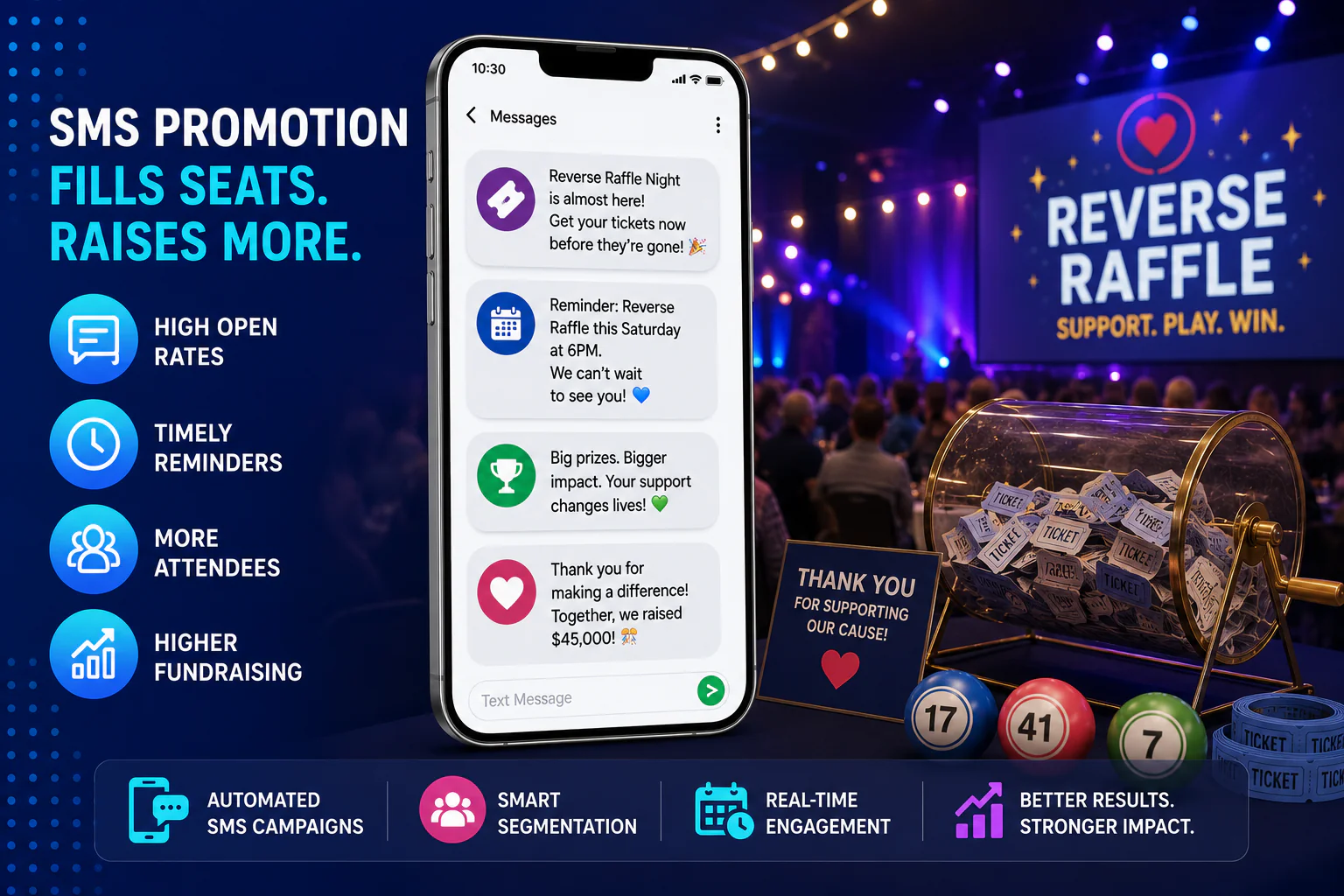
Reverse raffles have become one of the most effective fundraising event formats for charities, nonprofits, bingo halls, and community organizations. They combine entertainment, suspense, donor engagement, and fundraising into one experience.
But many reverse raffle events underperform for one simple reason:
The marketing strategy is weak.
Too many organizations still rely on:
- A few Facebook posts
- Last-minute reminders
- Organic social reach
- Hoping supporters remember the event
That approach no longer works consistently.
Social media algorithms limit visibility. Emails get ignored. Donors get distracted. Even supporters who want to attend often forget about the event entirely.
Modern fundraising events require a more direct communication strategy.
That’s why SMS marketing has become one of the most powerful tools for reverse raffle promotion.
With fundraising events software and automated SMS campaigns, organizations can dramatically improve:
- Ticket sales
- Attendance
- Donor engagement
- Event participation
- Repeat attendance
The Problem With “Facebook Post Marketing”
Many nonprofit event teams unknowingly treat social media as their entire marketing strategy.
The process usually looks like this:
- Create an event page
- Post graphics on Facebook
- Share occasional reminders
- Hope people buy tickets
The issue is real.
Organic Facebook visibility has declined significantly over time, making it increasingly difficult for nonprofits to rely solely on social media promotion for events. Supporters simply do not see every post.
Even highly engaged followers may miss:
- Ticket announcements
- Event reminders
- Deadline alerts
- Schedule updates
As a result:
- Attendance suffers
- Ticket sales slow down
- Last-minute panic begins
A Facebook post is not a communication strategy.
Why Reverse Raffles Need More Than Passive Promotion
Reverse raffles are different from ordinary fundraising campaigns because they depend heavily on:
- Live attendance
- Excitement
- Momentum
- Participation timing
People need repeated reminders and engagement leading up to the event.
Research and nonprofit marketing discussions consistently show that supporters often need multiple touchpoints before taking action.
That means:
- One post is not enough
- One email is not enough
- Passive marketing is not enough
Reverse raffles require active communication.
Why SMS Marketing Works So Well for Fundraising Events
SMS marketing succeeds because it solves the biggest communication problem nonprofits face:
👉 Visibility
Text messages are:
- Immediate
- Direct
- Highly visible
- Difficult to ignore
Nonprofit SMS platforms consistently report extremely high open and engagement rates compared to email and social media.
For fundraising events, this matters enormously.
Instead of hoping supporters see a social media post, organizations can:
- Deliver reminders instantly
- Send ticket links directly
- Trigger urgency
- Drive immediate action
Reverse Raffle Marketing Is Really About Attendance Psychology
Most attendees do not buy tickets the first time they hear about an event.
People are busy.
They forget.
They procrastinate.
Successful fundraising marketing works because it creates repeated psychological triggers:
- Awareness
- Reminder
- Urgency
- Excitement
- Commitment
SMS marketing supports every stage of this process.
The Reverse Raffle Communication Lifecycle
The highest-performing reverse raffle campaigns use communication before, during, and after the event.
Stage 1: Before the Event — Driving Ticket Sales and Awareness
This phase determines whether your event fills seats or struggles.
1. Early Announcement Campaigns
The first communication should:
- Introduce the event
- Explain the cause
- Share prize details
- Include ticket information
SMS works especially well when paired with email and social media.
Example:
“Reverse Raffle Night is coming! Reserve your ticket now before seats sell out.”
2. Ticket Deadline Reminders
Many supporters intend to buy tickets later.
Then they forget.
Automated SMS reminders solve this by creating urgency.
Examples:
- “Only 5 days left to reserve your reverse raffle seat.”
- “Ticket sales close tomorrow at midnight.”
These reminders increase conversions dramatically.
3. Attendance Reminder Campaigns
Even after purchasing tickets, attendees still need reminders.
SMS reminders reduce no-shows by keeping the event top-of-mind. Nonprofit communication platforms widely use automated reminder workflows for exactly this reason.
Best timing:
- 1 week before
- 1 day before
- Same-day reminder
4. VIP and Sponsor Communication
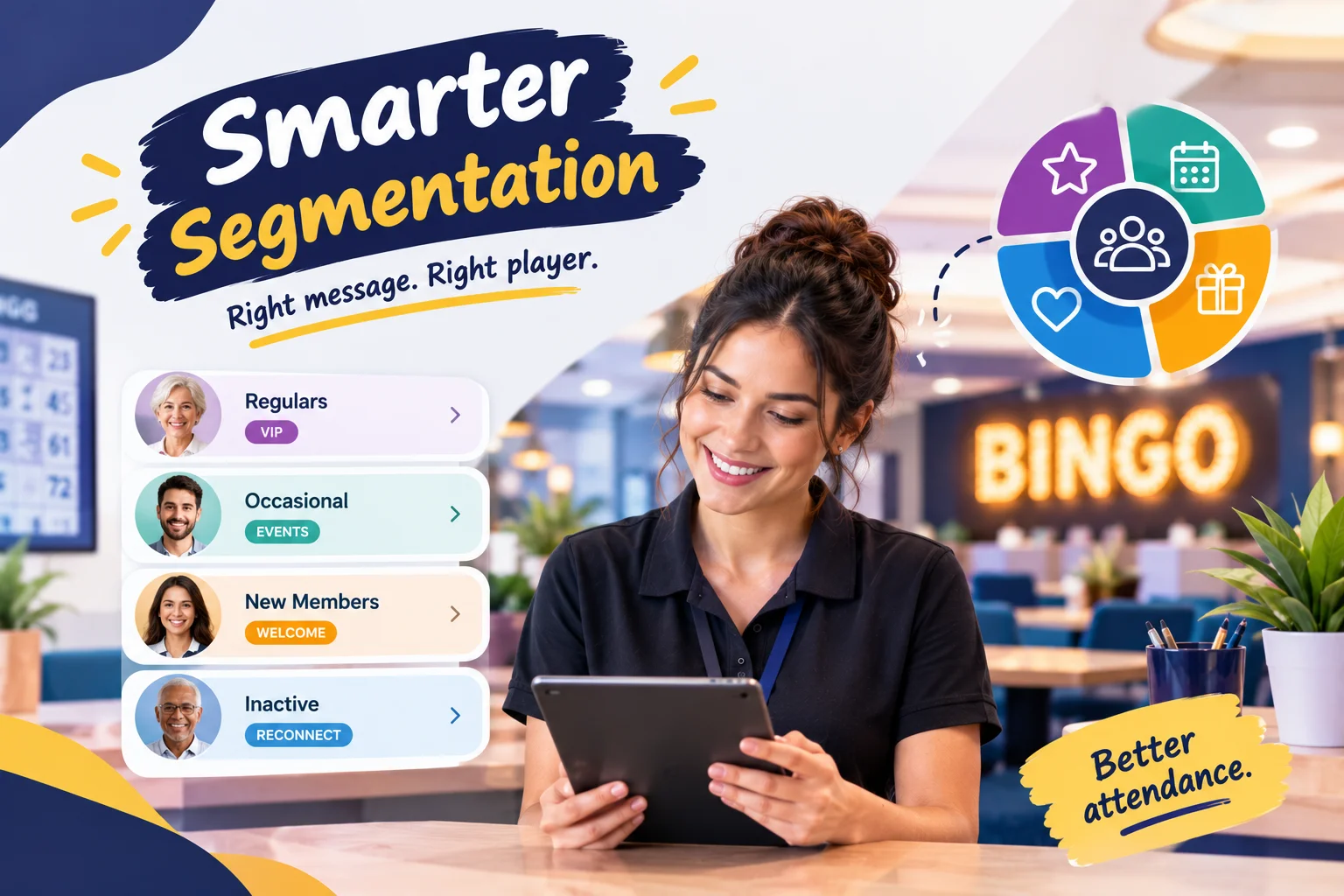
Not every attendee should receive identical messaging.
Segmented communication allows organizers to:
- Personalize outreach
- Recognize sponsors
- Reward VIP donors
- Increase engagement
Modern fundraising events software automates this process.
Why Email Alone Is No Longer Enough
Email still matters.
But relying on it alone creates problems:
- Low open rates
- Spam filtering
- Inbox overload
- Delayed visibility
SMS complements email by ensuring critical reminders are actually seen.
Nonprofit SMS providers consistently position texting as a high-visibility channel specifically for event reminders and donor communication.
Stage 2: During the Event — Real-Time Engagement
Most nonprofits stop communicating once the event begins.
That’s a mistake.
Live communication increases:
- Participation
- Donations
- Energy
- Engagement
How SMS Improves Live Reverse Raffle Events
1. Real-Time Announcements
SMS can notify attendees about:
- Prize milestones
- Drawing updates
- Last-call opportunities
- Bonus games
- Silent auction deadlines
This keeps momentum high.
2. Donation Pushes
During high-energy moments, SMS donation prompts can significantly increase giving.
Example:
“We’re only $2,000 away from tonight’s goal. Donate now and help us cross the finish line.”
3. Remote Audience Participation
Not every supporter can attend physically.
SMS allows remote supporters to:
- Participate in donations
- Follow event updates
- Stay emotionally engaged
This expands fundraising reach beyond the venue itself.
4. Volunteer Coordination
Event communication is not only attendee-facing.
SMS is also valuable for:
- Volunteer reminders
- Staff coordination
- Schedule adjustments
- Emergency updates
Organizations increasingly use automated SMS systems for volunteer communication because messages are seen quickly and reliably.
Stage 3: After the Event — Where Retention Actually Happens
The biggest fundraising mistake happens after the event ends:
Silence.
Many organizations fail to follow up properly.
This damages:
- Donor retention
- Future attendance
- Long-term engagement
The Importance of Post-Event Communication
Attendees want to know:
- The impact of the fundraiser
- How much was raised
- Who benefited
- What happens next
Post-event communication transforms attendees into long-term supporters.
Essential Post-Event SMS Campaigns
Thank-You Messages
Prompt appreciation improves donor relationships.
Example:
“Thank you for supporting our reverse raffle fundraiser. Your support helped us raise $45,000 for community programs.”
Impact Updates
Supporters respond strongly when they see outcomes.
Examples:
- Scholarship funding updates
- Equipment purchases
- Community impact stories
This builds trust and retention.
Future Event Invitations
One successful event should lead to the next.
SMS automation allows organizations to:
- Invite past attendees
- Promote future fundraisers
- Build long-term attendance habits
Why Automation Changes Everything
Manual communication creates inconsistency.
Teams forget:
- Reminder schedules
- Follow-up messages
- Segmentation
- Timing
Fundraising events software automates:
- SMS reminders
- Ticket confirmations
- Follow-up campaigns
- Donor communication
- Attendance workflows
Automation ensures every attendee receives the right message at the right time.
Common Reverse Raffle Marketing Mistakes
Many fundraising teams:
- Depend entirely on Facebook
- Send reminders too late
- Ignore SMS marketing
- Stop communicating after the event
- Fail to segment donors
- Lack of automation systems
These mistakes reduce attendance and fundraising potential.
The Role of Fundraising Events Software
Modern fundraising events software centralizes:
- Ticket management
- SMS campaigns
- Donor engagement
- Attendance tracking
- Communication automation
- Event analytics
This creates a complete event marketing ecosystem.
What High-Performing Reverse Raffle Campaigns Actually Do
Successful fundraising organizations:
- Combine SMS + email + social media
- Use automated reminders
- Segment supporters
- Communicate throughout the event lifecycle
- Follow up consistently after the event
They do not rely on one Facebook post and hope for the best.
Final Thoughts
Reverse raffles succeed when organizations build consistent communication systems—not when they depend on passive social media visibility.
Facebook posts can support awareness, but they are not enough to drive reliable attendance, ticket sales, and donor engagement.
SMS marketing changes the equation by delivering direct, immediate, and automated communication throughout the entire fundraising lifecycle.
With the right fundraising events software, nonprofits can move beyond inconsistent promotion and create repeatable systems that fill seats, improve donor retention, and maximize fundraising performance.