Many venue operators face the same frustrating problem.
They invest in a loyalty program.
They promote it on signs, websites, social media, and at the point of sale.
Yet enrollment numbers remain disappointing.
The typical response is predictable.
Offer a discount.
Give away a free item.
Provide a sign-up incentive.
Run a promotional giveaway.
While these tactics may temporarily increase loyalty program registrations, they often fail to create meaningful engagement.
Customers join for the reward.
Not because they genuinely want to participate.
As a result, many organizations end up with loyalty databases full of inactive members who never return, never engage, and never become long-term customers.
This is where gamification changes the conversation.
Rather than relying on discounts or giveaways, gamification creates experiences that make participation itself rewarding.
By leveraging curiosity, achievement, recognition, progression, and interaction, organizations can significantly increase loyalty program opt-ins while simultaneously attracting more engaged members.
For bingo halls, restaurants, arcades, family entertainment centers, nonprofits, and entertainment venues, gamification is becoming one of the most effective tools available for growing loyalty participation and improving customer retention.
Why Traditional Loyalty Enrollment Strategies Often Fail
Many loyalty programs are marketed primarily through incentives.
Examples include:
- Join today and receive $5 off
- Sign up and get a gift
- Register for bonus points
- Receive a welcome reward
While these offers may generate registrations, they often create a transactional relationship.
Customers participate because of the reward.
Once the reward is redeemed, engagement frequently declines.
This creates several problems:
- Low participation rates
- Poor retention
- Weak engagement
- Inactive member databases
- Limited long-term value
The goal should not simply be increasing registrations.
The goal should be attracting active participants who continue engaging over time.
What Is Gamification?
Gamification applies game-like mechanics to customer engagement experiences.
Instead of focusing solely on rewards, gamification introduces elements such as:
- Challenges
- Achievements
- Progress tracking
- Recognition
- Competition
- Milestones
- Interactive experiences
These mechanics encourage participation because they tap into natural human motivations.
People enjoy:
- Completing goals
- Earning recognition
- Unlocking achievements
- Tracking progress
- Reaching milestones
This creates engagement that extends beyond financial incentives.
Why Gamification Drives Loyalty Program Opt-Ins
The most successful loyalty programs make participation feel exciting.
Gamification accomplishes this by creating anticipation and curiosity.
When customers see opportunities to:
- Earn badges
- Unlock rewards
- Complete challenges
- Advance loyalty levels
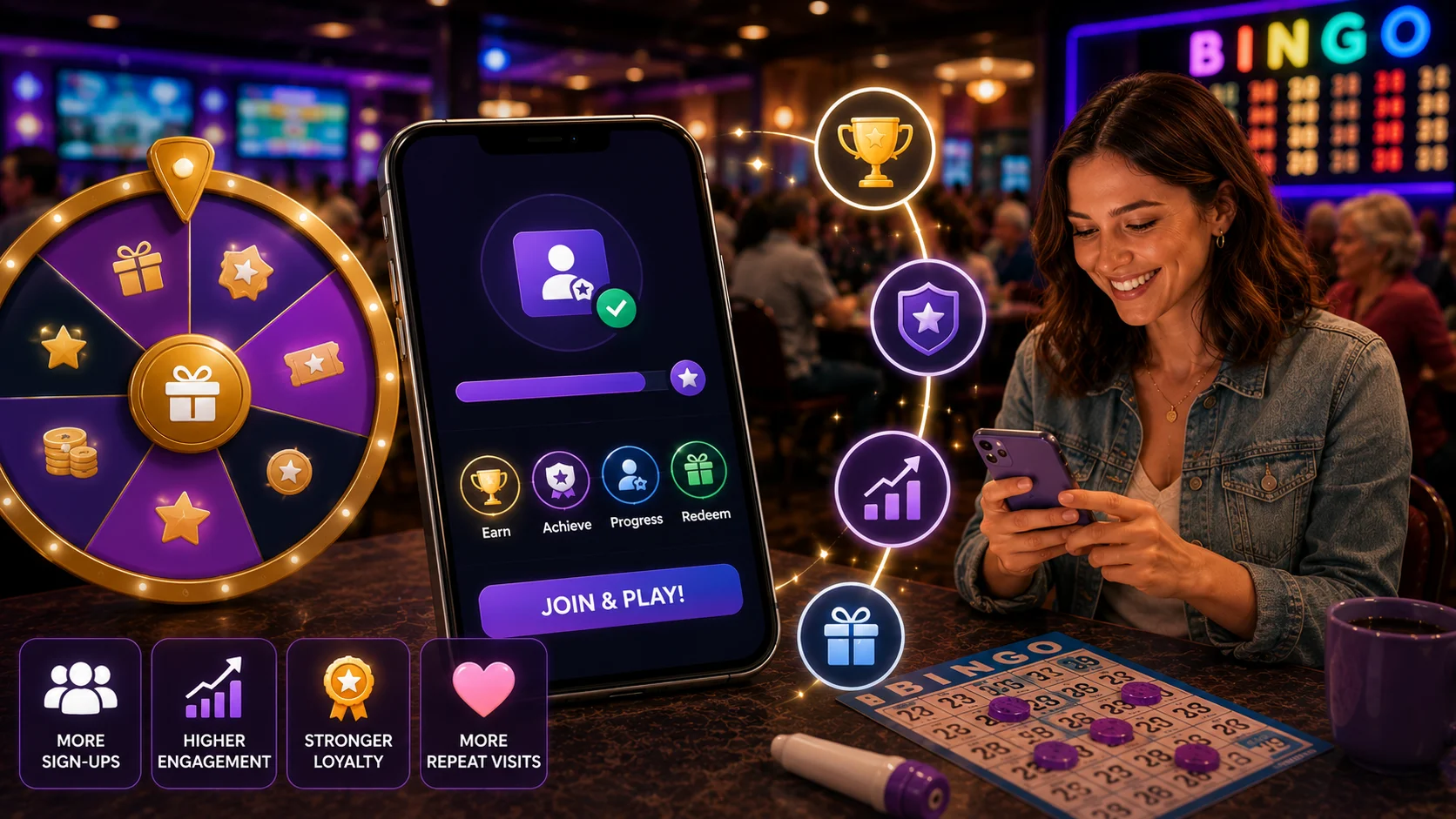
- Spin a reward wheel
- Track milestones
Enrollment becomes more appealing.
The loyalty program transforms from a marketing initiative into an experience.
That distinction is important.
People are more likely to join experiences than databases.
Curiosity Is a Powerful Enrollment Driver
One of the strongest psychological principles behind gamification is curiosity.
People naturally want to know:
- What happens next?
- What reward could I unlock?
- How close am I to a milestone?
- What badge can I earn?
This curiosity encourages participation without requiring discounts.
For example, a spin-to-win enrollment campaign may simply offer the opportunity to discover a reward after joining.
The excitement comes from participation itself.
Not necessarily from the reward value.
Spin-to-Win Campaigns Increase Sign-Up Rates
Spin-to-win promotions have become one of the most popular gamification tools.
The process is simple.
Customers join the loyalty program.
They receive an opportunity to spin a digital prize wheel.
Possible outcomes may include:
- Loyalty points
- Achievement badges
- Bonus entries
- Exclusive access
- Recognition rewards
- Promotional offers
The key advantage is anticipation.
Customers enjoy the interactive experience.
This often generates higher enrollment rates than static signup offers.
Achievement Badges Create Immediate Engagement
Many loyalty programs fail because nothing happens immediately after enrollment.
Customers join.
Then they wait.
Gamification solves this issue through achievement systems.
New members can instantly unlock badges such as:
- First Visit Badge
- New Member Badge
- Community Supporter Badge
- Event Participant Badge
These achievements create a sense of accomplishment from the beginning.
Early engagement increases the likelihood of long-term participation.
Progress Tracking Encourages Continued Participation
One reason customers abandon loyalty programs is a lack of visibility.
They do not understand:
- How close they are to a reward
- What benefits are available
- What actions should they take next
Progress tracking solves this problem.
Gamified loyalty platforms allow customers to monitor:
- Attendance milestones
- Loyalty status
- Achievement progress
- Reward opportunities
- Engagement levels
Visible progress motivates continued participation.
People enjoy completing what they start.
Milestones Turn Participation Into a Journey
Milestones are another highly effective enrollment tool.
Examples include:
- Attend 5 events
- Reach 10 visits
- Participate in 3 fundraising nights
- Maintain a monthly attendance streak
Each milestone provides a goal.
Goals create motivation.
Motivation drives engagement.
Unlike discounts, milestones encourage long-term participation rather than short-term action.
Recognition Often Outperforms Rewards
Many operators underestimate the power of recognition.
Customers enjoy feeling acknowledged.
Recognition can include:
- Loyalty status levels
- Achievement badges
- Leaderboards
- VIP designations
- Exclusive member recognition
These benefits cost very little to provide but often generate meaningful engagement.
Recognition creates emotional investment.
Emotional investment drives loyalty.
Loyalty Tiers Encourage Enrollment
Tiered loyalty systems are another powerful gamification strategy.
Examples may include:
- Bronze Member
- Silver Member
- Gold Member
- Platinum Member
- VIP Member
Customers naturally want to progress.
The possibility of advancement creates additional motivation to join and participate.
Tier systems also provide long-term engagement opportunities that extend far beyond initial enrollment.
Gamification Supports Attendance Marketing
One of the biggest advantages of gamification is its alignment with attendance marketing.
Attendance marketing focuses on increasing visit frequency.
Rather than rewarding spending alone, gamification rewards participation.
Examples include:
- Attendance streaks
- Visit milestones
- Event participation challenges
- Loyalty attendance badges
This encourages repeat visits while strengthening customer relationships.
SMS Marketing Amplifies Gamification
Gamification becomes significantly more effective when paired with SMS marketing.
Text messages keep customers informed about:
- New achievements
- Progress updates
- Challenge opportunities
- Milestone completion
- Loyalty status changes
Examples include:
"You are one visit away from unlocking Gold Member status."
"Your next achievement badge is ready to unlock."
"Complete your attendance streak this week."
These communications keep loyalty programs active between visits.
Why Gamification Produces Better Members
Discount-driven enrollment often attracts low-engagement participants.
Gamification attracts customers who enjoy participating.
These members are more likely to:
- Attend regularly
- Engage with promotions
- Participate in events
- Complete challenges
- Remain active over time
As a result, the overall quality of the loyalty database improves.
This leads to stronger retention and higher customer lifetime value.
Measuring Gamification Success
Modern gamification platforms provide visibility into key metrics such as:
- Loyalty enrollment rates
- Participation rates
- Attendance frequency
- Badge completion
- Challenge participation
- Customer retention
- Loyalty tier progression
These metrics help operators understand which engagement strategies are generating results.
Common Gamification Mistakes
Some organizations struggle because they:
- Overcomplicate challenges
- Ignore communication
- Fail to track progress
- Offer irrelevant rewards
- Neglect automation
The most effective gamification systems are simple, visible, and easy to understand.
Customers should immediately know how to participate and what they can achieve.
The Future of Loyalty Enrollment
Customer expectations continue evolving.
People increasingly seek experiences rather than transactions.
Static loyalty programs often fail to capture attention.
Gamification transforms enrollment from a registration process into an interactive experience.
Instead of asking customers to join a database, operators invite them into a journey.
This shift significantly improves participation and long-term engagement.
Final Thoughts
Growing a loyalty program does not require endless discounts, coupons, or free giveaways.
In many cases, these incentives attract registrations without creating meaningful engagement.
Gamification offers a more sustainable approach.
By leveraging curiosity, achievement, recognition, milestones, progress tracking, loyalty tiers, and interactive experiences such as spin-to-win campaigns, organizations can increase loyalty program opt-ins while building stronger customer relationships.
When integrated with attendance marketing, CRM data, SMS automation, and loyalty management software, gamification becomes a powerful engine for enrollment, engagement, retention, and long-term customer loyalty.
For modern venue operators, the question is no longer whether gamification works.
The question is how quickly they can begin using it to create more engaged and loyal customers.