The doors open. Players begin arriving. Someone asks about their loyalty points, another wants to know whether a reward is available, and a familiar face approaches the desk with a question about the next session.
For experienced bingo hall staff, these interactions are part of the daily routine. The challenge is making each player feel recognised while keeping check-in, enquiries, and other tasks moving.
A staff member might recognise a regular immediately but still need to search for their loyalty status, check a previous interaction, or ask a colleague to confirm a detail. Recognition exists, but the information needed to act on it is scattered.
This is where a rich player profile becomes useful.
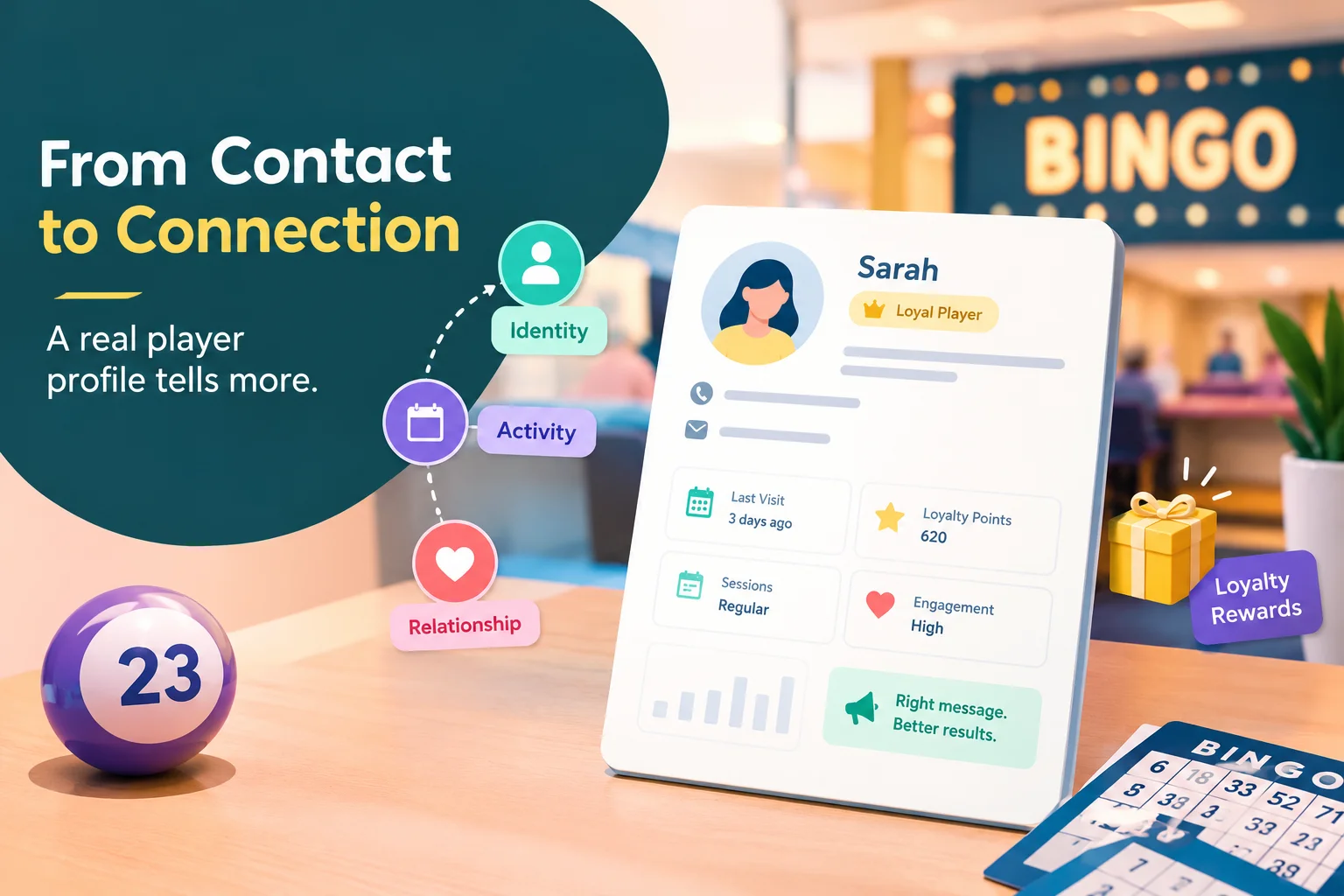
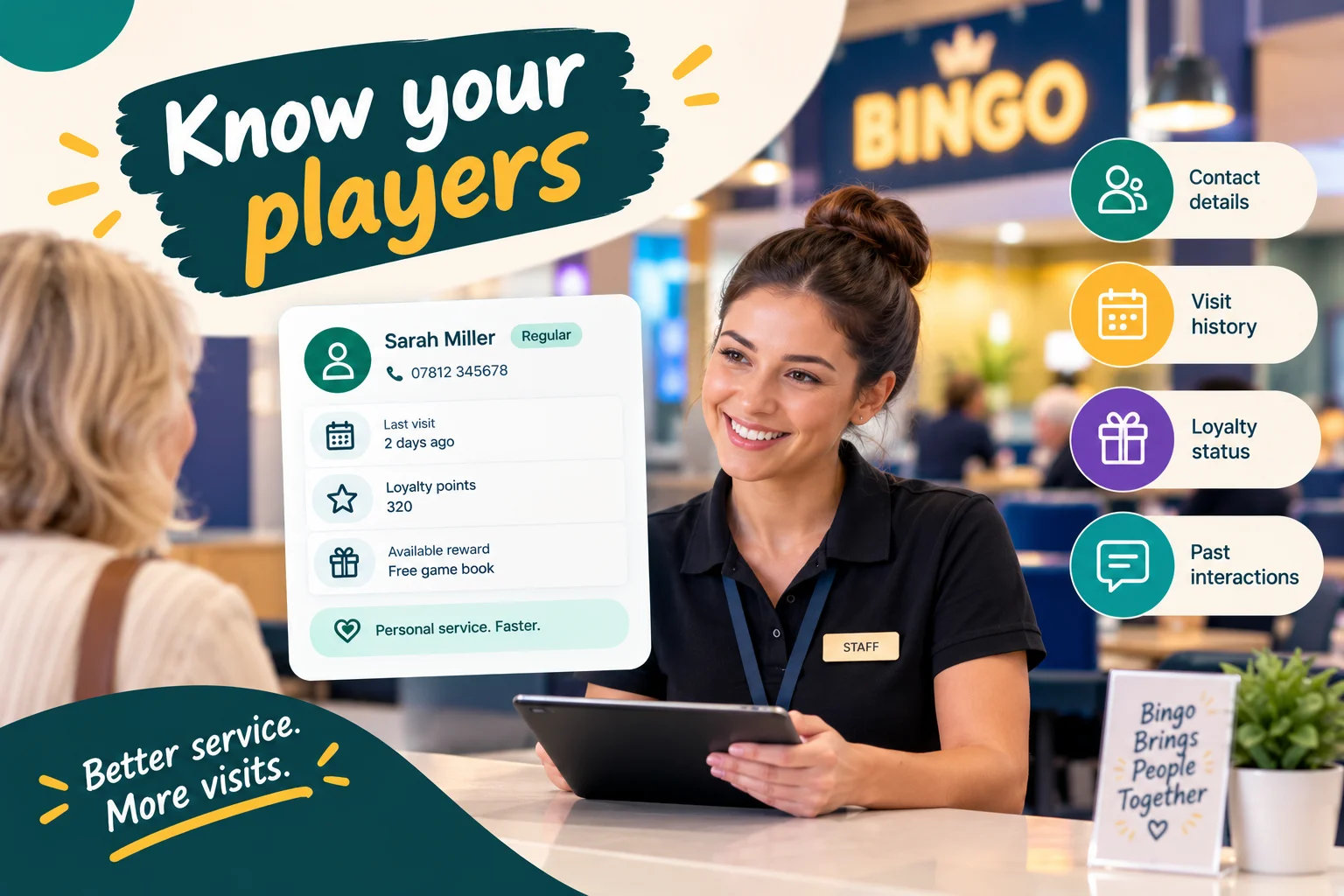
Instead of relying entirely on memory, paper notes, or separate systems, staff can use a central record to understand the player's relationship with the hall. Contact information, visit history, and loyalty status become easier to access, helping the team provide more informed service.
The goal is not to turn every greeting into a scripted interaction. It is to give staff the context they need to make ordinary moments feel more personal.
The Difference Between Recognising a Face and Knowing the Context
A regular player may have attended the same hall for years. Staff might know their name, preferred session, or usual arrival time through everyday interactions.
But personal familiarity has limits.
A team member working the desk may not know whether the player has a reward available. A newer employee may recognise the person but have no background on their previous interactions. During a busy session, even an experienced manager may struggle to remember every detail.
A player profile provides a shared reference point.
Consider three situations:
- A regular asks how many loyalty points they have accumulated.
- A player wants clarification about a previous promotional message.
- A familiar visitor asks whether a particular offer is still available.
Without accessible records, staff may need to search through messages, check another system, or ask someone else. With relevant information organised in a player profile, they have a better starting point for answering accurately.
That difference matters because good service is not only about friendliness. It also depends on how confidently and consistently staff can respond.
What Staff Should Be Able to See Before Helping a Player
A useful player profile does not need to display every piece of information the business has ever collected. It should make the information relevant to the interaction easy to find, subject to staff permissions and the hall's privacy practices.
Contact details and player identity
Staff should be able to identify the correct player without searching through several similar records.
Accurate names, contact details, and a consistent player identifier help reduce confusion. They also make it easier to avoid duplicate records that split one person's history across multiple entries.
This is especially valuable when the hall has a large membership database or when different employees handle registration and customer enquiries.
Visit history and attendance context
Knowing whether a player attended recently can help staff understand their relationship with the venue.
A regular visitor may need a straightforward answer about an upcoming session. Someone returning after a long absence might appreciate a brief explanation of current offers or changes they have missed.
Attendance information gives staff context, but it should never become a reason to make assumptions about someone's circumstances. The record helps the team serve the player; it does not explain everything about their life.
Loyalty status and reward information
Loyalty questions can quickly become frustrating when staff cannot find an answer.
If the relevant profile displays the player's current loyalty status and available reward information, the team has a clearer starting point for handling enquiries.
This can also help staff explain how the programme works, clarify the next step toward a reward, or direct the player to the right person if further verification is needed.
JustKonnect combines player information with loyalty-focused tools, helping bingo halls connect the player relationship with relevant engagement activity. Learn more about Player Profiles CRM.
Relevant interaction history
A brief record of previous interactions can prevent staff from asking the player to explain the same issue repeatedly.
For example, if an enquiry has already been recorded, the next team member may be able to understand the background before responding. This is particularly useful when a question passes from the front desk to a manager or marketing team.
The important distinction is between useful context and unnecessary notes. Records should be factual, relevant, professionally written, and accessible only to authorised staff.
Four Everyday Moments Where Better Player Information Helps
The impact of a richer profile is often easiest to see in ordinary interactions rather than major marketing campaigns.
1. The player asks about a reward
A regular arrives and asks whether their loyalty points have been updated.
If staff have to look through a separate loyalty system or find a paper record, the answer may take longer than expected. If the relevant information is accessible through the player's record or connected loyalty tools, staff can check the details and explain the next step more confidently.
The benefit is straightforward: fewer unnecessary searches and a smoother conversation.
2. A player returns after several weeks away
A familiar player walks in after missing several sessions.
Staff should not assume they know why the person was absent or immediately mention their inactivity. Instead, the available attendance context can help the team recognise that this is a returning visitor and offer a natural welcome.
A simple, genuine greeting is often more appropriate than a highly personalised comment that makes the player feel monitored.
If the player asks about recent events or promotions, staff can provide relevant information without making them feel as though they have to catch up on everything at once.
3. A new employee serves a long-standing regular
A hall's customer experience should not depend entirely on whether a particular experienced staff member is working that day.
When relevant information is recorded consistently, a newer employee can still identify the correct player and access permitted details about their visits, loyalty status, or recorded enquiries.
This does not replace human judgement or the value of staff who know their regulars personally. It gives the wider team a more reliable foundation for providing consistent service.
4. A player asks about a message they received
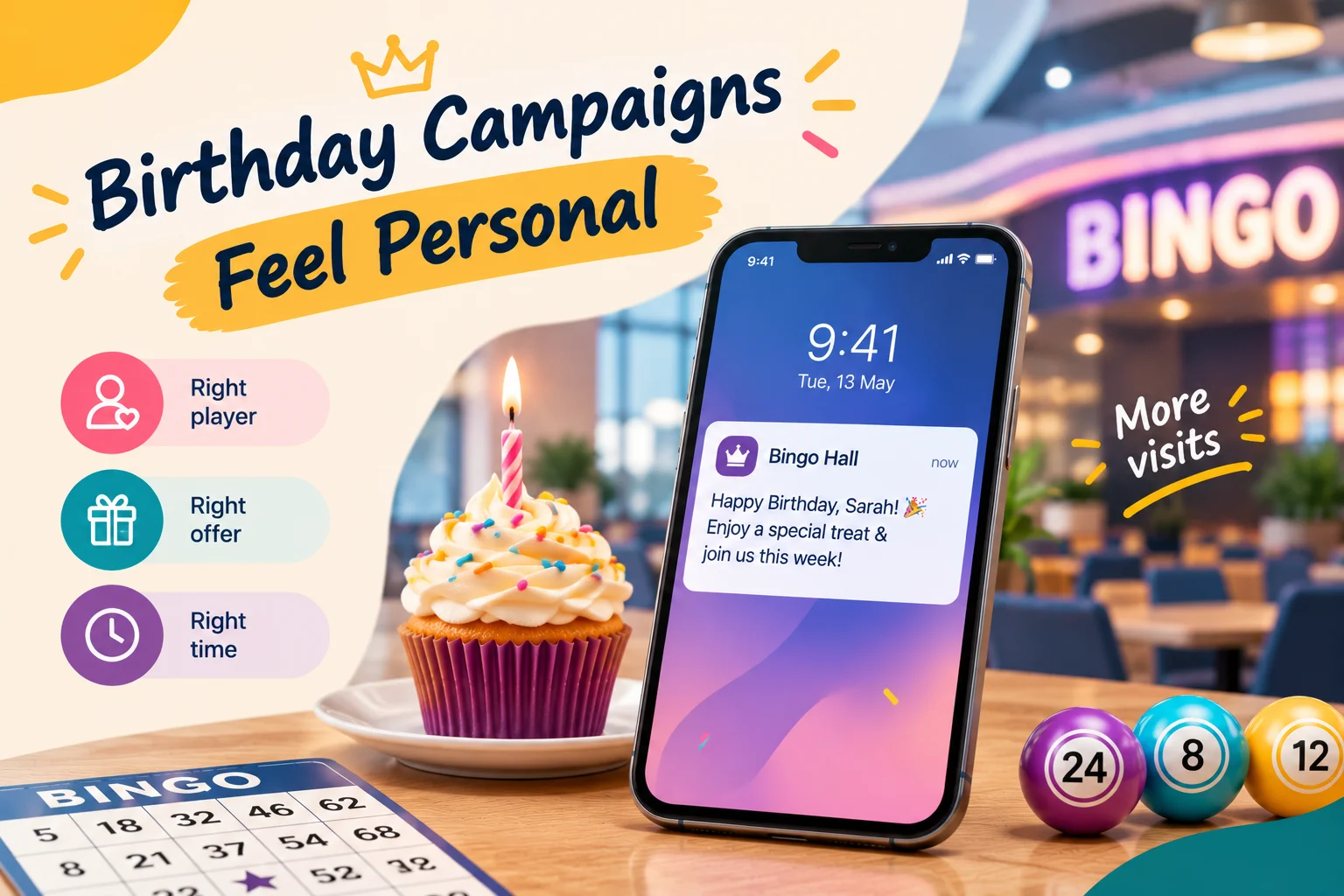
A player may arrive with a question about a text message, event invitation, or reward offer.
If staff can review the relevant campaign information and the player's recorded interaction where available, they can explain the offer more clearly or direct the enquiry to the appropriate team.
This reduces the risk of one employee giving an answer that conflicts with information another employee provided earlier.
The result is a more joined-up experience between marketing communications and the service players receive inside the hall.
Why This Matters More During Busy Sessions
A quiet afternoon gives staff more time to investigate an enquiry. A busy session can turn the same task into a bottleneck.
When several players need assistance at once, every additional search, repeated question, or request for a manager can interrupt the flow of service.
Rich player profiles can help reduce that friction by bringing relevant information together instead of requiring staff to piece it together from disconnected records.
The operational benefits may include:
- Less time spent searching across multiple systems.
- Fewer repeated questions when an interaction is handed to another team member.
- More consistent answers about recorded player information.
- Easier access to relevant loyalty and attendance context.
- A more consistent service experience across different shifts.
These benefits depend on data quality, staff training, permissions, and how the hall uses the system. A profile containing outdated or incomplete information will not automatically improve service.
The objective is to make accurate information easier to use at the moment it is needed.
Better Profiles Should Support Staff, Not Make Service Feel Robotic
There is a risk in treating customer data as a script for every interaction.
A profile might show that someone visits regularly or has a particular loyalty status. That does not mean every conversation should reference those details.
Players generally need staff to be helpful, respectful, and accurate. They do not need a recital of everything the business has recorded about them.
A practical approach is to use profile information in the background.
If a player asks about a reward, check the relevant information. If they need help with a previous enquiry, review the recorded context. If they simply arrive for their usual session, a friendly greeting may be all that is required.
Personalisation is most useful when it removes friction or makes assistance more relevant. It becomes uncomfortable when it feels intrusive.
Staff should also avoid recording speculative judgements about players. Notes should focus on legitimate operational needs, and sensitive information should not be collected or displayed without a valid reason.
The Role of a Bingo-Focused CRM
Generic contact management systems can store names, phone numbers, email addresses, and notes. But bingo hall service often depends on information tied to attendance, games, offers, and loyalty.
A bingo-focused CRM organises player information around these practical needs.
JustKonnect's Player Profiles CRM is designed to bring visit history, contact data, and loyalty status into one player profile. It also supports segmentation by visit frequency, last visit, and engagement.
For operators, this creates a connection between what the marketing team knows and what staff may need to understand about a player's relationship with the hall.
For example, attendance data can help the team identify different patterns of engagement, while loyalty information can provide context for reward-related questions. The information can also support more relevant communications when players are eligible to receive them.
The profile is not a substitute for attentive service. It is the information layer that helps staff deliver it more consistently.
How to Make Player Profiles Useful to Frontline Staff
Buying a CRM is only one part of the process. The hall also needs to decide how profiles will be maintained and used during everyday operations.
Keep the information practical
Prioritise fields that help staff identify players, answer common questions, understand attendance, and check relevant loyalty information. Avoid overwhelming employees with details they rarely need.
Establish clear update procedures
Decide how new registrations, changes to contact details, attendance records, and loyalty information will be maintained. Where information can be updated automatically through connected workflows, use those capabilities where appropriate.
Train staff around real scenarios
Instead of asking employees to learn every screen at once, train them to handle common tasks: locating a player, checking permitted details, reviewing a recorded enquiry, and directing an unresolved issue to the right person.
Set appropriate access permissions
Not every employee needs access to every record or field. Configure access according to job responsibilities and the hall's privacy requirements.
Review whether the process is actually helping
Ask staff which enquiries still require repeated searches, which details are often missing, and where players experience delays. Use that feedback to improve data quality and the workflow.
A profile system should make work easier. If staff must complete several extra steps for every routine interaction, the setup needs to be reviewed.
How Can a Hall Tell Whether Player Profiles Are Improving Service?
The value of a player profile is not measured only by how many records the database contains. Operators should also consider whether the information helps staff respond more efficiently and consistently.
Useful indicators to review include:
- Time needed to resolve common enquiries: Are staff spending less time searching for relevant information?
- Repeated enquiries: Are players having to explain the same recorded issue to multiple employees?
- Profile completeness: Are essential contact, attendance, and loyalty fields accurate and maintained?
- Staff feedback: Do employees find it easier to handle routine player questions?
- Player feedback: Do visitors report that their enquiries are handled clearly and consistently?
- Operational consistency: Can employees across different shifts access the same relevant, up-to-date information?
These are measures to test, not guaranteed outcomes. A hall can establish a baseline before introducing a new workflow, then review the same indicators after staff have had time to adopt it.
The most useful assessment combines operational measures with feedback from the people using the system every day.
Frequently Asked Questions
What is a rich player profile in a bingo hall?
A rich player profile is a central record that combines relevant player identity and contact details with information such as attendance history, loyalty status, and recorded engagement. It gives authorised staff more context for handling enquiries and supporting player relationships.
How do player profiles help bingo hall staff provide better service?
They can make relevant information easier to find, reduce repeated searches, and help staff respond more consistently to questions about visits, rewards, or previous interactions. Their usefulness depends on accurate records and a practical staff workflow.
Should every employee be able to see a player's full profile?
No. Access should reflect each employee's responsibilities and the hall's privacy and data protection requirements. Staff should see the information they need to perform their role, not automatically receive unrestricted access to every field.
Can player profiles improve the experience for returning visitors?
They can help staff access relevant attendance and loyalty context, making it easier to welcome returning players and answer questions. However, a profile cannot explain why someone has been away, so staff should avoid assumptions and use the information respectfully.
What is the difference between player profiles and loyalty software?
Player profiles organise information about individual players, including relevant contact and activity details. Loyalty software manages programme mechanics such as points, rewards, or tiers. When these capabilities work together, staff can more easily connect the player's record with their loyalty activity.
How should bingo halls keep player profiles accurate?
Halls should establish clear procedures for updating contact details, recording relevant activity, resolving duplicate records, and reviewing outdated information. Automated updates and connected systems can help where available, while staff training and appropriate access controls support consistent use.
Make Every Player Interaction Easier to Handle
The best customer service often happens in small moments: answering a question without a long delay, explaining a reward clearly, or helping a returning player feel comfortable.
Staff cannot be expected to remember every visit, every offer, and every previous interaction across an entire membership database. They need reliable information that is accessible when it matters.
A well-maintained player profile gives them that starting point. It connects the player's identity with relevant attendance and loyalty context, helping the team provide service that feels more consistent without making every interaction feel automated.
Explore JustKonnect Player Profiles CRM to see how a bingo-focused player management system can help your hall organise player information and support better-informed engagement, from the first visit to the next time a regular walks through the door.